Get Full Government Meeting Transcripts, Videos, & Alerts Forever!
Get email alerts on the Cash Assistance Successor Program topic
No spam. Unsubscribe anytime.
Cambridge committee weighs successor to Rise Up cash‑assistance program; no funding vote
Summary
The Human Services and Veterans Committee reviewed options for a successor to the city’s Rise Up cash assistance program, heard multiple public pleas to continue payments, and discussed legal and budget constraints; no funding decision was taken and the committee agreed to prepare a policy order for the full council.
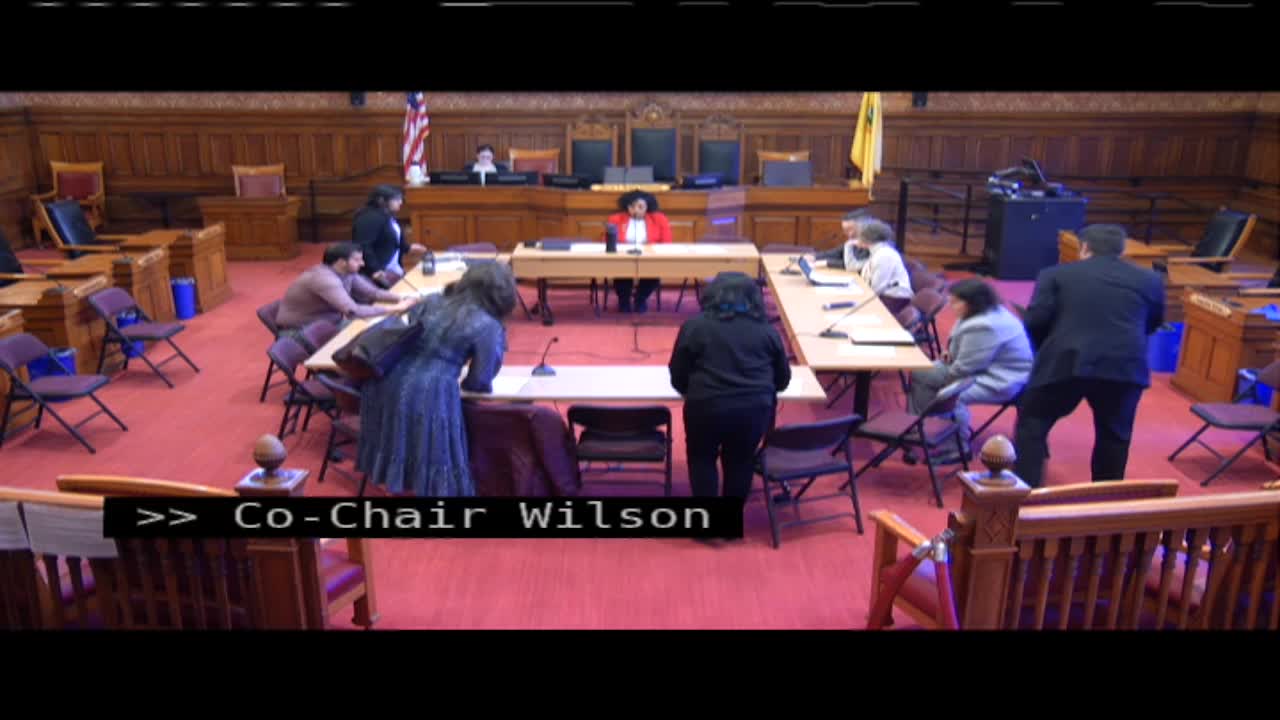
The Cambridge City Human Services and Veterans Committee on Wednesday reviewed options for a successor to the city’s Rise Up cash‑assistance program, heard more than a dozen public comments urging continuation, and discussed legal, administrative and budget questions but did not vote to fund a new program.
The committee heard a presentation from the Cambridge Community Foundation and the Cambridge Economic Opportunity Committee (CEOC) outlining design options and cost estimates. Geeta Pradhan, president of the Cambridge Community Foundation, told the committee the city’s pilot was the first citywide program of its kind and urged continuation: “We were the first city in the country to offer a citywide program, which was built on a fully philanthropically funded 1,660,000.00 investment.”
The Foundation and CEOC presented a model that mirrors the pilot’s eligibility and benefit level: $500 per month to families with children and incomes at or below 250% of the federal poverty line. That design was estimated to include roughly 1,923 families (about 7,200 residents) and would require several months to relaunch; the presenters projected a FY26 partial year cost and an annualized FY27 cost. Alternate options shown at the meeting included narrower eligibility tiers (for example, families at or below 150% or 100% of the federal poverty line) with lower overall cost and smaller caseloads.
Public comment focused on recipients’ experience. Tamara Christalyn, a former Rise Up participant, described the monthly payment as a stabilizing resource: “The 500 may not be a lot of money, but it made a huge difference in my life.” Jody Ramkeson, another participant and a Cambridge Department of Public Works employee, said the payments allowed her to repay debt and “be more present” with her children.
City staff and the law department raised operational and legal constraints. The city manager said “timing to do this in 6 months is probably a little bit aggressive” but that a relaunch was feasible with further scoping. Assistant City Solicitor Diane Pires and Deputy City Solicitor Elliot Veloso reiterated the solicitor’s written opinion that unrestricted monthly cash—characterized in prior discussion as a form of guaranteed income—would raise legal risks for a municipal program. As the law office told the committee, “there is a likelihood that it may not be, defensible if, guaranteed income is unrestricted in usage as noted in the opinion.” The solicitor’s memo recommends program designs that tie payments to defined public purposes or include restricted uses to reduce legal exposure.
Operationally, CEOC staff explained that the pilot used a vendor, AidKit, to distribute payments either by direct deposit or a debit card; CEOC served as the local administrator and the front line for participants. A debit card option was described as useful for unbanked residents and for households where account control is a safety concern. The committee discussed possible restrictions (for example, prohibiting alcohol or tobacco purchases) and non‑intrusive checks such as participant attestation or selective audits; staff said specific auditing and restriction levels would need to be designed to align with the solicitor’s guidance.
Members also pressed the presenters on evidence of program impact. Councilor Patty Nolan and others noted the pilot’s randomized evaluation had mixed findings and high attrition; Councilor Nolan called for further analysis of which participants left the study and how that may affect outcome measures. CEOC and Foundation representatives said additional, non‑pilot evaluation work is under way and that a more complete analysis of subgroup outcomes (by income, race/ethnicity and family type) would be valuable before scaling.
Budget questions dominated parts of the discussion. Presenters estimated program costs in the millions of dollars annually depending on eligibility and scope; the city manager and councilors flagged competing budget priorities and the need to identify funding sources. Vice Mayor Mark McGovern and others noted the city has used free cash in prior years for large items and argued it could be considered for this program, while Councilor Sabrina Wheeler and others emphasized the need to balance priorities across the city budget.
No formal vote to fund a successor program was taken. Committee members agreed to keep the matter in committee for further scoping and to prepare a policy order to convey a recommendation to the full City Council and, if referred, to the Finance Committee for consideration in the FY26/FY27 budget process. In lieu of a program vote, the only formal action taken at the end of the meeting was a procedural motion to adjourn, which passed by roll call, five‑to‑zero.
What happens next: staff said re‑engaging implementation partners, confirming eligibility projections and resolving legal questions about restrictions and benefit impacts would be necessary steps before the council could consider any appropriation or budget action.