Get Full Government Meeting Transcripts, Videos, & Alerts Forever!
Get email alerts on the African American Wellness Hub topic
No spam. Unsubscribe anytime.
County study recommends phased, community‑led African American Holistic Wellness hub; board asks equity committee to refine plan
Summary
A feasibility report recommends a phased rollout — mobile outreach, district satellites, then a permanent East County hub — to address stark health and social disparities affecting Black residents. The Board of Supervisors asked its equity committee and county departments to help develop implementation steps and return with an action plan.
A county‑commissioned feasibility study recommends a phased approach to build an African American Holistic Wellness and Resource Hub — starting with mobile outreach and site activations, followed by district satellite sites, and ultimately a permanent hub in East Contra Costa — and the Board of Supervisors asked staff to bring implementation details back through the equity committee.
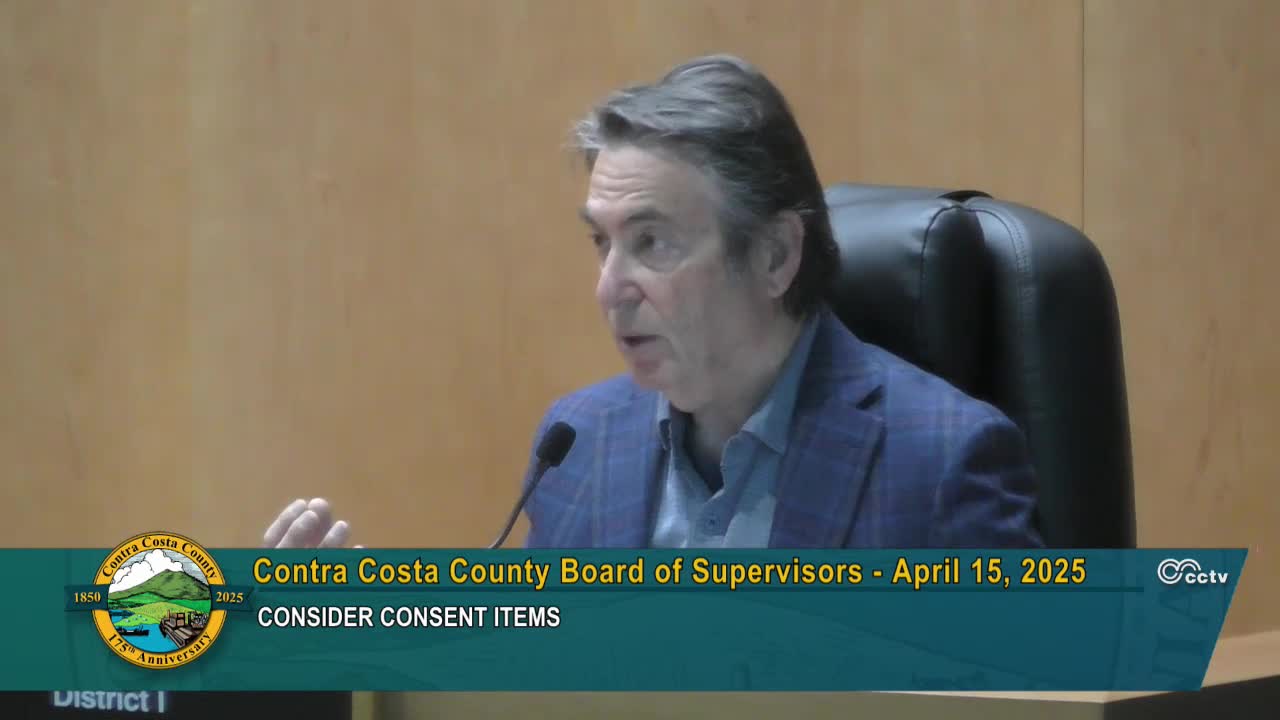
The Ceres Policy Research feasibility study, presented April 15 to the Contra Costa County Board of Supervisors by Dr. Kirby Lynch, was based on more than 4,000 survey responses, 16 listening sessions and interviews with community stakeholders. It found deep, countywide racial disparities across causes of death and community health indicators and concluded Black residents in Richmond, Antioch and East County experience the highest, most urgent needs.
"This report was a collective effort," Dr. Kirby Lynch said during the presentation, describing the research team and community steering committee that guided the work. Economist Ryan Drake Lee, who worked on the fiscal analysis, told supervisors the recommended multi‑phase rollout would allow the hub to begin delivering services quickly while the county and community design longer‑term governance and funding.
Why it matters: the study documents that Black residents in Contra Costa face much higher rates of preventable deaths and service barriers. It also found that many community members view existing services as untrustworthy or hard to navigate, and that culturally grounded, coordinated care is a top community priority.
What the study recommends: a three‑phase model - Phase 1: Rapid mobile wellness teams and pop‑up site activations to provide outreach, navigation and immediate prevention services. These teams would collect data on usage and satisfaction while building trust. - Phase 2: District satellite sites in priority neighborhoods to establish a consistent, visible presence and co‑locate services with trusted local partners and community‑based organizations. - Phase 3: A permanent, county‑partnered hub (the study identified a county property at 1650 Cavallo Road as one possible East County site) to centralize navigation, clinical partnerships and workforce development.
Ceres and county staff emphasized the hub must be community‑led and culturally grounded. "People desire a public space for Black wellness," Lynch said, and asked for careful phasing to ensure sustainability and community trust.
Board direction and next steps: Supervisors asked the Office of Racial Equity and Social Justice (ORESJ) to continue leading planning and to work with county departments (Community Health, Employment and Human Services, Probation, Library and others) and community partners to inventory existing services and identify gaps. The board asked staff to return to the Equity Committee with a draft implementation plan and a timeline for near‑term actions, with a reported target to brief the board again in June. Several supervisors stressed the need for subregional planning so services match local patterns of need in Richmond, Antioch and other neighborhoods.
Funding and governance: The Board previously set aside $7.5 million in Measure X funds for establishment of the hub; the study treats that allocation as seed money, not an annual budget. The report offered multiple governance options — from an MOU and fiscal agent with community oversight, to hybrid models and a joint‑powers authority — and Ceres urged a community‑centered fiscal structure rather than an immediate county‑run department. The report also emphasized early partnerships with philanthropic, health system and educational institutions to secure additional capital and operating support.
Public reaction at the board meeting: More than three dozen callers and speakers — including community organizers, clergy, service providers, parents and health advocates — urged the board to move quickly and to ensure the hub is Black‑led and rooted in local communities. Speakers repeatedly said the study confirms long‑standing community knowledge and asked supervisors to prioritize rapid rollout of mobile and satellite services while final governance is agreed.
What remains unresolved: The board accepted the feasibility report and directed staff to develop implementation details through the equity committee. Supervisors did not select a single governance vehicle; they asked the equity committee to refine options and return with recommended next steps, including a proposed staffing and contracting approach for initial mobile services and an approach to hold and deploy the Measure X allocation for launch activities.
Ending note: Supervisors and staff framed the feasibility study as a starting point — a data‑backed roadmap — and committed to a collaborative implementation process. Several supervisors emphasized that the project’s success will depend on accountable partnerships with Black‑led organizations, clear measures of utilization and outcomes, and long‑term funding beyond the initial Measure X allocation.