Get Full Government Meeting Transcripts, Videos, & Alerts Forever!
Get email alerts on the Agriculture Production topic
No spam. Unsubscribe anytime.
Michigan vegetable growers tell committee labor, water and regulation threaten production; council seeks research funding
Summary
Growers and the Michigan Vegetable Council told the House Agriculture Committee that H-2A costs, water rules, competing land uses and mounting regulations are squeezing vegetable production and urged state support for research and resilience grants.
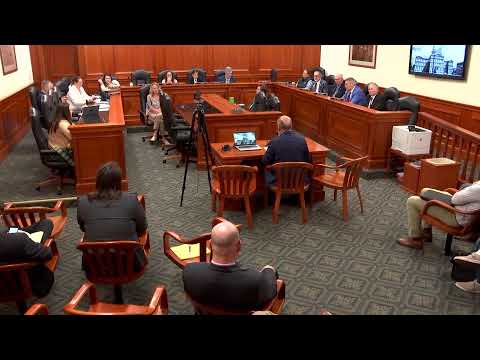
Representatives of the Michigan vegetable industry told the Michigan House Agriculture Committee on March 20 that rising labor costs tied to the federal H-2A guest worker program, limits on water use, and growing regulatory burdens are reducing the state—s vegetable acreage and making it harder for family farms to stay viable.
Kent Carnamot, a managing partner at Carnamot Farms in Fremont, told the committee that foreign competition and water rules are two of the farm—s biggest concerns. "Foreign competition. Our shelves on our stores are filled with farm products sourced with little regard for labor rates, food safety, and the environment," Carnamot said. He also listed aquifer restrictions, regulation, and manpower as factors that challenge operations.
Adam Van Dyke of Van Dyke Farms in Emmett City described how labor and market pressures shape planting decisions and farm succession. "The H-2A program, our farm would not be who we are without it," Van Dyke said, noting his operation relies on roughly 190 workers and a substantial H-2A cohort. Van Dyke and other witnesses said the rising H-2A adverse effect wage rate, which the presenters cited as $18.15 per hour, plus housing and transportation costs, makes some crops unprofitable compared with out-of-state or imported options.
Greg Bird of the Michigan Vegetable Council summarized industrywide data and asked the committee for policy support and research funding. The council emphasized Project Green and other partnerships with Michigan State University; Bird said the council is seeking $2,000,000 in recurring climate-resiliency funding and an $8,000,000 grant program in the governor—s proposed 2026 state budget to support crop resiliency and specialty-crop research. Bird cited USDA-derived industry numbers: "3,000 plus farms, 52,000 acres, $706,000,000 farm gate," and a broader specialty-crop supply-chain impact of about $6.3 billion supporting nearly 41,700 jobs, while noting the state lost about 13,000 vegetable acres from 2017 to 2022.
Witnesses described on-farm practices and risks that inform those requests. Van Dyke described frequent food-safety testing for leafy greens—monthly well testing, acre-scale leaf sampling for E. coli and Listeria, ATP swab checks on equipment—and said weather events and a single contamination event can end a season or close a business. Carnamot and Van Dyke also raised concerns about limited muck soils in parts of Michigan, and the effect of land conversions (including solar projects) and wetland constraints on available production ground.
Committee members asked about crop insurance availability and local market structures. In response to a question from Representative Alexander about insurance after flood losses, Van Dyke said whole-farm insurance options have only recently become accessible for some vegetable operations; two years earlier his farm had no insurance for a rain-related loss. When Representative Vranges asked about local food hubs and institutional contracting, witnesses described mixed experiences: smaller growers sometimes find hubs useful, while larger, contract-driven suppliers typically route produce through wholesalers.
The presenters invited members to visit farms and the Great Lakes Expo, scheduled for Dec. 9—11, 2025 at DeVos Place in Grand Rapids, and encouraged committee members to discuss H-2A wage concerns and research funding with federal and state partners.
Ending: The committee did not take immediate action on policy changes during this presentation; witnesses provided written materials and asked the committee to consider research and workforce cost issues as it develops future legislation and budget priorities.