Get Full Government Meeting Transcripts, Videos, & Alerts Forever!
Get email alerts on the Cannabis Regulation topic
No spam. Unsubscribe anytime.
Cannabis regulator builds reference lab, warns of hemp loopholes and licensing strain as industry expands
Summary
The Cannabis Regulatory Agency told a House subcommittee it is building a state reference laboratory and requested rule changes to restore summary-suspension authority after legal challenges, while flagging novel intoxicating hemp-derived products created under the 2018 Farm Bill as an emerging public-health risk.
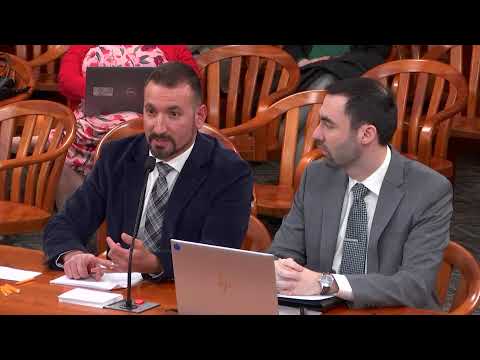
At a meeting of the Michigan House Operations subcommittee on Licensing and Regulatory Affairs, Cannabis Regulatory Agency (CRA) Executive Director Brian Hanna described rapid growth in Michigan’s regulated cannabis market, new enforcement and oversight work and the agency’s plan to open a state reference laboratory to support testing, investigations and public-safety work.
Hanna said the CRA now oversees more than 4,000 business licenses and added nine FTEs in fiscal 2025 to handle inspection, disciplinary and customer-service demands following an August 2023 Office of the Attorney General audit that flagged timeliness concerns. The CRA’s operating expenses are paid from restricted funds — application, license and renewal fees tied to statutory programs — not the general fund.
“We have now over 4,000 business licenses in the state of Michigan,” Hanna said, describing exponential license growth since 2021. He said more licenses have produced more complaints, inspections and disciplinary work; the CRA reported issuing approximately 634 disciplinary actions in 2024 and 5,396 educational warnings.
Hanna told lawmakers the agency is constructing a reference laboratory in existing CRA space to reduce investigation time, avoid overreliance on private licensed labs for regulatory investigations and provide an independent scientific resource. He said the lab is ahead of schedule and will help the agency “call balls and strikes on what’s real and what’s not with science.”
The CRA identified two enforcement challenges lawmakers should note. First, a 2024 legal challenge undermined the agency’s ability to carry out summary suspensions, meaning the CRA must often adjudicate misconduct without a quick suspension tool; Hanna said rule-language changes are planned to restore a stronger summary-suspension mechanism. Second, he warned that loopholes in federal hemp law and the 2018 Farm Bill have enabled manufacturers to create novel intoxicating cannabinoids and hemp-derived products that may evade regulation and enter consumer channels normally served by regulated retailers.
“These are chemicals we have never seen before in this planet’s existence,” Hanna said, describing novel substances produced under current federal and state hemp frameworks. He showed an example of an unregulated product sold in a liquor store and said it would not meet regulated-market limits.
CRA policy and legislative assistant Derek Soba told members the department contracted with vendors and used FY24 budget authority to start building the lab; statutory authority to possess and transport marijuana for lab use remains a separate legislative issue that previously failed to advance to become law. Hanna and Soba said the budget included funding for the lab’s construction, but staff will seek statutory language to allow CRA employees to handle marijuana evidence and streamline accreditations once the lab is ready.
Members asked about impaired-driving science, public-safety uses for the lab and advertising controls. Hanna said the lab could support law enforcement testing for fentanyl contamination and other illicit adulterants and that the CRA has joined the Michigan Impaired Driving Task Force to address scientific gaps in detecting current impairment from cannabinoids.
Hanna asked for legislative help on multiple fronts, including clarifying statutory authority where ballot initiative language limits agency action and considering changes to the state hemp statute to address products created under the federal Farm Bill. The CRA said it will continue outreach to municipalities and maintain industry education sessions; the agency highlighted a veteran-focused initiative and ongoing efforts to support micro businesses and reduce unnecessary retail infrastructure costs.
The subcommittee adjourned after the CRA presentation and a brief question-and-answer period.