Get Full Government Meeting Transcripts, Videos, & Alerts Forever!
Get email alerts on the Insurance Regulation topic
No spam. Unsubscribe anytime.
DIFS asks for $1.63 million in restricted funds to add five staff amid higher complaints, cyber threats
Summary
Department of Insurance and Financial Services Director Anita Fox told a Michigan House subcommittee the department seeks $1,634,200 in state-restricted fund authority for fiscal 2026 to cover payroll adjustments and five new positions to handle appeals, licensing reviews, legal support, cybersecurity and IT modernization.
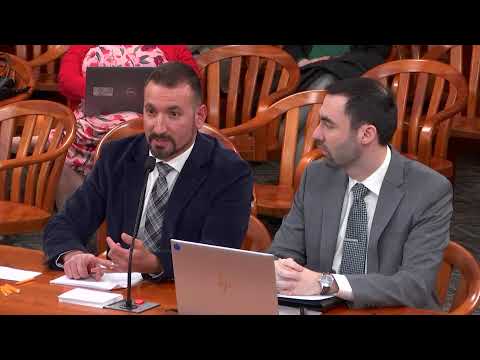
At a meeting of the Michigan House Operations subcommittee on Licensing and Regulatory Affairs, Department of Insurance and Financial Services (DIFS) Director Anita Fox asked lawmakers for $1,634,200 in additional state restricted fund authority for fiscal 2026 to cover payroll adjustments and five new staff positions.
Fox told the subcommittee the bulk of the request—about $955,000—reflects employee payroll adjustments and administrative costs, while roughly $600,000 would fund five FTEs to manage increased workload in the department’s consumer-protection and regulatory enforcement functions.
The request is intended to support appeals under the Patient’s Right to Independent Review Act, speed producer licensing and misconduct reviews, add an administrative law specialist to handle a growing body of statutes and regulations (including pharmacy benefit manager oversight), expand cybersecurity incident response and add a lead IT analyst for modernization and troubleshooting.
“We are totally fee funded, restricted funds,” Fox said, emphasizing that DIFS does not draw on the general fund and that industry license and fee revenue funds the work. She described the department’s dual mission: ensuring market solvency and consumer protection while supporting growth in Michigan’s insurance and financial services industries.
The director gave members data to justify the staffing ask: DIFS answered more than 50,000 consumer calls in 2024, processed about 9,500 complaints and more than 3,000 written requests for assistance, and reported recovering $22,500,000 for Michiganders in the last year. Fox also said insurer filings and industry activity have increased—producer license counts rose nearly 97% since 2014 and bank assets and money-transmission activity have grown markedly since 2019.
Fox described the Patient’s Right to Independent Review Act appeals process, noting that only a small share of denials nationally reach an external appeal and that increased outreach (a public campaign funded by one-time FY25 dollars) has driven greater demand for independent review. She said the department needs staff to handle expedited 72-hour appeals and other urgent cases.
Members asked about licensing backlogs, fee structures and what the requested positions would do. Representative Steele raised the producer-license issue, noting an out-of-state producer license historically collected $10 and remains administratively burdensome; Fox said DIFS is working to modernize fees and require licensees to keep contact information current. Representative McKinney pressed on high auto insurance rates in Detroit; Fox cited national trends, inflation, supply-chain impacts on repair costs, higher claim severity and localized factors such as theft and crash risk as drivers of higher and disparate premiums. Karen Geiger of DIFS confirmed the vendor contracted for an auto-insurance study is Milliman.
Fox also described cybersecurity as a growing priority: last year cyber incidents tied to regulated entities affected more than 1,000,000 Michigan consumers and the department needs more capacity to investigate and respond.
The subcommittee approved the meeting minutes from March 20, 2025 at the start of the session; Representative Steele moved the approval and the roll call recorded all members present.
The director closed by offering to follow up with additional materials and to make staff available for members’ questions.