Get Full Government Meeting Transcripts, Videos, & Alerts Forever!
Get email alerts on the Economic Development topic
No spam. Unsubscribe anytime.
Committee directs staff to pursue property-tax rebate for ‘Project Turtle’ at Spirit/Esperia campus
Summary
The committee voted unanimously to ask staff to negotiate a 10-year property-tax rebate agreement for a Fortune 500 fintech project called “Project Turtle” to occupy about 420,000 square feet at the Esperia/Spirit campus, with a commitment to employ 2,000 workers by March 15, 2030 and roughly $125 million in tenant improvements.
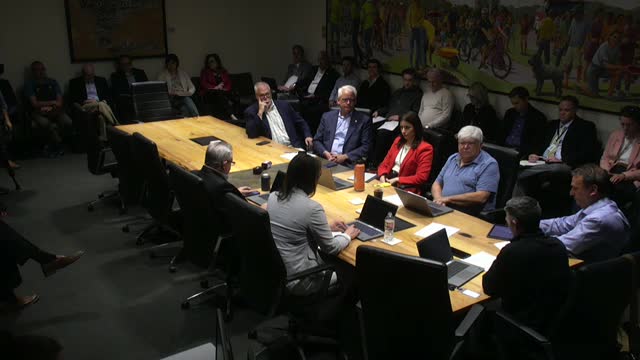
The Finance, Administration and Economic Development Committee voted unanimously Wednesday to direct city staff to negotiate a 10-year property-tax rebate agreement for a project identified in the selection process as “Project Turtle,” which would lease roughly 420,000 square feet on the Esperia (Spirit) campus and commit to hiring 2,000 full-time employees by March 15, 2030.
The proposal matters because the company — described in the presentation as a Fortune 500, fintech firm — would bring a large office hub and substantial payroll to Overland Park, while reusing existing commercial buildings rather than triggering new construction on greenfield land. Mayor Scug called it “the biggest job creating project that we've worked on in my time,” and city staff said the average annual salary is estimated at $125,000.
City staff and outside consultants told the committee that the tenant improvement estimate for the two existing buildings is about $125,000,000 and that the company is seeking a property-tax rebate to offset part of those upfront renovation costs. The rebate proposal is structured as a reimbursement: the tenant would pay property taxes and then apply to be reimbursed under the terms negotiated by staff. Mayor Scug and consultant Alec Leith said the rebate would not include revenue otherwise distributed to Blue Valley School District or Johnson County Community College, at the company’s request.
“We're using the name Project Turtle…we don't release the name until the organization is ready to announce,” Mayor Scug said, explaining the code-name and the city’s role. Alec Leith, the site-selection consultant, said the company performed a regional search and selected Overland Park after visiting several candidate markets, and described the project as a “regional headquarters/operating hub” with a multiyear hiring commitment.
Committee members pressed on several details before voting. Councilmember Scott Moser said he generally prefers reusing existing office space rather than new builds and welcomed that this proposal uses existing buildings on the Spirit campus. He asked about the length of the proposed lease and how the rebate period aligns; staff said the lease is for 15 years while the rebate term being considered is 10 years. Committee members also asked how many local employees would transfer from other company sites; the consultant said he expected at least several hundred transfers and estimated the project could yield “at least a thousand people locally” over time but cautioned that precise transfer numbers are not committed by the tenant.
Officials provided a rough fiscal estimate for the city portion of the rebate. Staff said the city’s direct portion of the rebate would be about $1,300,000 over 10 years under the assumptions shown in the staff report, but stressed the estimate depends on future assessed valuation growth (the presentation used a 5% annual valuation growth assumption). City staff and the mayor said the final agreement would include clawback provisions if the company does not meet its job, payroll or investment commitments.
The committee’s motion — to recommend the City Council direct staff to prepare a property-tax rebate agreement for Project Turtle on the terms outlined in the staff report — passed unanimously; the motion was seconded and the committee chair called the question.
Next steps: staff will negotiate terms and return to the City Council for approval of the final rebate agreement. The presentation and committee discussion identified remaining variables for negotiation including final rebate calculation mechanics, clawback language, and the precise scope of property tax streams covered by the rebate.