Get Full Government Meeting Transcripts, Videos, & Alerts Forever!
Get email alerts on the Sales Tax Revenue topic
No spam. Unsubscribe anytime.
Comptroller: Milwaukee 2% sales tax brought in $200.6 million in 2024, $16.6M above budget estimate
Summary
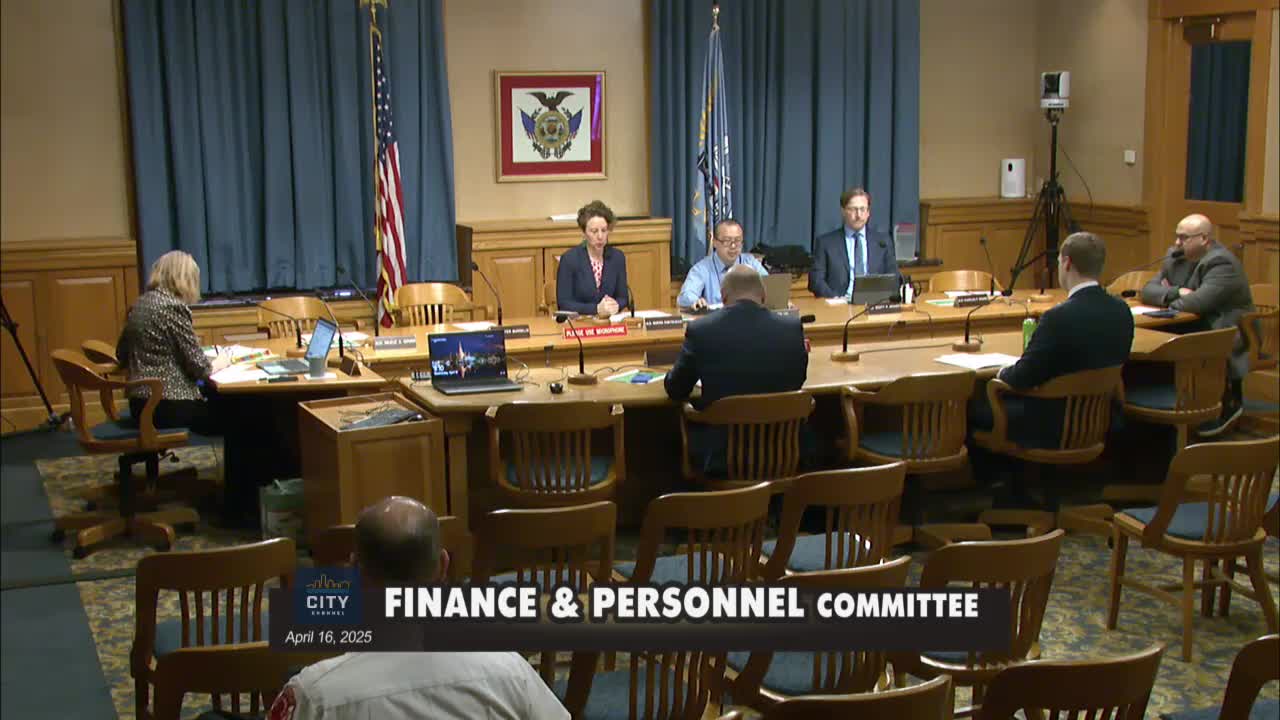
A city comptroller’s report to the Milwaukee Common Council Finance and Personnel Committee found that the city-only 2% sales tax generated $200,621,090 in fiscal 2024, $16.6 million (9%) above the $184 million estimate included in the 2024 budget.
A city comptroller’s report to the Milwaukee Common Council Finance and Personnel Committee found that the city-only 2% sales tax generated $200,621,090 in fiscal 2024, $16,600,000 more than the $184,000,000 estimate in the 2024 budget.
The comptroller, Bill Christiansen, said the city’s estimate was intentionally conservative because “there was no reliable historical data for taxable sales in just the city of Milwaukee” and because the model relied on the share of county taxable sales that occurred inside the city. He told the committee: “For example, the different data sets that we were working with supported the city share of county taxable sales being anywhere from 47% to 52%. So, in our model, we went with the low end that was supported by the data, 47%.” The Department of Revenue later determined that Milwaukee made up 50.5% of the county’s sales tax base in 2024.
Why it matters: The revenue exceeded the city’s forecast by 9%, improving the city’s fiscal position for 2024 and reducing immediate pressure on contingency reserves. But Christiansen cautioned that uncertainty remains for future years because 2024 was the first year of a city-only sales tax and the city had only limited months of experience when it prepared the 2025 estimate.
Comptroller Christiansen described other factors that complicated forecasting, including implementation delays, early noncompliance by some retailers, changing retail patterns such as online sales taxation, the role of retail centers outside the city and broad macroeconomic uncertainty such as inflation and recession fears. “So the way that we accounted for uncertainty…and the consequences of being too high in our estimate were far more severe than the consequences of being too low, for each of those variables in the model, we went with the lowest end of the range that was still supported by the data,” he said.
Looking ahead, the comptroller’s office submitted a fiscal 2025 sales tax estimate of $192,900,000 in August 2024. Christiansen told the committee that with 2024 actuals at $200.6 million, “I’d say there’s a very high likelihood that sales tax revenue in 2025, again, exceeds estimates,” but he declined to make guarantees because of recent global economic volatility.
Committee members asked about early 2025 distributions and monthly signals; Christiansen said year-to-year comparisons of single months are a weak indicator and that the city typically needs multiple years of city-only data before it would feel comfortable changing its conservative approach. Alderman Peter Bergellis, the committee vice chair, asked whether preliminary first-quarter numbers were available; Christiansen said the city had only January and part of February distributions at that point and was still awaiting April data from the state.
Ending: The committee accepted the report and placed the communication on hold to the call of the chair for follow-up; members said they expect further discussion of permissible uses for any sales tax overage in subsequent meetings, given statutory limits under Act 12.