Get Full Government Meeting Transcripts, Videos, & Alerts Forever!
Get email alerts on the Native Plants And Pollinators topic
No spam. Unsubscribe anytime.
San Diego Botanic Garden and donor fund Parkdale Lane Elementary native pollinator garden
Summary
The San Diego Botanic Garden, with funding from a private donor, removed invasive ice plant and installed native species at Parkdale Lane Elementary to create year-round pollinator habitat and educational signage; staff and volunteers will provide maintenance during establishment.
The San Diego Botanic Garden has installed a native pollinator garden on a slope at Parkdale Lane Elementary School in Encinitas, the garden’s habitat restoration program manager said at the Environmental Commission meeting.
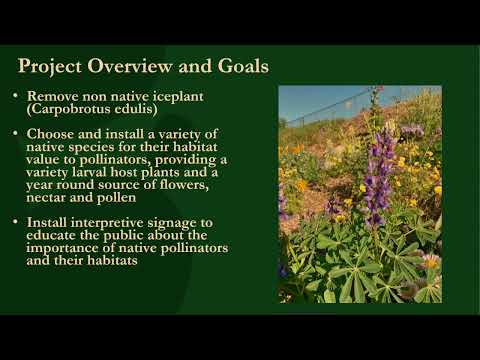
Joe DeWolf, Habitat Restoration Program Manager for the San Diego Botanic Garden, said a private donor funded the project and the garden’s three goals were to enhance pollinator habitat at the Botanic Garden, to create pollinator plantings on City property (Moonlight Beach parcel), and to transform the slope at Parkdale Lane Elementary. DeWolf said the work began in November and included removing nonnative ice plant (Carpobrotus edulis), scraping accumulated duff, installing mulch and landscape boulders, and planting a diverse mix of native shrubs, sages, buckwheats, manzanitas, wildflowers and other species selected to provide year‑round flowers and larval host plants.
DeWolf described the site as an ‘‘interpretive garden’’ because it is bounded by ice plant and turf; he said volunteers from the Botanic Garden grew many of the wildflower plugs used in the installation and planted them in 4‑inch pots to improve establishment. He said volunteers and garden staff have been hand‑watering weekly during establishment and that the Botanic Garden committed to maintain the site for ‘‘at least a few years’’ to reduce maintenance burden on the school.
Commissioners asked about long‑term maintenance, irrigation and whether the school district would require ongoing care. DeWolf said the planting is intended to become largely self‑sustaining once established: ‘‘Once we get enough native coverage and get enough of these wildflowers to reseed and get a nice seed bank going, it should be, for the most part, self sustaining.’’ He added that volunteers remain important and encouraged residents to sign up through the San Diego Botanic Garden website for Wednesday morning restorations and occasional Saturday events.
DeWolf said early observations included native sweat bees, a yellow‑faced bumblebee and hummingbirds visiting the site; he and commissioners noted the project’s potential educational value for students and neighbors. No formal commission action was taken; the presentation was informational and followed by public questions and discussion about native plant policy alignment with weed‑abatement and fire‑safety rules.