Get Full Government Meeting Transcripts, Videos, & Alerts Forever!
Get email alerts on the Community Grants topic
No spam. Unsubscribe anytime.
Community speakers urge restoration of Dream Keeper Initiative funding at board meeting
Summary
Multiple community speakers at the April 15 Board of Supervisors meeting urged the mayor and board to restore previously allocated Dream Keeper Initiative funding, saying cuts have reduced capacity for Black‑serving organizations and programs.
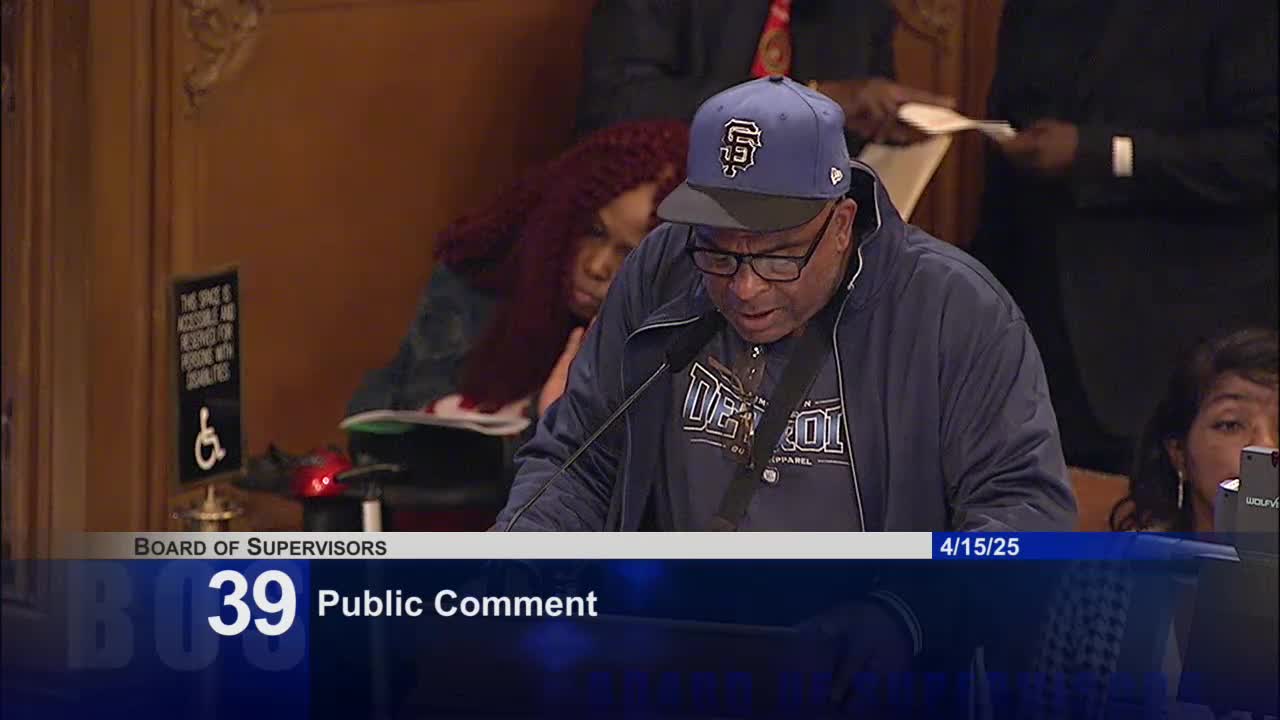
During general public comment on April 15, multiple speakers representing MegaBlack and Dream Keeper Initiative (DKI)‑funded organizations told the Board of Supervisors they had not been informed of major reductions in DKI funding and asked the board to restore prior levels.
Speakers described a history of DKI grants supporting community nonprofits and programs and warned that reductions jeopardize services. Several speakers said the administration cut the program’s annual allocations and that the community learned of steep reductions only through recent solicitations and notices.
What speakers said (summary of public comments): community members stated that the Dream Keeper Initiative originally funded at $60 million annually was later reduced (speakers cited an intermediate $45 million number and expressed concern that the RFP process and released grant pool now total far less, below $20 million per year). Speakers said the reduction undermines investments in Black‑serving community‑based organizations and the programs they run, including education and workforce efforts and community supports. Those speaking included representatives identifying as members or leaders of MegaBlack and other community organizations. They delivered a formal letter to the board and clerk during the meeting and urged direct engagement and restoration of funding.
Why it matters: Dream Keeper Initiative funding has been an important local resource for community programs. Claiming reduced allocations and limited outreach, speakers said the cuts risked program continuity and outcomes that organizers say demonstrated measurable success. The public record indicates a demand for clarity from the mayor’s office and the Human Rights Commission about annual funding levels, RFP structures and timelines for awards.
Board response and context: Several supervisors on the dais referenced working on related community investments and noted the need for transparent information; the mayor and city offices were acknowledged earlier in the meeting for staff support and public engagement. The board did not take an immediate vote on DKI funding at this meeting; speakers requested follow‑up meetings and full funding restoration to previously publicized levels.
Ending: Community members asked the board to use its oversight role to seek a clear accounting of DKI funding decisions, to restore or reallocate funds where appropriate, and to ensure timely, transparent communication with grant applicants and community stakeholders.