Get Full Government Meeting Transcripts, Videos, & Alerts Forever!
Get email alerts on the Evidence And Appeals topic
No spam. Unsubscribe anytime.
Appeals court hears challenge to expert testimony, delayed-report statistics in State v. Francis
Summary
At oral argument in State v. Francis, defense and prosecutor debated whether an expert's testimony about delayed reporting and related statistics impermissibly bolstered victim testimony and whether a jury should have received a lesser-included instruction on a special-trust theory of consent.
SALT LAKE CITY — The Utah Court of Appeals on Tuesday heard argument in State v. Francis over whether expert testimony about patterns of delayed reporting and other generalized statements about victims’ behavior improperly bolstered sexual-assault allegations and whether the trial court erred by refusing a lesser-included-offense instruction.
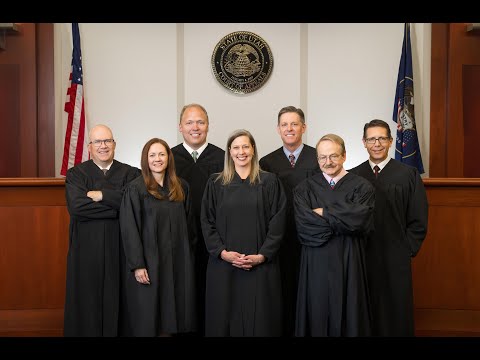
The case was argued before Judge Ryan Tenney, joined by Judges Harris and Mortensen. Natalie Scabine, representing the appellant Mr. Francis, told the court the expert’s testimony mixed clinical anecdotes and literature in a way that made a numeric presentation especially prejudicial to the defense. "The testimony was that this is coming from both his experience and keeping up with the literature," Scabine told the panel, arguing that the combination made the evidence sound more scientific and risked encouraging the jury to treat generalized statistics as dispositive in assessing credibility.
The prosecutor, Tara Peterson, countered that the expert relied on both research and clinical practice and said the record showed the witness had told the trial court he based opinions on both. "Off of both, and I'd like to point the court to several places in the evidentiary hearing where the expert made that clear," Peterson said, urging the court to uphold the trial court’s decision to admit the testimony.
Why it matters: The parties debated the line between permissible background explanation and impermissible bolstering. The defense asked the appeals court to adopt a rule excluding numeric statistics—such as testimony that two-thirds of victims delay reporting—in credibility-determinative contexts; the defense argued such numbers can effectively tell jurors how to resolve credibility. The state urged a narrower approach tied to foundation and reliability under Utah Rule of Evidence 702 and to the trial court’s discretion under Rule 403.
Most disputed evidence and legal questions
- Source of testimony: Counsel disputed whether particular statements (for example, that most rapes are perpetrated by someone the victim knows or that a substantial fraction of victims delay reporting) came from peer-reviewed studies, the expert’s clinical practice, or a mix. Scabine said the record often did not let the court separate those sources; Peterson said the record contains multiple points showing both bases.
- Bolstering vs. background: Defense counsel cited precedents—transcript references include Garcia Cardio, Burnett, Iorg, Rammell and Lopez as analogues—to argue that numeric statements about reporting patterns can improperly bolster credibility. The state relied on cases allowing experts to explain that delayed reporting is "common," drawing a line between vague, nonnumeric statements and concrete statistics.
- Reliability and Rule 702: The panel questioned whether reliability and foundation problems require the court to exclude numerically specific testimony even if general statements about commonality are admissible. Scabine framed three overlapping challenges: (1) whether numerical statistics are per se improper in credibility cases (a Rule 403 issue), (2) whether the testimony was founded on reliable methods and sources (a Rule 702 concern), and (3) whether trial counsel preserved objections to the testimony as presented at trial versus at the pretrial hearing.
- Character testimony under Rule 608: The court also reviewed a trial-court ruling allowing a stepmother to testify about the complainant’s reputation for truthfulness. The defense argued that the question asked and the answer effectively put the witness into the role of giving an impermissible opinion that could be cumulative; the state said the testimony was properly framed as reputation evidence and that the district court acted within its 403 discretion when it limited further testimony.
- Lesser-included instruction and consent theories: The panel pressed defense counsel on whether the trial evidence could fairly support a jury finding of consent on some charged acts, especially given testimony that the victim sometimes did not say "no," and that substance use played a role. Scabine argued the jury could have reached a reasonable doubt on lack-of-consent on some theories (including the ‘‘special trust’’ theory) and that refusal of a lesser-included instruction was reversible error; Peterson said the jury made mixed findings and pointed to convictions on other counts.
What the court heard but did not decide
The oral argument focused on legal standards rather than factual determinations. Several judges expressed uncertainty about whether a categorical rule (banning all numeric statistics in credibility cases) would be appropriate or whether the court should apply existing precedent that treats reliability and prejudice on a case-by-case basis. Counsel disagreed about whether the record preserved trial objections to post-hearing testimony that expanded beyond the evidentiary-hearing scope.
Context and next steps
The appeals court panel told counsel it would issue a written opinion in due course. The arguments raised recurring tensions in sexual-assault prosecutions nationwide about the role of expert evidence explaining delayed reporting and about the limits of character and reputation testimony.
Ending
The case was submitted to the court after argument; the panel did not indicate when it would release an opinion.