Get Full Government Meeting Transcripts, Videos, & Alerts Forever!
Get email alerts on the Housing Tax Policy topic
No spam. Unsubscribe anytime.
Board votes to suspend collection of San Franciscoempty-homes tax pending litigation
Summary
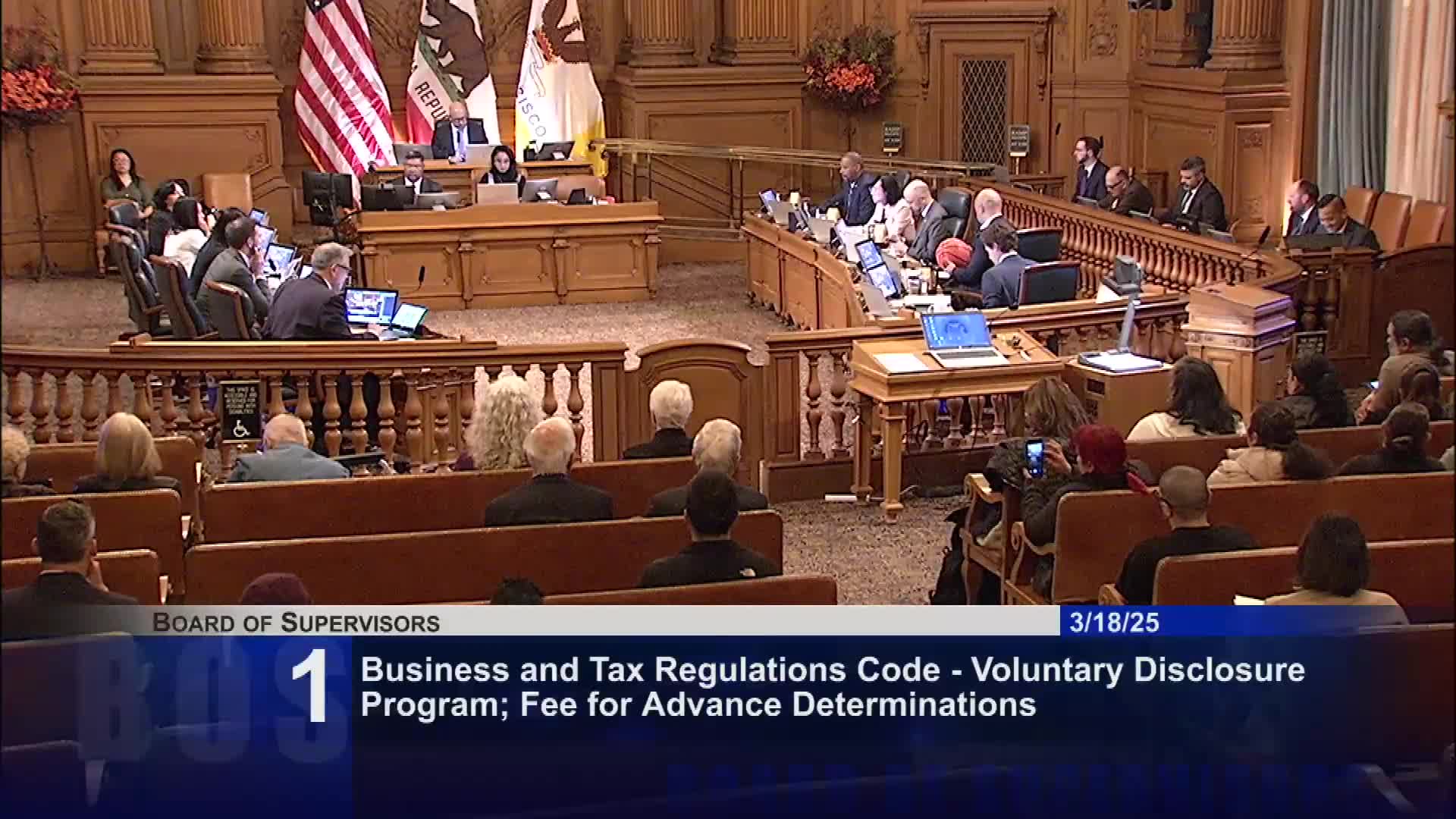
The Board of Supervisors passed an ordinance on first reading to suspend the voter-approved empty homes tax until final resolution of ongoing lawsuits, after debate about revenue estimates, administrative costs and legal risk.
The San Francisco Board of Supervisors voted on first reading on March 18 to suspend the voter-approved empty homes tax until a final court decision resolves pending litigation.
The ordinance, which requires a two-thirds vote, passed on first reading by a 9-2 margin, with Supervisors Walton and Fielder voting no. The measure would suspend collection and reinstate the tax so it first applies in the tax year immediately following the calendar year of a final decision in the lawsuits challenging the tax.
Supporters said suspension reduces administrative burden while litigation is unresolved; opponents warned it risks delaying revenue and undercutting a tool meant to improve housing availability. Supervisor Connie Chan, who supported the suspension, said implementing the tax now would impose heavy administrative demands on the Treasurer's office that could outweigh early revenue while the law remains under legal challenge.
Supervisor Fielder, who said she had worked with colleagues to seek implementation options, voted no, telling colleagues she remained concerned that if the courts lifted an injunction while litigation continued the legislation would prevent collection until the litigation concluded. "This legislation is complicated," Fielder said, and she said she would vote no because she feared the measure could defer collection even if courts allowed it earlier.
Officials from the Treasurer and Tax Collector's office and the Controller's office answered supervisors' questions about revenue and administrative costs. Amanda Fried, from the Treasurer's office, and Controller Wagner explained that revenue estimates vary. Wagner said the original ballot estimate projected roughly $25,000,000 annually; the Budget and Legislative Analyst's revised analysis reflected a lower, market-response figure (about $9,000,000 in 2024 rising to roughly $15.4 million in 2026) and should be treated as the later, revised estimate. The Treasurer's office staff said roughly 80,000 parcels would be asked to file declarations each year, most of which would not owe the tax, and that outreach and communications to that many filers would be costly.
Treasurer's office staff warned that collection under legal uncertainty would raise costs: the office would need expanded communications and a specially trained unit working with the City Attorney's office, and staff estimated mailings, paid media, and legal support would substantially increase early-year expenses. They said it was impossible to produce an exact cost estimate but that outreach and enforcement expenses would be higher while litigation remained unresolved, and that revenues in the early years could be materially lower.
Several supervisors tied the debate to city finances: one member cited an $800 million-plus budget gap and said absent clear cost-benefit data it was hard to support suspending or delaying collection. After discussion the clerk called the roll and recorded nine ayes and two noes. The Board passed the ordinance on first reading; additional readings or implementation steps may follow pending final committee or administrative actions.
Proponents and opponents said they will continue to monitor the litigation and coordinate with the Treasurer and Controller on implementation planning and outreach if the courts allow collection to begin.