Get Full Government Meeting Transcripts, Videos, & Alerts Forever!
Get email alerts on the Public Safety Police Staffing topic
No spam. Unsubscribe anytime.
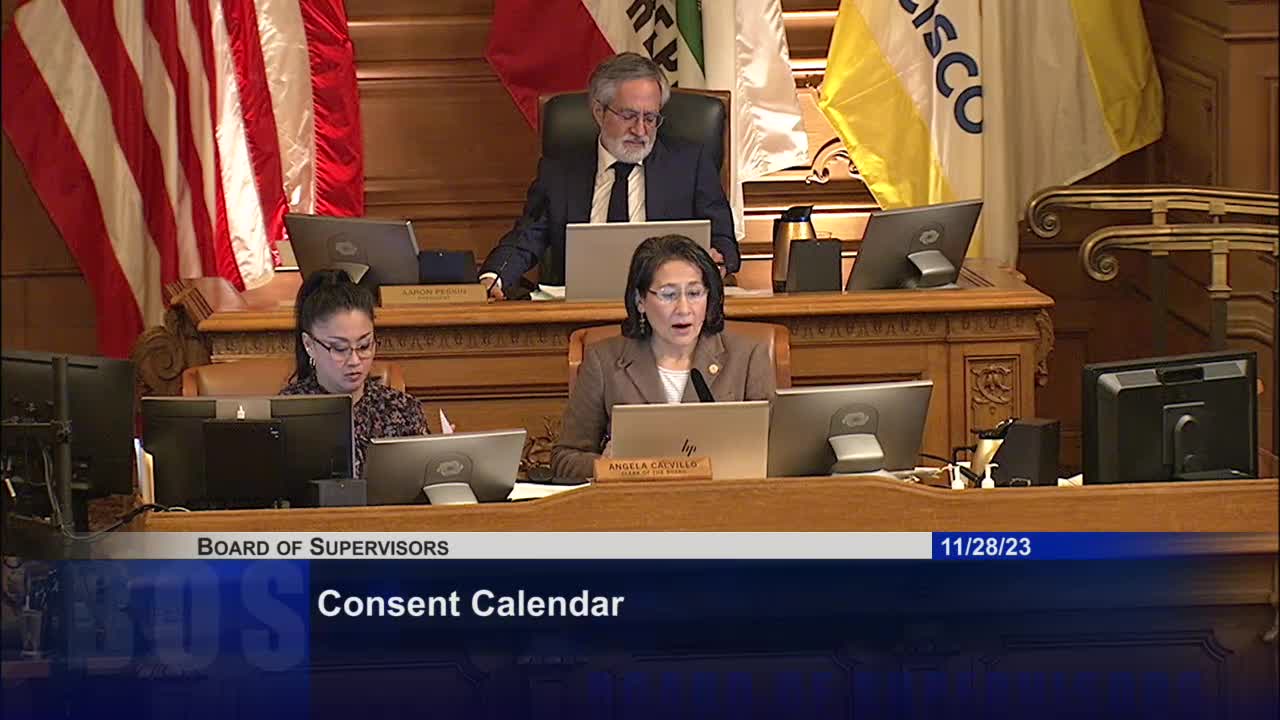
Board of Supervisors orders charter amendment on police minimum staffing to ballot after heated debate
Summary
The San Francisco Board of Supervisors voted 6–5 on Nov. 28 to submit a charter amendment to the ballot that would define “full‑duty sworn officers,” establish a minimum police staffing level and require that a future voter‑approved funding measure be certified by the controller before mandatory set‑asides take effect.
The San Francisco Board of Supervisors voted 6–5 on Nov. 28 to submit a charter amendment to the ballot that would define “full‑duty sworn officers,” set a minimum police staffing level in the city charter and require a future certification of sufficient voter‑approved revenue before mandatory funding provisions take effect.
Sponsor Supervisor Asha Safaie framed the measure as a response to a growing public safety concern and San Francisco’s budget shortfall. “This measure has evolved in a way that I think is healthy in terms of what debate we need to have in San Francisco,” Safaie said, noting the city faces an ongoing budget deficit and shortages across multiple first‑responder roles.
The amendment, as presented, would (a) define a “full funding date” that the city controller must certify after voters approve a tax measure generating sufficient revenue, and (b) once that date is reached, require set‑aside funding for recruitment, hiring bonuses and minimum staffing levels. Deputy City Attorney Anne Pearson explained the mechanism: when the controller certifies that an eligible ballot measure generates enough revenue, “the funding requirements of this charter amendment will go into effect.”
Opponents across the board argued the measure is legally and fiscally problematic. Supervisor Matt Dorsey, who authored an earlier staffing proposal, said he would vote no because the amended language does not set aside immediate, concrete funding. “This measure is merely aspirational because it is not a new dedicated tax,” Dorsey said. He and several colleagues warned that the amendment could force general tax revenue to be used for police staffing if a future general tax were large enough to trigger the charter language.
Supervisor Aaron Peskin, Supervisor Dean Preston and others raised broader concerns that the proposal could become a “poison pill” for future general revenue measures and restrict the city’s flexibility during emergencies or downturns. Speaking to deployment and recruitment questions, Supervisor Connie Chan cited a March 2022 staffing study that recommended about 2,100 officers as a planning benchmark.
City Controller Ben Rosenfield gave a near‑term vacancy estimate: “it appears that the department has about 300 vacant funded Q2 positions currently vacant in the current budget.” Several supervisors and speakers also discussed recent memoranda of understanding and staffing investments: the board previously approved sizable increases and a $167 million police MOU, and the current police budget figure of roughly $785 million was cited in the debate.
After discussion and the clerk’s roll call, the board voted to order the charter amendment submitted to the ballot. The ayes were Supervisors Melgar, Peskin, Safaie, Stephanie, Walton and Chan; the nos were Supervisors Dorsey, Engadio, Mandelman, Preston and Ronan.
Why it matters: The vote sends a policy question about policing and the city charter to voters while leaving open significant legal, fiscal and implementation questions raised by supervisors and the city attorney’s office. Supporters argued the ballot gives voters direct say over funding priorities; opponents said the measure could hamper the city’s ability to deploy revenue for other urgent needs or adapt to changing circumstances.
Discussion versus decision: The meeting record contains extensive debate about (a) whether minimum staffing numbers should live in the charter, (b) recruitment and retention strategies (including proposals for hiring bonuses), and (c) legal issues around earmarking general tax revenue. The formal board decision was limited: to submit the amended charter language to the ballot. No changes to the budget or immediate funding were enacted by this vote.
Next steps and implementation: The charter amendment will be placed on the ballot per the clerk’s certification process. The transcript record does not specify which ballot or a definitive election date beyond multiple references to a March ballot; implementation details about ballot labeling, city attorney analyses, or placement on a specific election were not specified during the hearing.