Get Full Government Meeting Transcripts, Videos, & Alerts Forever!
Get email alerts on the Public Participation topic
No spam. Unsubscribe anytime.
Board of Supervisors ends most remote public comment, preserves access for people with disabilities
Summary
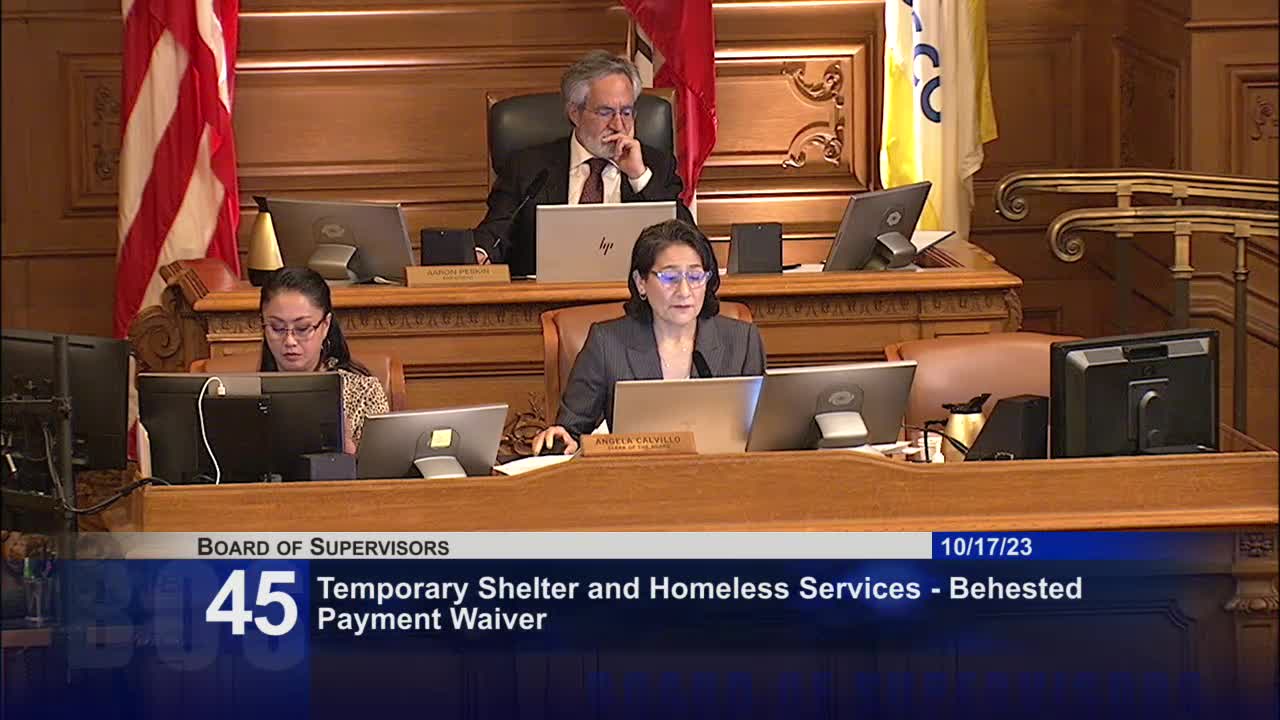
On Oct. 17, 2023, the San Francisco Board of Supervisors voted 8–3 to amend its rules and discontinue most remote public comment, allowing remote participation only as legally required to accommodate people with disabilities.
The San Francisco Board of Supervisors voted 8–3 on Oct. 17 to amend its rules of order to discontinue most remote public comment at meetings of the board and its committees, except where state or federal law requires remote access for people with disabilities.
Supporters said the change was needed after repeated episodes of abusive, racist and antisemitic calls during remote public comment. Supervisor Peskin, who introduced the item out of committee, described anonymous callers who used remote comment “to unleash a torrent of racist and antisemitic comments” and said the board should explore other ways to restore remote access before those changes could be implemented at the state level.
Opponents argued the rule would reduce access for people who rely on remote participation. "Remote public comment helps many people who otherwise couldn't be here to have a voice," said Supervisor Engadio. "It helps people who are disabled, have difficulty traveling to City Hall, parents with young children, and people who work during the day and can't take time off." Supervisor Preston said he shared the goal of screening out hate speech but was "not convinced that the only avenue to doing that is this proposal" and voiced support for exploring alternatives such as delays or registration instead of eliminating most remote comment.
Supervisor Melgar likewise said that remote comment "provides an opportunity for many residents to engage that would not otherwise be able to" and said the few who abused the system should not be the reason to limit participation. Supervisor Walton emphasized that the change was intended to preserve accommodations for people with disabilities and seniors while addressing misuse by callers outside the city.
The motion required eight affirmative votes under the board's rules. The roll call recorded eight yes votes and three no votes; the transcript identifies supervisors voting no as Preston, Angardio, and Melgar. The ordinance language presented to the board would revise Rule 1.3.3 to discontinue remote public comment except as legally required to enable participation by people with disabilities.
Implementation details and next steps were not specified in the text read into the record; the amendment passed and will be reflected in the board's rules of order. Several supervisors said they remain open to alternatives to restore broader remote access if state law or technology changes allow safer, practical options.
Votes and procedural note: the item came out of the Rules Committee and required an eight‑vote supermajority; the board recorded a vote of 8–3 and the motion was approved.
Ending: The board's change narrows the circumstances in which remote callers may participate immediately; supervisors who opposed the measure urged staff and colleagues to continue searching for technical and legal solutions to restore broader remote participation without exposing the public or meeting participants to abusive speech.