Get Full Government Meeting Transcripts, Videos, & Alerts Forever!
Get email alerts on the Land Use Ceqa topic
No spam. Unsubscribe anytime.
Board upholds planning department's CEQA exemption for 939 Lombard after lengthy hearing; opponents cite school safety and landslide risk
Summary
The Board of Supervisors voted 11-0 to affirm the Planning Department's class 1 and 3 categorical exemption for a proposed single-family home at 939 Lombard Street after testimony from neighbors, parents and school representatives who urged a full environmental review citing landslide, drilling, shadow and air concerns.
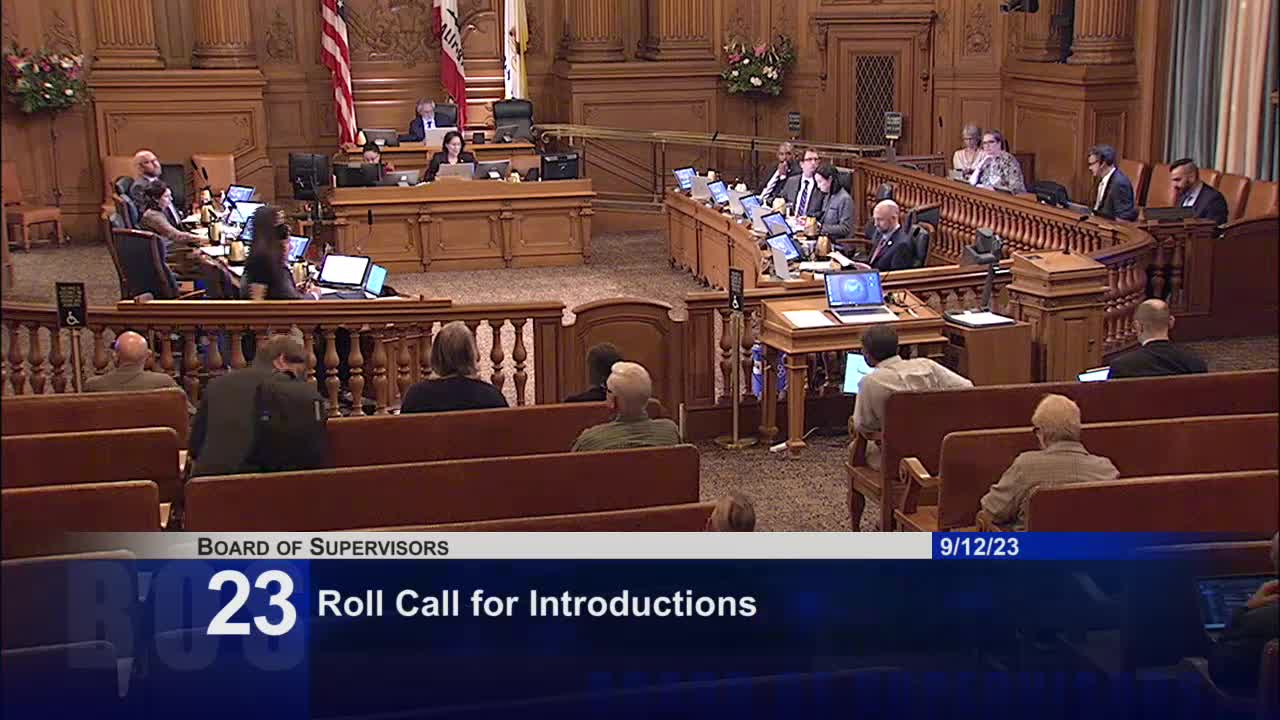
The San Francisco Board of Supervisors on Sept. 12 upheld the Planning Department’s determination that the proposed project at 939 Lombard Street is categorically exempt from environmental review under the California Environmental Quality Act (CEQA).
After a public hearing that included presentations by neighbors, parents, Yick Wo Elementary School community members and the project sponsor, the board voted unanimously to approve item 16—affirming the Planning Department class 1 and 3 categorical exemption—and tabled items 17 and 18. Supervisor Mandelmann made the motion; Supervisor Preston seconded. The roll call was recorded as 11 ayes.
What the project proposes: The project sponsor plans to demolish an existing two-car parking structure at the front of the lot and construct a four-story, 5,173-square-foot single-family home, bringing the parcel to two homes with the existing rear residence. The Planning Department’s staff report and briefing materials state the proposed structure is 40 feet tall, complies with applicable planning code and residential design guidelines, and that the project fits within CEQA categorical exemptions for small demolition (class 1) and small residential construction (class 3).
Arguments from opponents: Appellants and speakers urged a full environmental impact report. The principal appellant, identified in the hearing as Mr. Eng, and community representatives argued the site poses a landslide risk, that deep drilled piers and removal of bedrock and mature trees could destabilize the hillside, and that construction noise, dust and vibration could harm students and staff at adjacent Yick Wo Elementary School. Speakers also raised shadow impacts on the school yard, questioned whether the geotechnical and contaminant reviews were sufficient and noted the project’s proximity to a shared retaining wall.
Community testimony included parents, teachers and volunteers who said the school serves about 200–250 students including special-needs classrooms and that outdoor classes and gardening programs would be affected by construction, noise and increased shading in late afternoons. Several remote callers expressed concern about potential soil contaminants beneath the proposed drill piers and the schoolyard’s reliance on sunlight for students and gardening activities.
Planning department and sponsor response: Don Lewis of the Planning Department told the board that the department reviewed the appellant’s supplemental materials and found no new evidence to overturn the exemption. Lewis summarized staff findings that: the project fits class 1 and 3 categorical exemptions; the project would not cause unusual circumstances that would give rise to significant effects under CEQA; construction would be temporary; standard dust-control and noise regulations would apply; the site is not in an industrial or historically contaminated zone; and the proposed drilled piers would support the new structure and — according to the department and the project’s geotechnical report — reduce the load on the shared retaining wall.
Tara Sullivan, counsel for the project sponsor, said the appellant had not produced “substantial evidence” such as expert reports that would meet the CEQA legal test for overturning a categorical exemption. Sullivan said the project sponsor revised the design to add a five-foot setback at the fourth floor and to remove rooftop penthouses.
Board action and rationale: After questions from supervisors and a review of the record, President Peskin called for a motion to affirm the Planning Department determination and to table related items. Supervisor Mandelmann moved to approve item 16 and table items 17 and 18; Supervisor Preston seconded. The motion passed on a roll-call vote of 11–0.
Why it matters: The hearing highlighted tensions common in San Francisco between infill residential development and neighborhood concerns over geotechnical risk, construction impacts and effects on adjacent public facilities such as schoolyards. Opponents urged an Environmental Impact Report or mitigated negative declaration; planning staff and the project sponsor said the record does not support that outcome under CEQA standards.
What’s next: Items 17 and 18, motions related to conditional reversal and preparation of written findings, were tabled. The project remains subject to building department and other permitting reviews, including DBI inspections and any required third-party peer review for geotechnical and structural work.