Get Full Government Meeting Transcripts, Videos, & Alerts Forever!
Get email alerts on the Mayoral Appearance Downtown topic
No spam. Unsubscribe anytime.
Mayor Breed outlines downtown reinvention plan, discusses graffiti abatement and enforcement as COVID emergency ends
Summary
Mayor London Breed presented a multi-pronged plan to revive downtown San Francisco and introduced initial tax reform proposals. At question time she said rescinding the COVID emergency order would not fundamentally change law enforcement on encampments and urged use of 311 and a new graffiti-abatement pilot for private property.
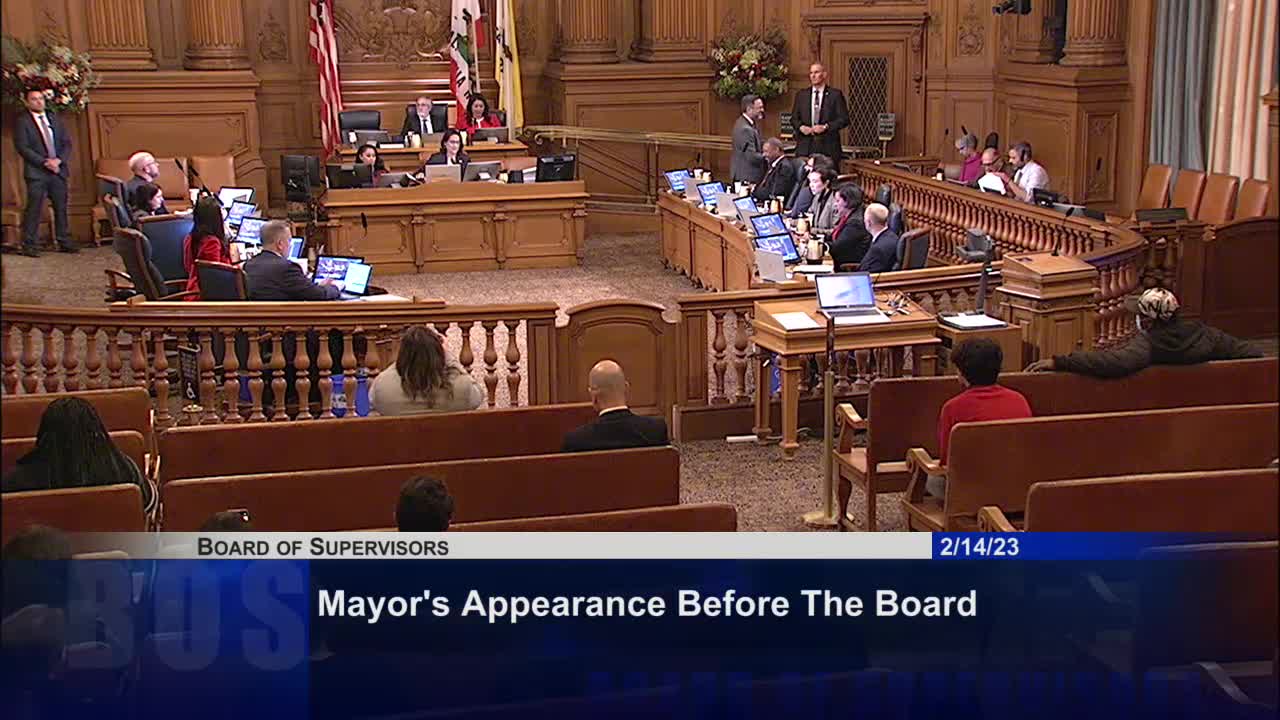
Mayor London Breed on Feb. 14 told the San Francisco Board of Supervisors she had released a plan to “reinvent downtown and strengthen our economy,” and introduced initial legislation and tax proposals aimed at stabilizing local businesses and recruiting companies to fill vacant office space.
The plan, Breed said, contains nearly 50 initiatives and includes “a pair of tax reforms aimed at stabilizing our existing businesses, as well as recruiting new businesses to fill many of our office vacancies.” She said she has asked the controller and tax collector to lead a working group to propose tax reform for the 2024 ballot and emphasized that “we need to make this decision on data and analysis of the controller and tax collector.”
The mayor also addressed public-safety staffing and downtown impacts: “Our police officers are stretched thin right now, but we need to keep this funding going because I don't want to be forced to pull officers off the streets from making drug arrest, addressing retail theft, and investigating arson,” Breed said. She added the city must “build back this police force.”
Separately during question time brought by Supervisor Aaron Peskin on behalf of Supervisor Gordon Mar, Mayor Breed and District 1 Supervisor Connie Chan discussed how rescinding the COVID emergency order would affect enforcement of laws related to encampments, graffiti and illegal dumping. “Rescinding the emergency declaration won't change that considerably,” Breed said, adding that “increasing capacity in our various city services will help to address the challenges around blight.”
Breed pointed to a graffiti-abatement pilot the city launched last year and described a program allowing businesses and property owners to opt in for Department of Public Works removal through March 11. “This program allows for businesses and property owners to opt into a program through 03/11 where the Department of Public Works will come and remove graffiti to make our commercial corridors cleaner and safer,” she said, citing early successes in West Portal and Mission neighborhoods.
Supervisor Chan framed the question as coming from Richmond District constituents: “How will rescinding the COVID emergency order impact enforcement of laws concerning encampment, graffiti, garbage dumping?” The mayor urged residents to use San Francisco's 311 system for graffiti, trash pickup and other service requests and said the city aims to respond within 48 hours. Supervisors and the mayor also noted prior pandemic-era decisions that paused enforcement on private-property graffiti and that enforcement has been restored as the pandemic waned.
Why this matters: The mayor's roadmap combines economic, tax and public‑safety elements intended to accelerate downtown recovery while preserving city services. The exchange highlighted the operational limits of local government—many supervisors pressed for details about response times and program capacity—and flagged implementation steps citizens can take now, such as reporting problems through 311.
Looking ahead: Breed said the presented measures are “just the beginning” and invited ideas from workers, businesses and supervisors as the administration refines proposals for committee hearings and possible ballot measures in 2024.