Get Full Government Meeting Transcripts, Videos, & Alerts Forever!
Get email alerts on the Redistricting topic
No spam. Unsubscribe anytime.
Hundreds of public commenters urge supervisors to reject redistricting outcome and place community ‘unity map’ on November ballot
Summary
Dozens of residents and community organizations told the Board of Supervisors the city’s redistricting task force process fractured neighborhoods, diluted minority voting power and lost public trust. Many called for the board to place a community‑vetted “unity map” and reform proposals on the November 2022 ballot.
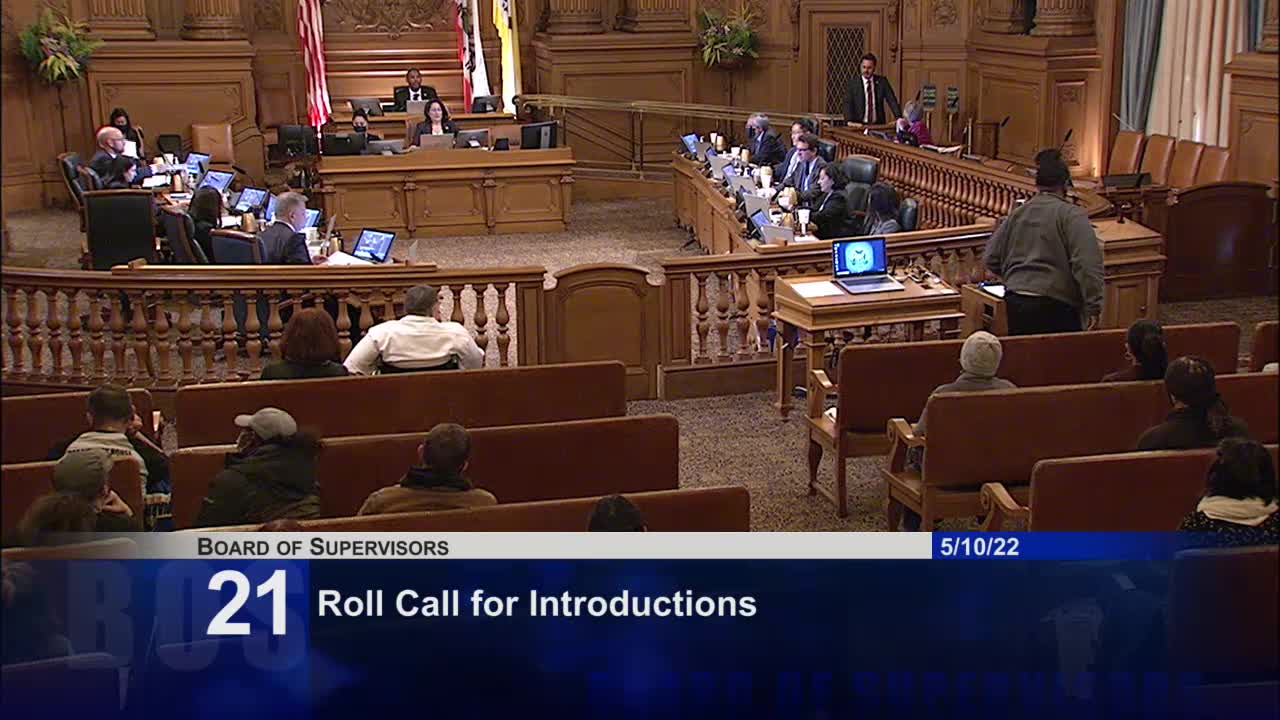
Hundreds of residents, neighborhood leaders and community organizations used the May 10 public comment period at the San Francisco Board of Supervisors to urge action on the city’s redistricting process — asking the board to repair a process critics described as inconsistent, opaque and politically driven.
Why this matters: The city’s supervisor districts determine local representation for the next decade. Complainants told the board that the draft map adopted by the redistricting task force split historically linked neighborhoods — in particular the Tenderloin and South of Market — and diluted the voting power of Black, Filipino, LGBTQ, and other communities of interest.
What speakers said and asked: Many speakers demanded the board put a community‑vetted “community unity map” and reforms to the redistricting process on the November ballot so voters — not the task force or political insiders — can decide. Repeated themes included complaints about late‑night meetings, inconsistent votes by task force members, and missing or unusable draft‑map documentation during the process.
Representative remarks and attributions: - George Wooding, who identified himself as representing the San Francisco Land Use Coalition and Coalition for San Francisco Neighborhoods, said: “SF's entire redistricting process is flawed and possibly corrupt.” - Curtis Bradford, co‑chair of the Tenderloin People’s Congress, said the process was “a premeditated, intentional, and malicious attack on low income, marginalized communities of color, LGBTQ folks,” and asked the board to “put the ballot measure on the ballot. Let the voters decide.” - Raquel Redondius (filipino Cultural Heritage District) described the Filipino community’s ties to both SoMa and the Tenderloin and said public testimony had overwhelmingly asked that the neighborhoods remain together in one district.
Several community groups and coalitions stated they had produced a “unity map” after months of outreach; multiple commenters asked supervisors to adopt or put that unity map before voters. Speakers from advocacy groups, tenants’ organizations, LGBTQ and transgender cultural districts, and neighborhood councils all urged reform of the task force selection and decision process and criticized late‑night votes and inconsistent criteria.
How supervisors responded: The public comment item occupied a long portion of the meeting. The transcript records no formal board vote on redistricting during this session; callers asked the board to act and to place a referendum on the ballot. Several speakers specifically urged supervisors to support reforms that would limit undue influence and require task force transparency going forward.
Background/next steps: The redistricting task force produced a final map after a months‑long process; community groups say they will seek ballot remedies if the board does not act. Supervisors are the locally elected body with authority to consider referral to the ballot and to introduce charter amendments; speakers at today’s meeting asked them to exercise that authority before the November ballot deadline.