Get Full Government Meeting Transcripts, Videos, & Alerts Forever!
Get email alerts on the Tenant Protections topic
No spam. Unsubscribe anytime.
Supervisor Preston proposes extending San Francisco no‑fault eviction moratorium through Dec. 31
Summary
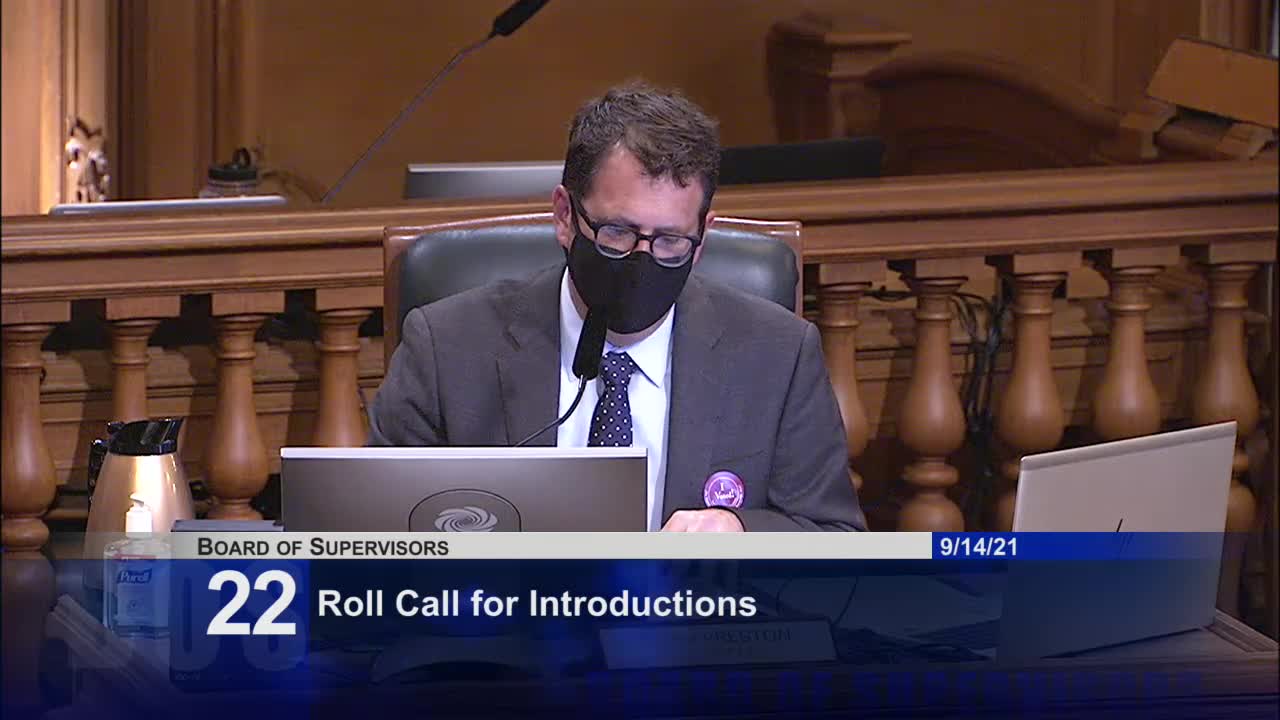
Supervisor Preston introduced a legislative package Sept. 14 to extend local protections against no‑fault evictions through Dec. 31 and to enact an emergency ordinance to prevent the city's protections from expiring on Sept. 30.
Supervisor Preston introduced a legislative package on Sept. 14 seeking to extend San Francisco’s local moratorium on no‑fault evictions through Dec. 31, and to adopt an emergency ordinance to prevent local protections from expiring on Sept. 30.
Preston said the change to statewide law (referenced in the hearing as affecting nonpayment eviction protections) has limited the city’s ability to extend protections tied to nonpayment, but he argued the city retains authority to restrict no‑fault evictions such as owner‑move‑ins, capital improvements, demolitions and substantial rehabilitation. “I will do everything in my power to prevent people from losing their homes during this public‑health crisis,” Preston said during his remarks.
Preston said existing local protections are set to expire at the end of the month and that the proposed package is intended to preserve tenant stability while the pandemic continues. He listed early cosponsors including President Walton, Supervisor Peskin, Supervisor Ronan, Supervisor Chan, Supervisor Haney and Supervisor Mandelmann.
The proposal would enact both an emergency ordinance to bridge the gap at month‑end and an ordinance to carry protections through Dec. 31. Preston asked the full board to act without delay; the item was introduced for board consideration and cosponsors were recorded in the public comments portion of the meeting.
Next steps: The ordinance package will be scheduled for committee and further board action; specifics of enforcement, exemptions and interplay with state law were not resolved in the Sept. 14 introduction and will be developed in committee.