Get Full Government Meeting Transcripts, Videos, & Alerts Forever!
Get email alerts on the Tenderloin Emergency topic
No spam. Unsubscribe anytime.
Board to review mayor—s Tenderloin emergency; requests weekly reports, will revisit in February
Summary
After extended hearings and public comment, the San Francisco Board of Supervisors voted to continue review of Mayor London Breed—s Dec. 17 proclamation of a local emergency for drug overdoses in the Tenderloin. The board asked departments for weekly situational reports and will reconvene as a committee of the whole on Feb. 8, 2022.
The San Francisco Board of Supervisors on Jan. 4 voted to continue review of Mayor London Breed—s Dec. 17 proclamation of a local emergency addressing drug overdoses in the Tenderloin, asking city departments for weekly situational reports and scheduling a full committee-of-the-whole check-in for Feb. 8, 2022.
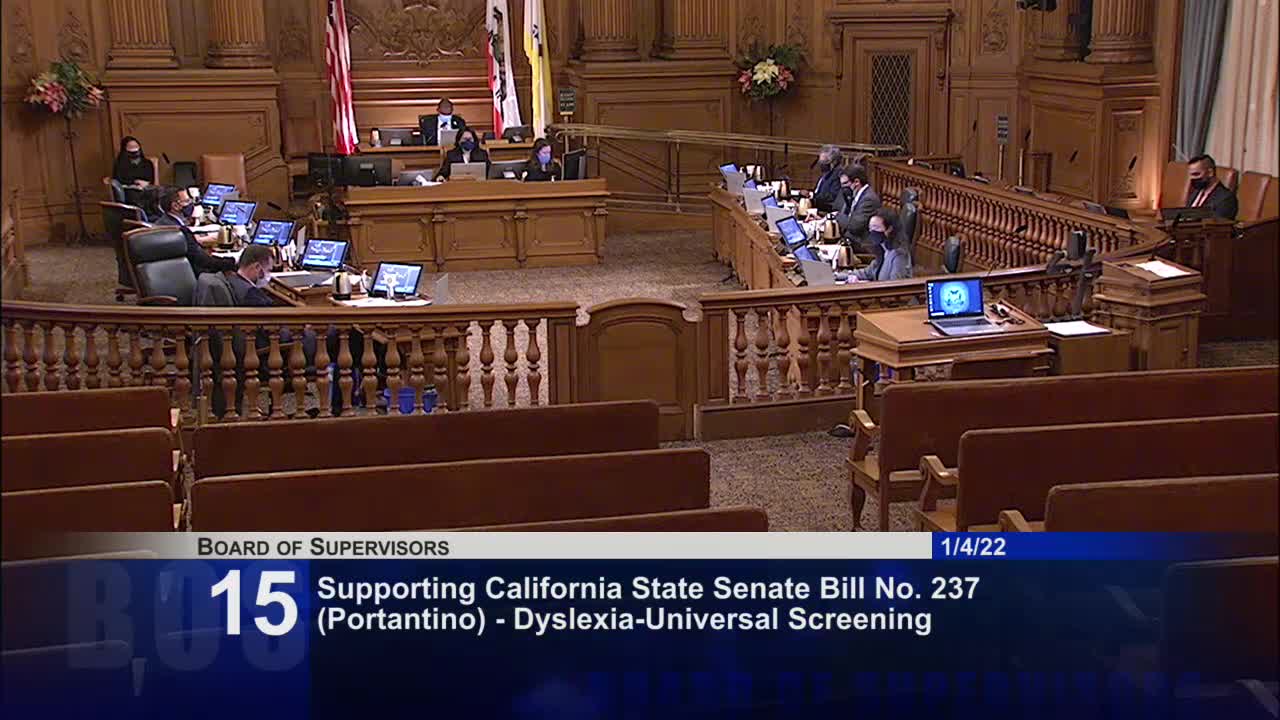
Supervisors debated the emergency for more than two hours in a committee-of-the-whole session that included detailed questioning of Department of Public Health and Department of Emergency Management staff, repeated requests for clearer metrics, and a large block of public testimony both supporting and opposing the declaration.
Supervisor Aaron Peskin, who called for the follow-up review, said the committee would focus on unanswered questions about the plan and next steps; he pressed departments on operational details, hospital partnerships, and how the emergency declaration could be used to accelerate hiring and expand treatment access. "If there are elements of [Mental Health SF] that you think are necessary to happen earlier than the date that they're scheduled...we could look at whether emergency powers would be warranted," Deputy City Attorney Anne Pearson told the board.
Department of Public Health officials described the public-health role they will play under the emergency structure. Dr. Hilary Cunnings, director of Behavioral Health Services and Mental Health SF, said DPH would help design the linkage center and coordinate outreach and referrals into care: "Our goal is to reduce overdose deaths, to reduce public drug use, and to provide ready access to care and treatment," she said. Greg Wagner, DPH chief operating officer, told the board the department plans to make a major hiring push and said the city is aiming "to hire at least 200 positions in the next 90 days," naming categories such as behavioral health clinicians, care coordinators, and psychiatric specialists.
Members of the board pressed for greater transparency and for hard commitments on housing and beds. Director Mary Ellen Carroll of the Department of Emergency Management said DEM would prepare a weekly situational report and share a template with the board; she also confirmed a six-month lease had been signed for a linkage site at 1170 Market Street and that one non-congregate shelter site and another opening soon had been made available.
The board first approved a motion to convene as a committee of the whole to hear the proclamation earlier in the meeting; that motion passed unanimously. At the end of the committee hearing, Supervisors Aaron Peskin and others proposed continuing further formal Board action until a Feb. 8 committee-of-the-whole meeting to allow staff to produce the requested weekly reports and for the Board to exercise ongoing oversight. That continuance passed 8-3.
Public testimony during the two-hour public-comment period was mixed: some speakers urged immediate action and praised the linkage-center concept; others said the plan risked increasing policing or coercive sweeps and asked the Board to prioritize housing, case management and community-led outreach.
The Board directed departments to provide recurring, written situational reports with metrics including placements into shelter or treatment, outreach contacts, arrests and seizures by the police, and daily bed availability. Supervisors said they wanted the data visible to the public and requested follow-up briefings and additional meetings as needed.
For now the emergency remains in effect; the Board set a formal check-in as a committee of the whole on Feb. 8, 2022, and asked departments to return weekly updates until then.