Get Full Government Meeting Transcripts, Videos, & Alerts Forever!
Get email alerts on the Clean Power topic
No spam. Unsubscribe anytime.
Board holds informational hearing as Clean Power SF rates rise; SFPUC says action needed to stabilize program
Summary
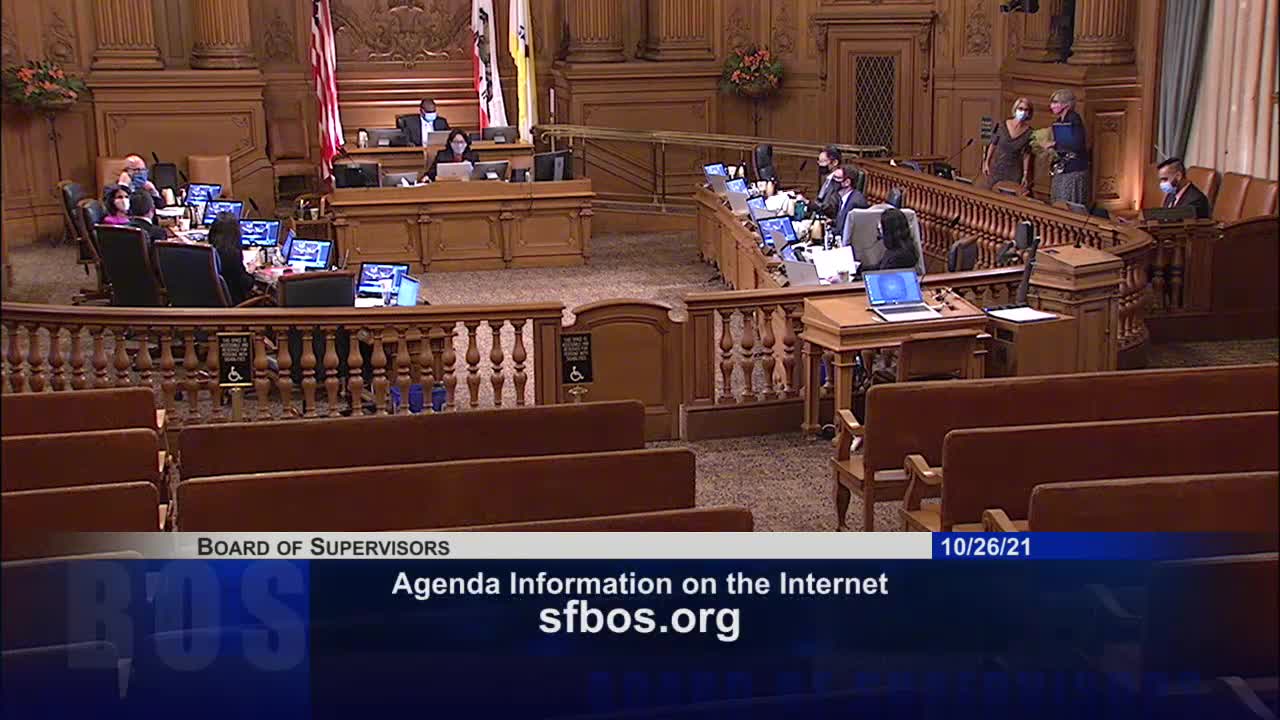
San Francisco supervisors convened a Committee of the Whole on Oct. 26 to hear an informational briefing from the San Francisco Public Utilities Commission on rising Clean Power SF generation charges.
San Francisco supervisors convened a Committee of the Whole on Oct. 26 to hear an informational briefing from the San Francisco Public Utilities Commission on upcoming changes to Clean Power SF electric generation charges. Supervisor Chan, who facilitated the session, said “it is not my intent for us to take action on the proposed rate increase that will take place on November 1,” calling the meeting an opportunity for oversight and public explanation.
The SFPUC’s deputy assistant general manager for the power enterprise, Mike Himes, told the board Clean Power SF has more than 380,000 accounts and a 96% retention rate, and that its procurement since launch has reduced the city’s electricity-sector greenhouse-gas emissions. “Clean Power SF is a local solution to our global climate crisis, offering more clean and renewable electricity supplies to our community,” Himes said.
SFPUC staff described a rate action adopted by the commission on Sept. 28 that the agency said is intended to return Clean Power SF rates toward cost of service. Erin, an SFPUC staff presenter, said the action will raise the average residential customer’s Clean Power SF portion of the bill by about 4% on Nov. 1 — roughly a $3 monthly increase for the typical household — while also authorizing automatic mid‑year adjustments that keep the program’s margin relative to PG&E consistent.
Staff traced the causes of the increases to two main factors outside the agency’s immediate control: a rising state surcharge known as the Power Charge Indifference Adjustment (PCIA) that recovers prior PG&E procurement costs for customers who move to community choice aggregation, and sharply higher wholesale electricity prices driven by natural‑gas price increases, drought impacts on hydroelectric generation, and supply-chain constraints. Himes and the SFPUC’s rate administrator, Aaron Franks, said Clean Power SF used reserves earlier this year to smooth a 40% PCIA increase that occurred on Jan. 1, 2021 and that the September action is intended to restore fiscal sustainability.
The SFPUC told the board the commission had previously reduced Clean Power SF rates by 16% in January 2021 to blunt immediate bill shock and is now taking steps to replenish reserves. Erin said the city charter requires an independent rate study at least every five years; the SFPUC’s first such study for Clean Power SF is under way and expected in spring 2022. The study will propose a longer-term rate strategy “based on our own costs, our own timelines, and our own policy goals,” Erin said, and aims to reduce mid‑year volatility.
SFPUC staff also outlined customer-assistance measures. The agency said it has delivered $3 million in direct bill relief for low‑income customers, promoted state and utility low‑income programs, and will enroll customers with arrears into repayment plans. Staff noted the state’s Arrearage Payment Program (authorized by AB 113) is expected to distribute funds by Jan. 31, 2022, which could reduce customer debt accumulated during the pandemic.
Public comment at the hearing included a single caller who urged support for nuclear power as a long‑term, low‑carbon option; no action was taken by the board at the hearing. Supervisor Chan said the board will continue to track the SFPUC’s rate study and plans for affordability and outreach.
What happens next: the SFPUC’s rate increase takes effect on Nov. 1, 2021. The agency told the board it expects to present the independent rate study in spring 2022 and said the study will inform a shift to a rate-setting approach less tied to PG&E’s monthly changes.
(Reporting note: quotations in this article are drawn from the Oct. 26, 2021 board meeting transcript.)