Get Full Government Meeting Transcripts, Videos, & Alerts Forever!
Get email alerts on the Criminal Justice Conditions topic
No spam. Unsubscribe anytime.
Board approves $30,000 settlement over sleep‑disruption claims at County Jails 4 and 5 amid dissent over adequacy
Summary
The Board of Supervisors approved an ordinance authorizing settlement of a lawsuit alleging unconstitutional sleep disruption in County Jails 4 and 5; some supervisors said the settlement's 7‑hour sleep provision may be insufficient.
The San Francisco Board of Supervisors on April 13 approved an ordinance authorizing settlement of litigation alleging that staff practices at County Jails 4 and 5 led to unconstitutional sleep disruptions for detainees. The ordinance authorizes a $30,000 settlement and requires court approval as part of the settlement terms.
Several supervisors debated whether the agreed remedy—allowing seven hours of uninterrupted sleep—was adequate. Supervisor (speaker identified in the transcript as) Rohling said she had voted for the item on first reading after learning that the settlement would provide seven hours of uninterrupted sleep, which she noted is the CDC's minimum recommendation for health. On reflection, she said she would vote no on final reading because many detainees suffer serious trauma or mental illness and might require more sleep. "I just don't know that 7 hours in and of itself is sufficient," she said, and added she regretted her earlier yes vote.
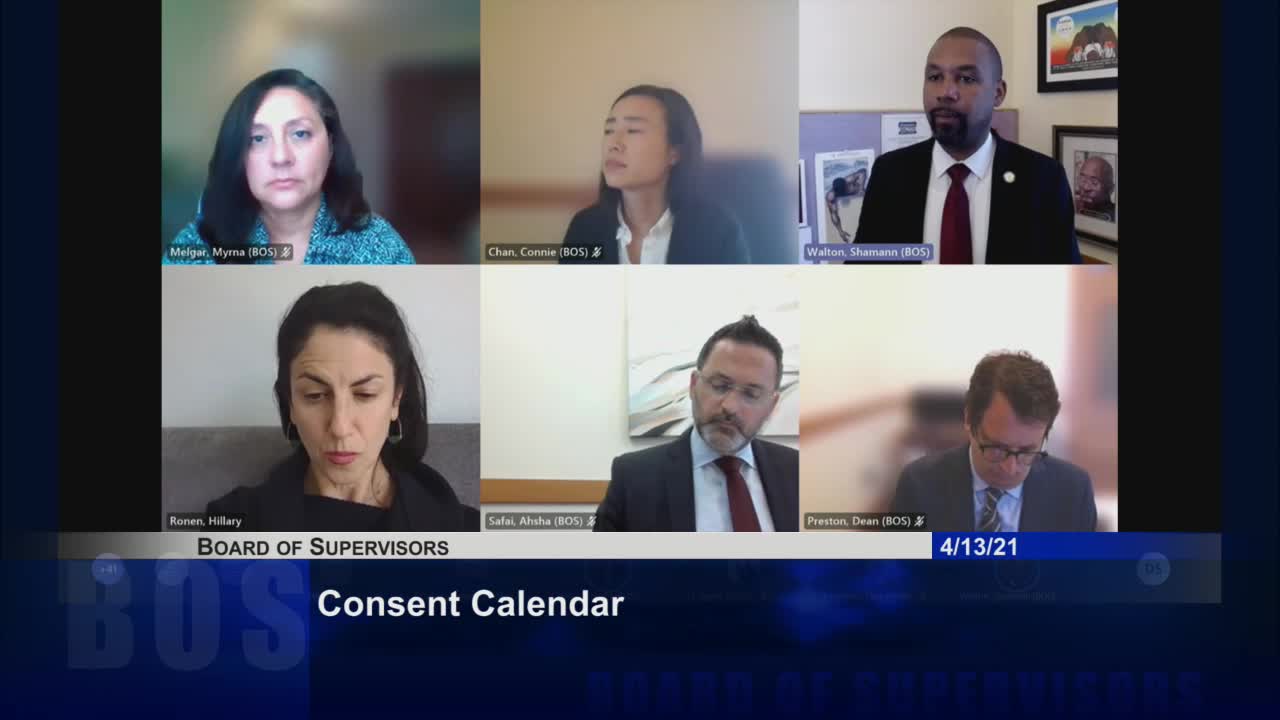
The roll call on the ordinance produced nine ayes and two no votes. Supervisors Ronan and Safaie voted no; nine other supervisors voted in favor. The clerk recorded the final tally as 9‑2 in favor, and the ordinance passed on final reading.
What the ordinance does: it authorizes settlement of the lawsuit brought by Jose Poot and others, relating to alleged sleep deprivation in County Jails 4 and 5. The item summary presented to the board described the settlement as involving payment of $30,000 and court approval as required.
The record shows substantive concern from some board members about whether the settlement terms adequately protect detainee health; that debate was noted on the record even as the ordinance passed. The board did not take further action at the meeting to modify the settlement terms.