Get Full Government Meeting Transcripts, Videos, & Alerts Forever!
Get email alerts on the Substance Use Services topic
No spam. Unsubscribe anytime.
Mayor Breed announces plan for first San Francisco drug sobering center; declines long‑term pledge to earmark Prop I revenue
Summary
Mayor London Breed told the Board of Supervisors the city will pursue a lease for a Selma Street drug sobering center offering peer support, nursing assessments and connections to care.
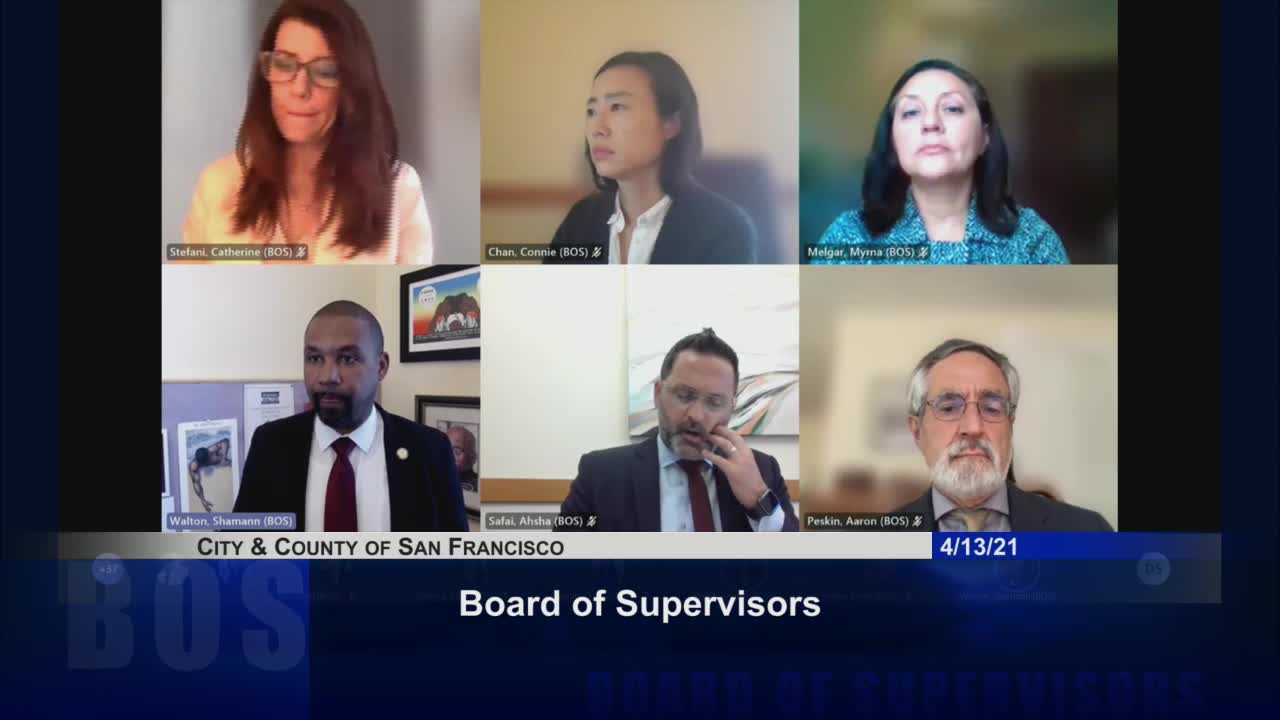
Mayor London Breed told the San Francisco Board of Supervisors on April 13 that the city is moving forward with a lease to open what she described as the city's first drug sobering center, aimed at providing a nonjudgmental place for people experiencing substance use to be assessed and connected to care.
Breed said the center on Selma Street would provide one‑on‑one peer support, on‑site nurse health assessments, referrals for medical and psychiatric care, basic hygiene services and connection to job training, and would serve as an alternative site for outreach teams and the city's street crisis response team to bring people besides hospitals. "This center will have 1 on 1 peer support and on‑site nurse for health assessments, referrals for medical and psychiatric care," Breed said.
The mayor framed the center as part of a broader set of responses to rising overdoses and fentanyl‑related deaths. "This isn't a new concept for us," she said, adding that the proposal grew out of the city's meth task force and the mental‑health response system. Breed said the city will use data and metrics to track progress and adjust tactics as needed.
The announcement came during a special‑order appearance by the mayor. Supervisor Dean Preston followed with a question about the Fair Recovery Act (Prop I), the November 2020 ballot measure that increased the transfer tax on high‑value real‑estate transactions. Preston asked whether the mayor would commit "to funding rent relief and the Housing Stability Fund from Prop I revenue for so long as you are mayor." He noted the Board had already allocated initial funds and sought a commitment that Prop I revenue would be used as voters expected.
Breed declined a long‑term pledge to earmark Prop I dollars, saying the transfer‑tax increase is a general tax and the ballot language did not dedicate revenue to specific programs. "The measure that increased the transfer tax on the November 2020 ballot was a general tax, and the ballot question made no mention of any potential uses," Breed said. She added that the city has already received more than $75 million in state and federal rent‑relief funds and that city budgeting must consider structural deficits: "If we were to assume that funding goes to new spending that is not already reflected in our deficit projections, it would increase the deficit by that amount."
Breed said housing and renter protections remain a top priority for her administration and reiterated that she and the Board are elected to make spending decisions under constrained fiscal circumstances. She also told the board the city would continue to coordinate outreach teams, the street crisis response team, and nonprofit partners around treatment and shelter options.
The mayor's office did not propose any ordinance or binding pledge during the appearance; the remarks were presented to the board as an informational special order and Q&A.
What happens next: the mayor indicated the city will pursue the lease and implement the program as part of the existing system of street‑level care and outreach. Supervisors did not vote on any motion during the special order; follow‑up budget decisions would occur in the Board's normal budget process.