Get Full Government Meeting Transcripts, Videos, & Alerts Forever!
Get email alerts on the Shelter In Place Hotels topic
No spam. Unsubscribe anytime.
Board adopts temporary rules to keep shelter‑in‑place hotel rooms available for rehousing and crisis placements
Summary
Supervisors approved an emergency ordinance to limit closures of shelter‑in‑place (SIP) hotel rooms, require transparency on placements and to make a portion of vacated rooms available for temporary shelter while housing placements occur.
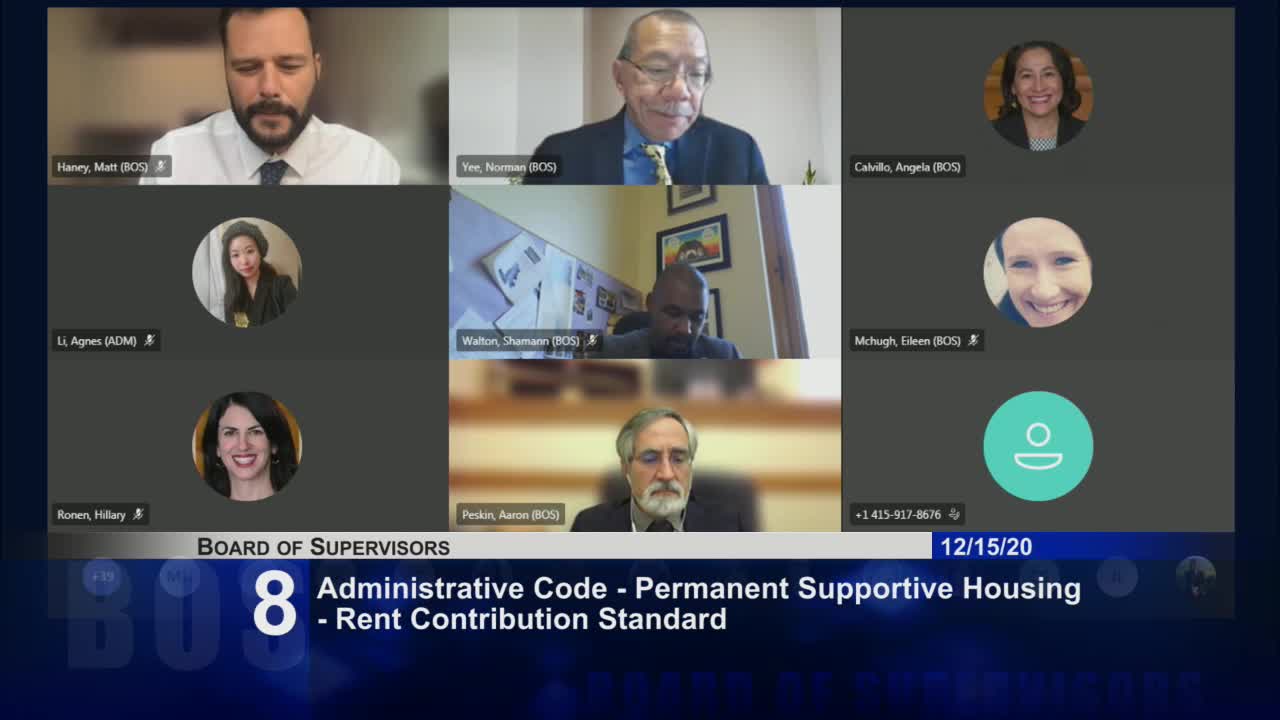
The San Francisco Board of Supervisors on Dec. 15 approved an emergency ordinance aimed at preserving access to shelter‑in‑place (SIP) hotel rooms used to house people experiencing homelessness during the COVID‑19 pandemic and to set reporting and transparency requirements for the Department of Homelessness and Supportive Housing (HSH).
The measure requires that current SIP occupants not be returned to homelessness as a condition of moving them from a SIP room and adds new reporting requirements so the board and public can track placements from SIP hotels into permanent housing. It also sets a temporary backfill rule: for each 10 SIP rooms vacated under certain conditions, the city will make six rooms available as temporary shelter, a 60% backfill rate for the 60‑day emergency period. The practical effect is to keep a substantially large share of rooms available for people on the street while HSH works to place current occupants into longer‑term housing.
Supervisor Matt Haney introduced the ordinance to prevent planned wind‑down steps that city staff had been preparing and to lock in the city’s rehousing priorities for the people currently inside SIP rooms. He said the ordinance balances the immediate need to keep people sheltered during winter months with the reality that some rooms will transition to longer‑term uses and that federal reimbursement (FEMA) drives much of the program’s economics.
The board debated the need for additional time and public input; some supervisors called for a special follow‑up meeting to work through details. The final ordinance includes clarified definitions of when a client may be moved, how housing placement status is determined (coordinated entry status), and a 30‑day public reporting requirement on placements and vacancies. Supervisors recorded an 11‑0 vote to adopt the ordinance as amended.
Budget and Legislative Analyst staff told the board the city’s SIP program costs had been largely reimbursed by federal and state aid to date; supervisors asked for clarity about what portion of costs would remain on the city and how transitions would be funded if federal funding ended. Several board members said the ordinance is an interim, 60‑day emergency measure and emphasized the need for ongoing oversight and follow‑up with HSH and DPH to ensure people are not returned to the streets.