Get Full Government Meeting Transcripts, Videos, & Alerts Forever!
Get email alerts on the Police Contracts topic
No spam. Unsubscribe anytime.
Board passes first reading of police MOU amid broad calls for reform and transparency
Summary
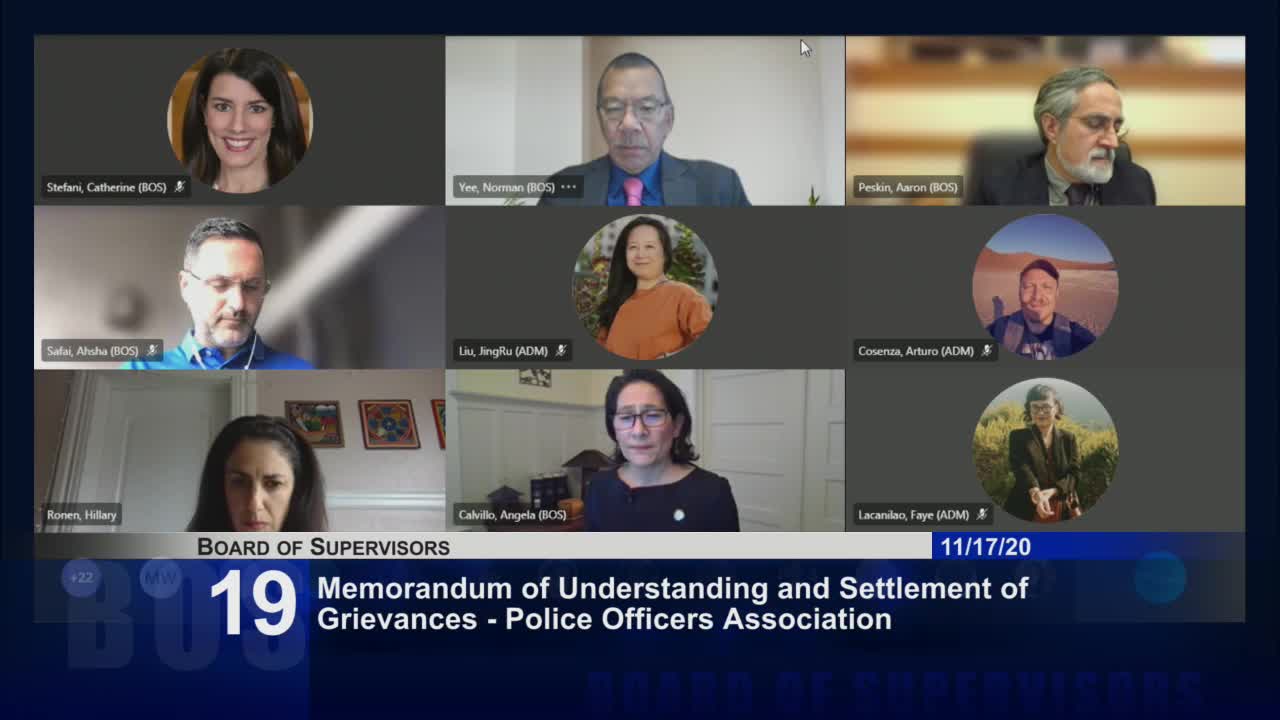
The Board of Supervisors voted 9–2 on Nov. 17 to approve on first reading a tentative memorandum of understanding with the San Francisco Police Officers Association that delays some wage increases while prompting prolonged debate over police reform and negotiation transparency.
The Board of Supervisors voted 9–2 on Nov. 17 to approve on first reading a tentative memorandum of understanding (MOU) between the city and the San Francisco Police Officers Association (POA), setting deferred raises and other contract changes while prompting sustained debate over whether the agreement could, or should, have included explicit police-reform measures.
Supporters, including several supervisors and the mayor's negotiating team, said the agreement postpones budgetary costs and preserves jobs in the short term. Opponents argued that the Department of Human Resources negotiated behind closed doors and that the contract missed an opportunity to secure side agreements tied to reforms demanded after the killings of George Floyd and others.
The measure delays wage increases due this fiscal year and provides other negotiated changes. Supervisor Ronan and Supervisor Preston said they opposed the agreement, saying it failed to require concrete reform commitments from the POA. “I have many issues with this contract before us today… I cannot support the MOU before us today,” Supervisor Ronan said, arguing that the administration and the Department of Human Resources (DHR) should have used the negotiation as leverage for reform and transparency.
The department and the police chief defended the agreement as a pragmatic way to avoid a budget hole and to maintain momentum on DOJ-related compliance work. “We are in a really good place, in my opinion,” Police Chief Scott told supervisors, listing policy changes adopted this year and saying the department has accelerated implementation of DOJ reforms. Carol Eisen, interim director of the Department of Human Resources, told the board “that is not my position” when asked whether rejecting the MOU would necessarily lead to layoffs, but said the administration would have to look at budget choices if a hole materialized.
Opponents pressed the mayor’s office and DHR repeatedly during the hearing to guarantee layoffs would not be used to pressure passage; Controller Ben Rosenfield said the deferred wage terms were costed at roughly $7.1 million for the current fiscal year, with additional impacts in subsequent years, and that how any gap would be closed would be a set of choices for the mayor and the board.
The debate included extended public comment and testimony from Police Chief Scott and POA President Tony Montoya, who said the POA was “willing to roll up our sleeves and get to work” on reform ideas. Several supervisors said they had worked for months with unions and community groups on police reform and objected to finalizing a deal without written side agreements on items such as transferring certain mental-health calls from police to health teams.
President Yee and other board members urged the administration to pursue letters of intent or side agreements where possible. DHR staff said a legally enforceable waiver of meet-and-confer rights would not be achievable on short notice, but that letters of intent could be explored.
Votes at a glance: The roll call on Item 19 produced nine aye votes and two nays: Supervisors Haney, Mandelmann, Marr, Peskin, Safaie, Stephanie, Walton, Yi and Feuer voted yes; Supervisors Preston and Ronan voted no. The board passed Item 19 on first reading.
The board also discussed a parallel proposal for more transparency around DHR negotiations; Supervisor Ronan announced forthcoming legislation to require greater public reporting about closed-door bargaining. The Board set the ordinance for second-reading action as required by city rules.
Why it matters: The vote moves an economic agreement forward that supporters say stabilizes city finances and jobs; opponents say the administration squandered leverage to lock in reform measures. The debate foreshadows continued fights over the next rounds of contract implementing language, the role of the police commission, and how the city balances fiscal pressures and demands for policing reform.
What’s next: The MOU advanced on first reading. The board will take the second-reading/ adoption step according to its calendar; meanwhile supervisors signaled they will continue legislative and oversight efforts aimed at transparency and reform of how DHR negotiates with police labor.
Provenance: The discussion and vote appear in the meeting transcript beginning with the item summary and presentation (topicintro) and concluding with the first-reading vote (topfinish).