Get Full Government Meeting Transcripts, Videos, & Alerts Forever!
Get email alerts on the Sro Covid Protections topic
No spam. Unsubscribe anytime.
Board reenacts emergency protections for residential-hotel occupants during COVID-19 surge
Summary
The San Francisco Board of Supervisors unanimously reenacted an emergency ordinance extending protections for Single Room Occupancy (SRO) and residential-hotel residents during the COVID‑19 pandemic, requiring testing, access to isolation/quarantine rooms and other public‑health measures.
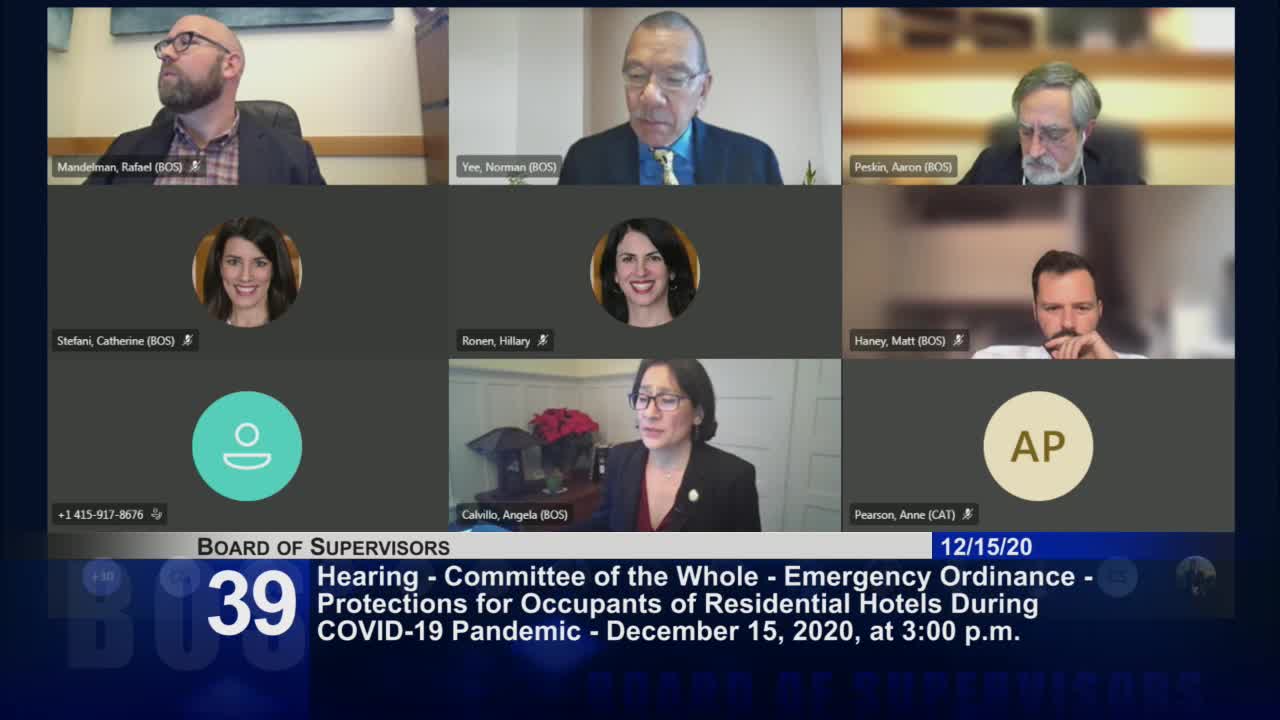
The San Francisco Board of Supervisors unanimously reenacted an emergency ordinance on Dec. 15 to continue special COVID‑19 protections for occupants of residential hotels and SROs, including mass testing triggers, access to isolation and quarantine rooms and requirements for public reporting.
Supporters said the move responds to a continuing surge in COVID‑19 cases and disproportionate impact on congregate housing. “We have almost 706 unique COVID cases across 69 SRO hotels with seven deaths,” Supervisor Aaron Peskin said during the board’s Committee of the Whole, citing the Department of Public Health tracker and urging swift action to protect residents. The ordinance requires testing at a building when certain triggers are met and directs DPH to offer isolation or quarantine housing and culturally and linguistically appropriate outreach and supports.
The ordinance was amended before final passage to remove language that DPH officials had warned was potentially harmful or legally problematic — specifically narrower provisions on broad building notice and testing triggers — and to add direction for expanded coordination with tenant advocates and community organizations. DPH officials, including Dr. Deborah Borne, testified to the board that mass testing in response to a single positive result is often not the most effective public‑health step and raised concerns about privacy and unintended harms; they recommended testing strategies aligned to outbreak thresholds and emphasized ventilation and masking.
Budget and Legislative Analyst staff presented cost estimates, telling the board the city would face additional testing and hotel isolation costs for a 60‑day emergency extension and estimating a net city cost of about $1.3 million for the period after anticipated FEMA reimbursements. The analyst said the estimate incorporated updated hotel nightly costs reported by DPH.
Supervisors said they would keep working with DPH and the SRO community on operational details and oversight. The emergency ordinance requires an 8‑vote affirmative threshold; the board recorded the required supermajority and adopted the reenactment as amended.
The ordinance instructs DPH to publish reports on testing, isolation placements and outcomes and directs additional outreach to residents and culturally appropriate supports. Supervisors said they expect continued amendments and oversight as the city monitors both hospital capacity and the needs of SRO residents.
The board convened as a committee of the whole to consider the ordinance and heard public comment from SRO tenants, neighborhood groups and the Mission, Central City and Chinatown SRO collaboratives in support of the protections and of continued transparency from DPH.
Officials said the ordinance is intended as a short‑term emergency measure to keep vulnerable residents safer during the current pandemic surge while DPH continues to expand testing, isolation capacity and outreach.