Get Full Government Meeting Transcripts, Videos, & Alerts Forever!
Get email alerts on the Caltrain Sales Tax topic
No spam. Unsubscribe anytime.
San Francisco Board of Supervisors unanimously backs placing Caltrain sales tax on November ballot
Summary
The Board of Supervisors voted 11-0 to approve submitting a three-county, one‑eighth of 1% retail transaction-and-use tax for Caltrain to the Nov. 3 ballot, and accepted a parallel Joint Powers Board governance resolution that requires an independent auditor and counsel and prioritizes repayment to SamTrans.
San Francisco Board of Supervisors members voted unanimously on Aug. 7 to place a one‑eighth of 1% retail transaction-and-use tax for Caltrain on the Nov. 3, 2020 ballot and to advance related governance actions adopted by the Peninsula Corridor Joint Powers Board.
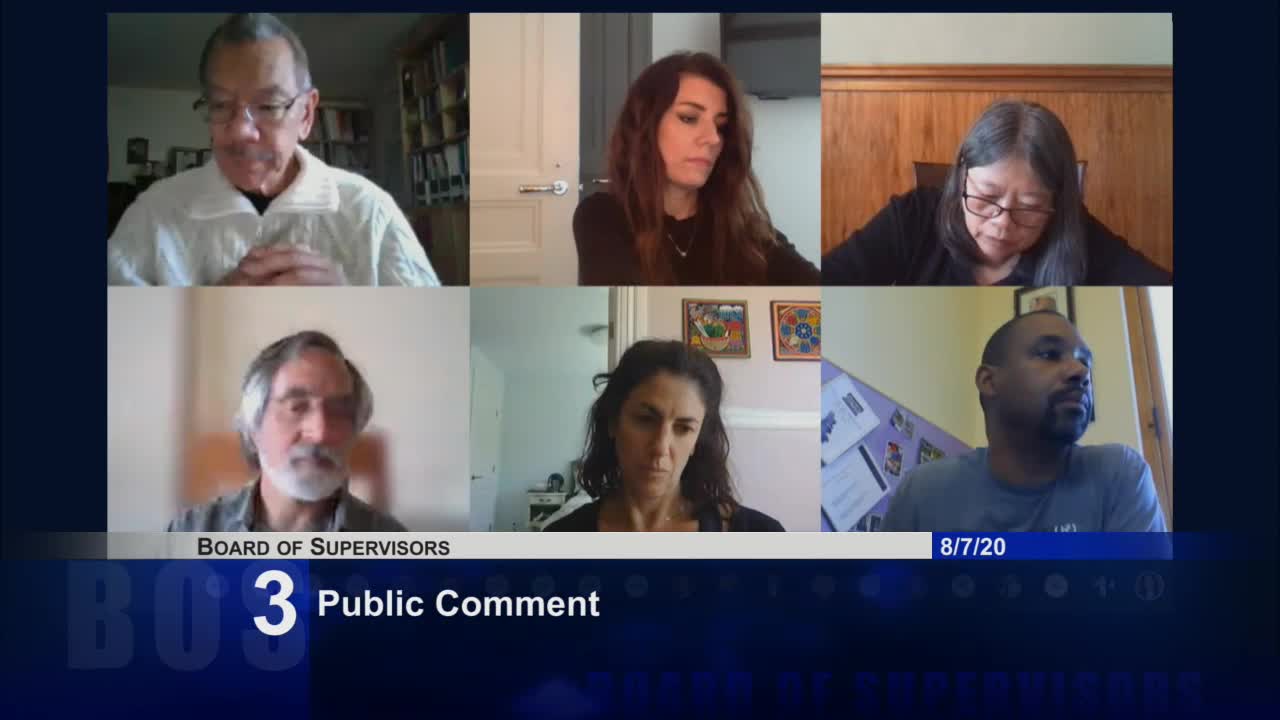
The vote came after the board convened as a Committee of the Whole to hear a brief staff presentation and public testimony on the proposal. The body approved an amended resolution that rescinds and replaces a prior San Francisco resolution and affirms the JPB governance actions. "We will be making history if we can get this two‑thirds measure passed as this will be the first ever dedicated funding source for Caltrain," Supervisor Shamann Walton said during the meeting.
The measure that the JPB approved and that San Francisco advanced would impose a one‑eighth of 1% sales tax across the three Caltrain counties for 30 years and is estimated in the presentations to generate about $100 million a year for operating and capital needs, including state of good repair and electrified service expansion. Michelle Bueler of the San Francisco County Transportation Authority summarized the two-part approach: a clean ballot measure to fund Caltrain and a separate rules-and-bylaws resolution at the JPB to address governance.
The Joint Powers Board's governance resolution, which the JPB approved at its meeting on July 28 and which supervisors said they negotiated with Santa Clara and San Mateo County representatives, contains several specified commitments. Those include a requirement that, until a permanent governance solution is adopted by amendment of the joint powers agreement, a two‑thirds vote of JPB members will be required to approve sales-tax expenditures beyond the first $40,000,000; authority over appointment of the Caltrain executive director will be included in governance reform after SamTrans is repaid for its investment; and member agencies will pursue repayment of SamTrans, including engagement with the Metropolitan Transportation Commission. The JPB resolution also requires appointment of independent counsel and an independent auditor by January 2021 and calls for a governance reform recommendation by the end of 2021.
Supervisor Aaron Peskin, who joined Walton and other county negotiators in the work to reach the agreement, praised the cross‑county negotiations. "What a long, strange trip it has been," Peskin said, thanking colleagues and staff for the negotiations. Several supervisors, including Matt Haney, noted the measure's potential positive effect for San Francisco Municipal Transportation Agency finances and emphasized the importance of clearer governance.
Public commenters during the hearing broadly supported placing the measure on the ballot. Speakers representing organizations such as San Francisco Transit Riders and Friends of Caltrain urged passage, saying stable funding is essential to maintain service for riders, including many essential workers who use Caltrain to reach jobs on the Peninsula and in the South Bay.
The board adopted Walton's amendment to the resolution that added an explicit whereas clause referencing the Caltrain business plan and the service vision adopted by the JPB on Oct. 3, 2019. The amended resolution was approved by roll call, 11 ayes, 0 no.
Board members and staff said the parallel governance resolution at the JPB and the clean ballot measure were intended to avoid placing competing or conditional measures before voters. Supervisors credited negotiators from San Mateo and Santa Clara counties and multiple staff offices for the rapid round-the-clock work to reach the agreement.
The action by the San Francisco Board completes the set of local approvals required from the seven member agencies to place the measure on the Nov. 3 ballot; San Mateo and Santa Clara counties and their transit authorities had approved similar actions at the JPB and in their jurisdictions.
The board recorded the vote on the amended resolution as unanimous. The meeting was held remotely; the clerk noted that members participated by video conference and public comment was taken by teleconference.