Get Full Government Meeting Transcripts, Videos, & Alerts Forever!
Get email alerts on the Homelessness topic
No spam. Unsubscribe anytime.
Board urges public health orders to prioritize private rooms for people experiencing homelessness
Summary
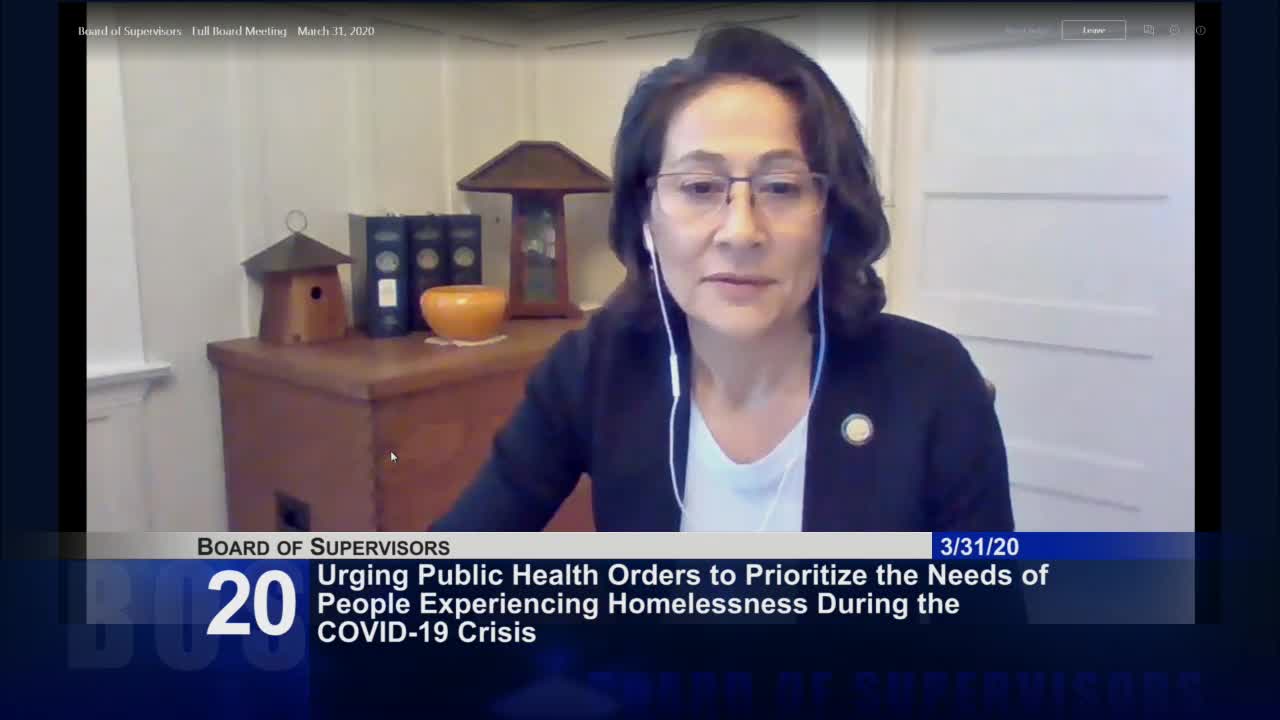
The Board of Supervisors on March 21 unanimously adopted a resolution urging public‑health orders and city action to prioritize non‑congregate shelter options — chiefly hotel and motel rooms — for people experiencing homelessness during the COVID‑19 crisis.
The Board of Supervisors on March 21 unanimously adopted a resolution urging public‑health orders and city action to prioritize non‑congregate shelter options — chiefly hotel and motel rooms — for people experiencing homelessness during the COVID‑19 crisis.
"It is unacceptable to have thousands of people on our streets where they cannot shelter in place and keep themselves safe," Supervisor Matt Haney said when he introduced the resolution, summarizing testimony from residents and providers. The board adopted the resolution with a roll‑call vote recorded as 10 ayes (one supervisor temporarily absent at times during the meeting).
Nut graf: The measure responds to mounting public comment and public‑health guidance that individuals in congregate settings and on the street face heightened risk. Sponsors said private rooms should be prioritized both for people who test positive and those at high medical risk, and that the city should depopulate congregate shelters where feasible and rapidly lease available rooms.
Supporters and public commenters pointed to counts and conditions. Haney cited Department of Public Works and program figures noting roughly 25 public pit‑stop bathrooms with only three operating 24 hours, and he said the city had about 5,000 people living on the streets. Multiple public commenters, service providers and housing advocates called for immediate leasing of hotel rooms and for the city to coordinate emergency placement, citing examples from other counties.
Supervisor Hillary Ronan, who sponsored the ordinance creating the American Indian Cultural District earlier in the meeting, joined Haney and others in pressing for accelerated action. Service providers including the Homeless Emergency Service Providers Association and Compass Family Services urged the city to reimburse shelter operators and to deploy hotel rooms and supplies quickly.
Several public commenters attributed the urgency to public‑health risk and a lack of alternatives: "Shelter in place on the sidewalk is not shelter in place," one speaker said. Others described successful private placements arranged by supervisors or community groups and urged citywide expansion.
The board's resolution asks the Department of Homelessness and Supportive Housing, the Human Services Agency and the Department of Public Health to issue clear guidance, prioritize non‑congregate housing placements, and to accelerate use of vacant hotel rooms and other facilities "to the extent possible." It also calls for clearer public reporting on progress.
Ending: The resolution passed unanimously; supervisors and staff said they expect the mayor's office and relevant departments to move quickly and that the board would follow up in committee and hearings. Public commenters and several supervisors urged the city to provide transparent daily reporting on placement numbers and supply distribution.