Get Full Government Meeting Transcripts, Videos, & Alerts Forever!
Get email alerts on the Emergency Firefighting Water System topic
No spam. Unsubscribe anytime.
Supervisors declare state of urgency to expand San Francisco emergency firefighting water system
Summary
The Board of Supervisors unanimously adopted a resolution directing studies, interim protections and an annual report to accelerate expansion of the city's emergency firefighting water system to neighborhoods now without high‑pressure firefighting pipelines.
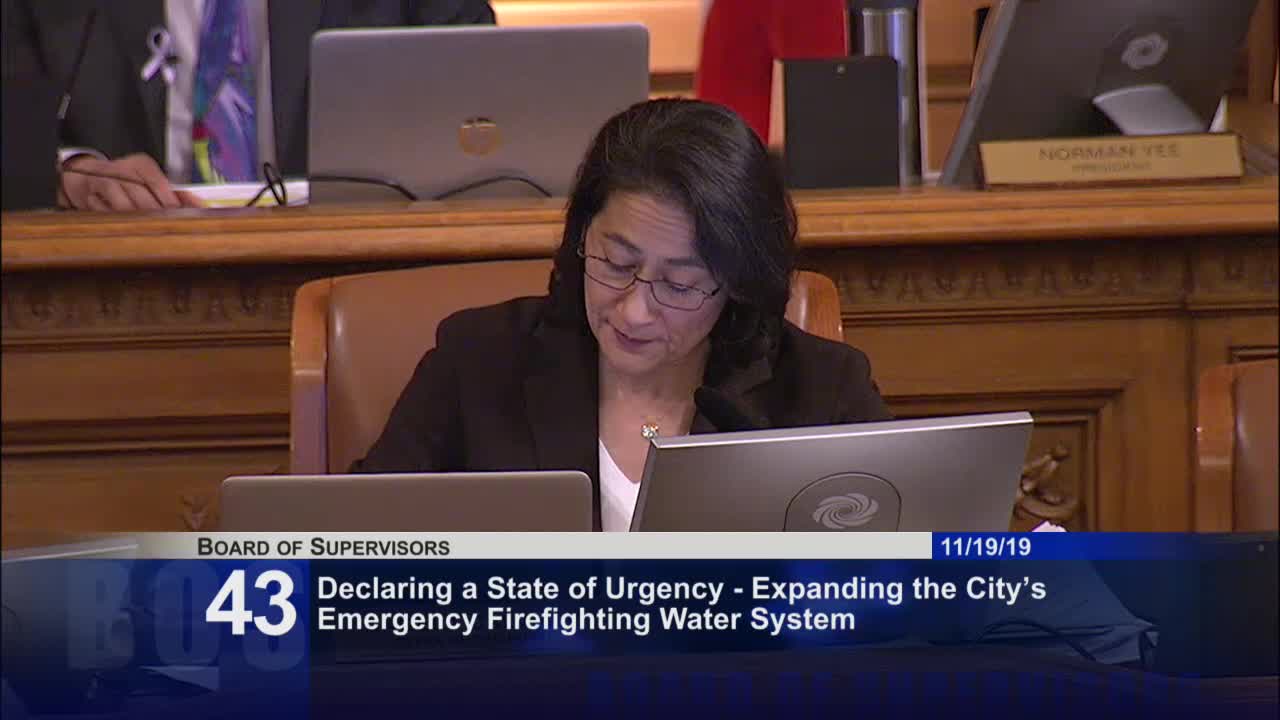
The San Francisco Board of Supervisors on Nov. 19 unanimously adopted a resolution declaring a state of urgency to rapidly expand the city's emergency firefighting water system and to produce a public action plan aimed at protecting neighborhoods now unserved by the high‑pressure firefighting pipeline network.
Sponsor Supervisor Marr said the measure "declares a state of urgency to rapidly expand the city's emergency firefighting water system to ensure that all neighborhoods are protected, in the event of a catastrophic fire following a major earthquake." The board accepted two noncontroversial amendments and adopted the resolution as amended without objection.
The resolution directs the city to: pursue a comprehensive 15‑year plan to extend high‑pressure firefighting pipelines to neighborhoods not currently served; complete a study on adding a new saltwater pumping station on the city's West Side; analyze whether to propose a separate bond as part of the city's capital planning; and create interim protections within three years to increase firefighting capacity in currently unprotected neighborhoods. The amendments set the annual status report of the emergency firefighting water system due by June 30 each year, with the first report due June 30, 2020, and add the phrase "high‑volume" in several descriptive passages of the resolution.
Supervisor Safaie and other board members praised the resolution as overdue and stressed the need to prioritize equity in rollout and to accelerate study work with the Public Utilities Commission (PUC) and the Fire Department. The sponsor thanked the PUC, the Fire Department and the Office of Resilience and Capital Planning for consulting on the measure.
The resolution cites the 1906 earthquake as the historical impetus for creating a separate high‑pressure emergency firefighting water system. The executive summary attached to the resolution notes the system currently includes about 135 miles of high‑pressure pipelines and two saltwater pumping stations; the sponsor said roughly one‑third of the city is not protected by the system, naming residential neighborhoods on the West Side and in the southeast including the Richmond and Sunset districts, Ocean View, Merced, Ingleside Heights, Bayview Hunters Point and Visitation Valley.
Supervisor Marr framed the work as a response to the twin risks of large earthquakes and wildfire, noting that federal hazard science projects elevated earthquake risk for the Bay Area and that a modern focus on resilience requires investment in dedicated firefighting infrastructure and public oversight. The board accepted the sponsor's request to add an annual oversight report to the board.
Action: the board accepted the sponsor's amendments (mover: Supervisor Marr; second: Supervisor Ronan) and then adopted the resolution as amended unanimously. The clerk recorded the adoption without a separate roll call; 11 members were present earlier on the dais.
Implementation and next steps noted in the meeting: staff from PUC and other agencies will assist with scoping studies; the resolution directs consideration of interim measures within three years and directs the PUC and city agencies to analyze financing options, including the possible use of a bond. The resolution does not appropriate funds; actual construction and timetable will depend on subsequent planning and financing decisions.
Why this matters: the resolution focuses city attention and reporting on a network that is separate from the drinking water system and is designed to provide high‑volume, seismically resilient water supplies for firefighting. Board members stressed equity in prioritizing neighborhoods for near‑term protection and signaled that funding decisions would be required later to implement the plan.
Ending: The board adopted the resolution as amended without objection and asked relevant city agencies to return with technical studies and recommendations for funding options and interim protections.