Get Full Government Meeting Transcripts, Videos, & Alerts Forever!
Get email alerts on the Affordable Housing topic
No spam. Unsubscribe anytime.
Supervisors say housing-preference programs help but urge more affordable units after report
Summary
Board discussion of the mayor's housing preference annual report showed support for neighborhood preference rules but highlighted that only 305 families were housed from 9,620 applications over two years; supervisors called for more affordable housing and better geographic distribution.
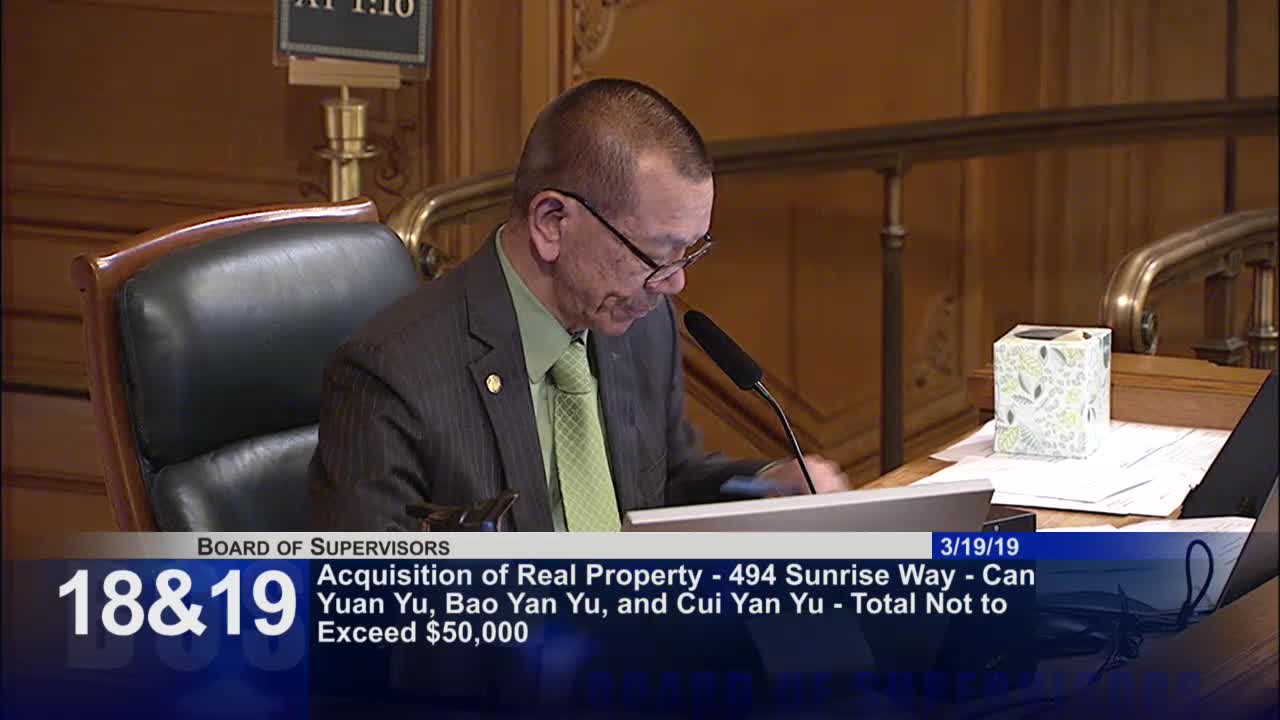
The Board of Supervisors on March 19 received and approved the mayor’s Office of Housing and Community Development’s annual report on certificate-of-preference and neighborhood preference programs for new-construction affordable housing marketed between July 1, 2016 and June 30, 2018.
Supervisors who spoke during the item praised the neighborhood-preference approach but said the numbers in the report underline that preferences alone are insufficient without more affordable housing sites. Supervisor Gordon Marr said the report shows “305 families out of 9,620 applications” were housed in that period and called the result “absolutely unacceptable.” He urged dedicating resources to build affordable housing in neighborhoods that have not seen new affordable projects.
Supervisor Shamann Walton and Supervisor Brown both said the data show neighborhood-preference provisions are working where implemented, but they urged scaling up production citywide to stop displacement. Supervisor Haney noted that certain districts have no preference-eligible projects and repeated calls for resources and projects in the city’s West Side.
The board adopted the resolution to receive and approve the annual report unanimously.
Why it matters: The report provides detail on the functioning of preference programs intended to give local residents and displaced households priority for rental and ownership units. Supervisors framed the report as evidence that policy mechanisms are necessary but not sufficient — supply must increase where people need housing.
What’s next: Supervisors signaled a need for targeted development resources and for continued tracking of preference outcomes by district to guide future housing investments.