Get Full Government Meeting Transcripts, Videos, & Alerts Forever!
Get email alerts on the Housing Homelessness topic
No spam. Unsubscribe anytime.
Mayor Breed urges shelter expansion, fast‑track contracting and pledges PG&E study as supervisors press for broader budget outreach
Summary
Mayor Breed used her Jan. 15 appearance before the Board of Supervisors to outline new shelter‑crisis ordinances, housing targets and to say the SFPUC will study PG&E bankruptcy impacts; supervisors pressed the mayor on expanding public outreach for the fiscal 2019–20 budget.
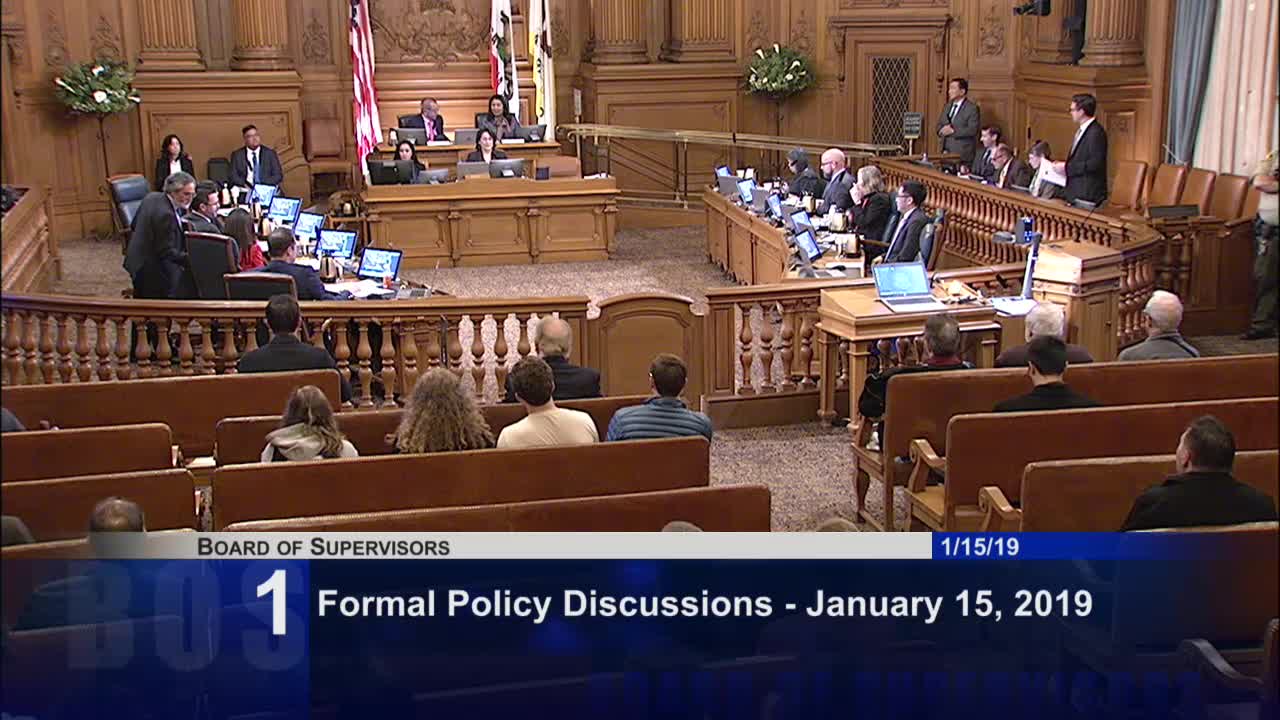
Mayor Breed addressed the Board of Supervisors on Jan. 15, saying her administration will prioritize homelessness and affordable housing and announcing two proposed ordinances aimed at speeding the city's procurement and siting of emergency shelters.
The mayor told the board she aims to "build a thousand shelter beds" and said the new "shelter crisis" ordinances streamline contracting with service providers, speed construction of shelters and relax conditional use requirements in specific zones for a limited period. She said one of the ordinances will "opt us into" Assemblymember Phil Ting’s statute referenced in the presentation (transcript: "AB 9 32"), which she said allows San Francisco to substitute an approval memo for an official building permit during a declared local shelter crisis. (Mayor Breed)
Why it matters: Breed framed the measures as part of a broader package to move more quickly on both temporary shelter capacity and longer‑term housing production. She said the ordinances together with an ERAF proposal could help provide shelter and navigation‑center beds to at least 300 people, in addition to 900 planned new affordable housing units, rehabilitation of more than 1,000 affordable units and 86 mental‑health stabilization beds discussed in her remarks.
Budget outreach and public engagement
Supervisor Mar (District 1) asked how the mayor’s office would expand public participation in the mayor’s fiscal 2019–20 budget process. Mayor Breed said departments and commissions will solicit proposals through February 21 and that her office will conduct targeted meetings across neighborhoods this spring to gather spending priorities. "Input from all community members is vital to informing and shaping the budget process," she said, adding the board will also have opportunity for public input. (Supervisor Mar)
Breed said her directive to departments is to focus on "accountability and equitable outcomes, despite who is available to advocate for resources," and to provide multiple outreach channels so that residents without time to come to City Hall have opportunities to be heard.
PG&E and electricity issues
Mayor Breed also addressed consumer concerns tied to PG&E’s bankruptcy proceedings and asked the San Francisco Public Utilities Commission to study potential short‑ and long‑term impacts on the city’s electric network. She directed the SFPUC to report back within three months with a preliminary report on the state of the city’s electrical network, options such as purchasing PG&E equipment, and issues that may require state‑level action. Breed reiterated that the city does not expect residents to lose service during PG&E’s bankruptcy process. (Mayor Breed)
Procedural notes
Breed appeared under the agenda’s special‑order protocol and was given up to five minutes for opening remarks. The mayor answered follow‑up questions from supervisors and met procedural rules governing special presentations. After the exchange, President Yee noted the matter was "discussed and is now filed."
Speakers and sources: Mayor Breed; Supervisor Mar; President Yee; SFPUC referenced for the three‑month study assignment. Authorities mentioned in the presentation include the statute referenced by the mayor as "AB 9 32" (as read into the record) and local administrative code provisions governing the special‑order process.