Get Full Government Meeting Transcripts, Videos, & Alerts Forever!
Get email alerts on the Planning Central Soma topic
No spam. Unsubscribe anytime.
Board of Supervisors adopts Central SoMa area plan, directs $940 million for affordable housing
Summary
After years of planning, the Board of Supervisors voted to adopt the Central South of Market (Central SoMa) area plan, approving zoning, financing and incentives to allow up to roughly 8,800 new housing units, substantial public benefits and new standards for production, distribution and repair (PDR) space.
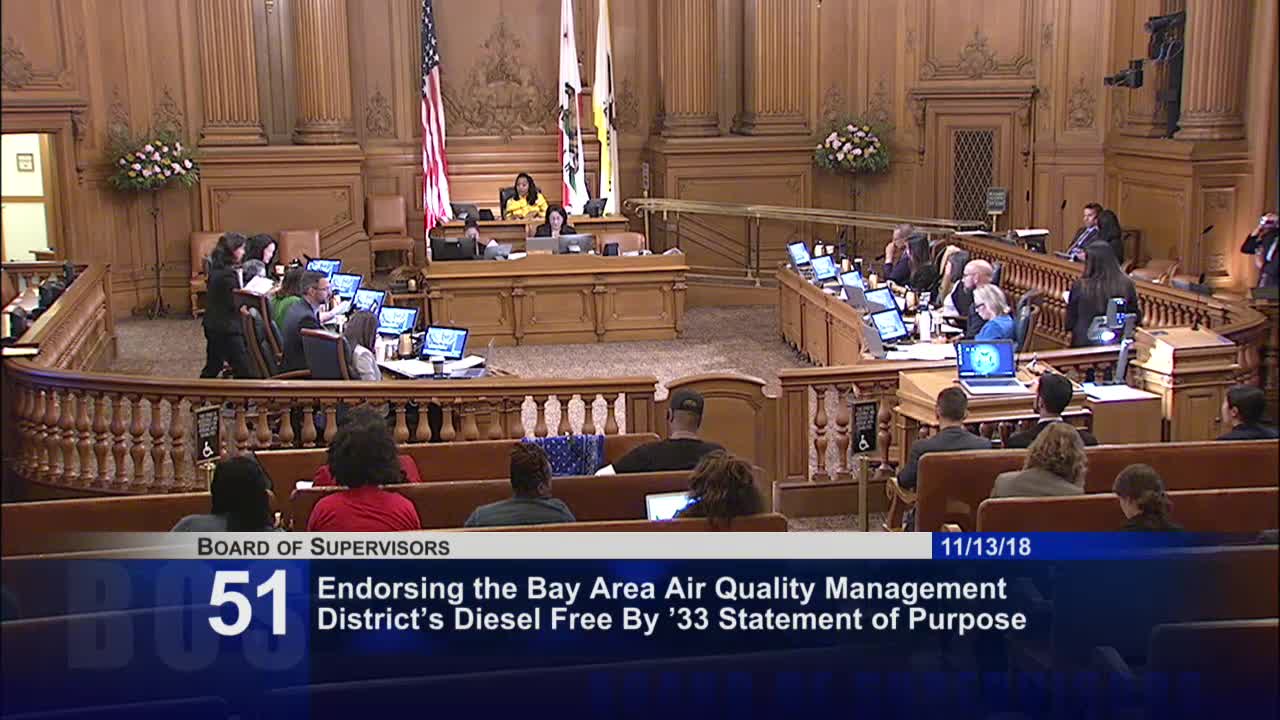
The San Francisco Board of Supervisors on Nov. 13 adopted the long‑delayed Central South of Market area plan, clearing a package of resolutions and ordinances to guide growth in a roughly 230‑acre area of downtown. The board passed the measure as amended after several rounds of committee review and public hearings.
Supervisor Matt Haney (note: transcript uses Supervisor Kim as the speaker introducing the plan) described the plan as a response to eight years of interagency and community work to create a framework for increased housing and jobs while protecting local businesses and industrial uses. "The Central SoMa area plan will also net roughly $2,100,000,000 in public benefits. Almost a billion of this will be set aside for affordable housing," Kim said during the hearing.
Why it matters: The plan is designed to steer a large share of regionally available growth into a transit-rich core while aiming to preserve manufacturing, production and repair (PDR) uses. Supporters say it will create an infrastructure and benefits package — including parks, streetscape improvements, childcare, and a proposed recreation center with a pool — tied to future development rather than relying only on discretionary approvals.
Key facts and board action - Scope: roughly 230 acres in Central SoMa, updated land‑use rules, zoning map amendments, and a new housing sustainability district using AB 773 authorities. - Housing: the plan increases the potential housing yield by about 25% over earlier estimates, cited in testimony as up to roughly 8,000–8,800 residential units citywide within the plan area. - Public benefits: the board cited an estimated $2.1 billion in total plan benefits, with about $940 million earmarked for affordable housing. - PDR protections: the plan requires replacement and/or no‑net‑loss of PDR space and establishes a $10 million PDR relocation fund to assist businesses that must move during redevelopment.
The board voted to adopt the plan package, which combined resolution items and five planning‑code/zoning ordinances (items 52–56 on the agenda) after amendments heard in Land Use Committee. The chair called the measure as called and, after accepting the amendments on the record, the board approved the package without objection.
What changed in committee: Supervisors and planning staff reported more than 100 technical amendments during the drafting process; supervisors noted new language to require on‑site childcare at designated key sites, extra attention to family‑sized units and multi‑bedroom apartments, and an explicit PDR relocation/mitigation fund. The plan also established the first housing sustainability district in California under AB 773 to allow streamlined approvals for projects that meet on‑site affordability and prevailing wage conditions.
Reaction and next steps Supporters — including the plan sponsor and planning staff — framed the package as a balance between accommodating regional growth and protecting neighborhood jobs and small businesses. Several supervisors, while supportive, urged continued attention to school capacity and other public services as new housing comes online.
The plan is now in effect as adopted; projects subject to the new rules will proceed through standard permitting channels. Implementation will require interagency coordination and actions by the city departments responsible for housing, transportation, parks and public works.
Ending note Supervisor Kim said the plan "was in the works for eight full years" and called adoption a milestone for meeting the city’s housing and infrastructure needs while protecting industrial and cultural uses.