Get Full Government Meeting Transcripts, Videos, & Alerts Forever!
Get email alerts on the Housing And Homelessness topic
No spam. Unsubscribe anytime.
Mayor Breed urges one‑time ERAF dollars for public housing repairs, shelter and mental‑health beds
Summary
Mayor London Breed told the Board of Supervisors that one‑time surplus funds should target immediate housing repairs, shelter capacity and mental‑health/substance‑use treatment beds, and cited plans to rehabilitate thousands of public housing units in southeastern neighborhoods.
Mayor London Breed told the San Francisco Board of Supervisors on Dec. 11 that housing and homelessness must remain the city's top spending priority and that one‑time surplus funds should be used for immediate repairs and services.
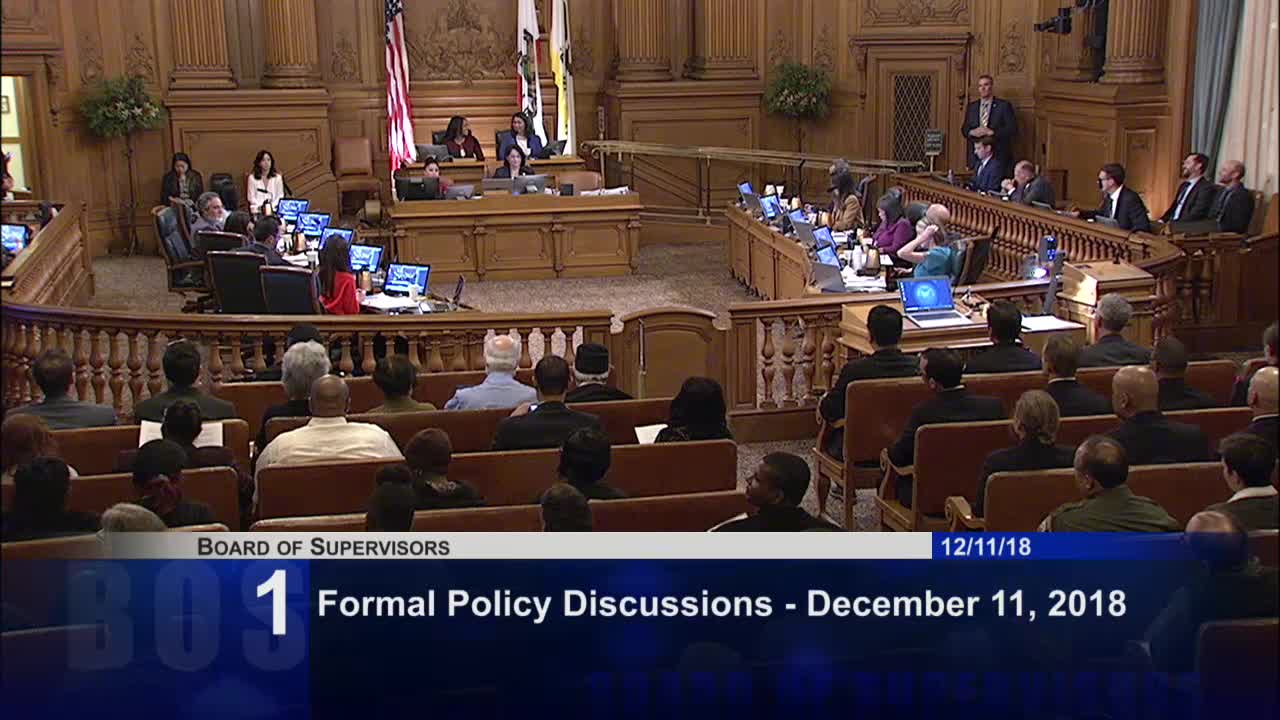
Breed made the remarks during a scheduled 2 p.m. policy discussion with the full board. President Malia Cohen asked how the mayor would prioritize investments from the city's Educational Revenue Augmentation Fund (ERAF) and other one‑time funding to address problems ranging from street encampments to substandard conditions in public housing.
The mayor replied that she had personal experience living in public housing and described conditions—broken pipes, roaches and mold—that many residents continue to face. Breed said housing and homelessness would be at the top of her agenda and highlighted a mix of short‑term and longer‑term actions: rehabilitating public housing, expanding shelter capacity, adding mental‑health stabilization beds, and creating more affordable housing. She described the ERAF‑style one‑time funding as an opportunity to make "bold action" while the city seeks more sustainable revenue sources.
Breed gave specific figures for projects in southeastern neighborhoods: using the funding, she said the city could stabilize housing for nearly 3,000 residents, rehabilitate 775 units in Sunnydale and 606 units in Potrero Hill, and create more than 2,000 new housing units, including 654 affordable units. She also referenced plans to add about 1,000 shelter beds and to expand mental‑health and substance‑use treatment capacity. The mayor and President Cohen said Alice Griffith and Hunters View public housing projects and work in Bayview Hunters Point would be priorities.
Board members asked follow‑up questions about whether the supplemental process for spending the surplus would change if similar surpluses recur. Breed said the board would determine the process through its budget procedures but emphasized the need to prioritize people who have been neglected.
Why it matters: The mayor framed the city's one‑time surplus as a narrow window for capital repairs and temporary services to stabilize existing publicly subsidized housing and move more people into shelter or treatment. The comments give supervisors a clearer sense of the mayor's priorities ahead of upcoming budget decisions and charter‑level spending discussions.
Looking ahead: The mayor said she looks forward to working with the board to translate those priorities into specific spending plans; the board will consider many of the measures and related appropriations in its committee and budget processes.