Get Full Government Meeting Transcripts, Videos, & Alerts Forever!
Get email alerts on the Cannabis Tax topic
No spam. Unsubscribe anytime.
Supervisors send cannabis business tax to voters, delay collection until 2021 to fund equity and compassion programs
Summary
The Board voted 8–3 to place a citywide cannabis business tax measure on the November ballot. The measure delays implementation until 2021, exempts medical sales and small receipts, and includes a Wayfair amendment to start some revenue earlier.
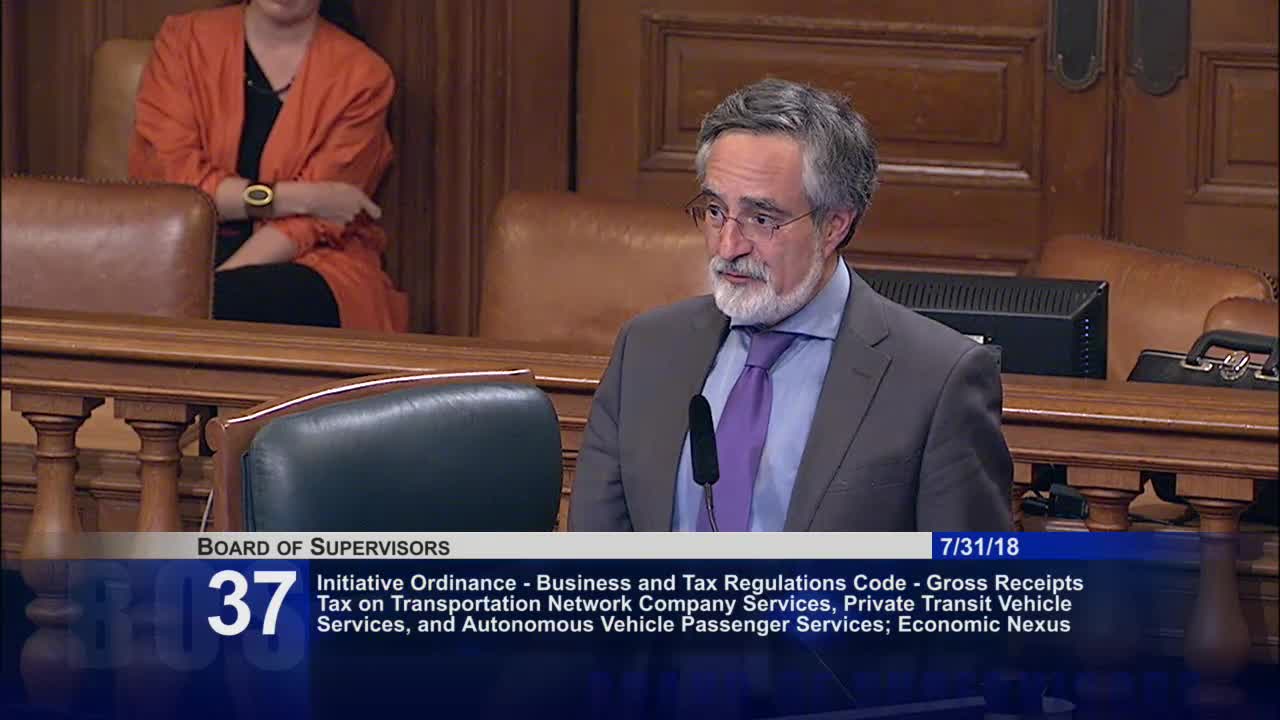
San Francisco supervisors voted 8–3 on July 31 to place a local cannabis business tax before city voters in the November 6, 2018 election.
Board President Malia Cohen, sponsor of the ballot measure, framed the proposal as infrastructure for an equity program and a city‑funded compassion program for low‑income patients who use cannabis as medicine. Cohen said the ordinance is “an infrastructure and a tool” that includes special exemptions for medical cannabis and a lower rate for start‑up businesses while giving the board authority to adjust rates later.
The proposal delays the tax’s start date until Jan. 1, 2021, at the request of industry stakeholders so the regulated market has additional time to stabilize. To generate earlier revenues for programs, the proposal includes a Wayfair‑style amendment to capture some remote sales revenue sooner; city estimates put total potential revenue from the combined measures between roughly $7 million and $16 million, with short‑term Wayfair receipts possibly $2–$4 million, according to the city controller’s office.
Key features discussed on the floor included an exemption for medical cannabis sales, an exemption for testing and delivery, and a provision exempting the first $500,000 of gross receipts for businesses. Supporters said the measure creates a funding stream for equity, workforce development and a compassion program to subsidize medicine for low‑income patients. President Cohen emphasized the measure’s staged timetable and the board’s power to revise tax rates as the local industry matures.
Opponents said the retail cannabis market is too new and fragile to bear additional local taxes and warned that high combined tax burdens could push consumers back to an unregulated market. Supervisors Mandelmann, Ronan and Kim voted against placing the tax on the ballot, citing concerns about premature taxation and potential impacts on prices and the legal market.
The motion ordering the ordinance to the ballot passed and will appear on the November 6, 2018 consolidated election.
What happens next: The measure will be on the Nov. 6 ballot for voter approval. If approved, the board will implement the tax and direct proceeds to the designated programs in line with the measure’s exemptions and staging.