Get Full Government Meeting Transcripts, Videos, & Alerts Forever!
Get email alerts on the Planning Code Amendments topic
No spam. Unsubscribe anytime.
Supervisors amend planning code to streamline review, restore tenant-notice protections
Summary
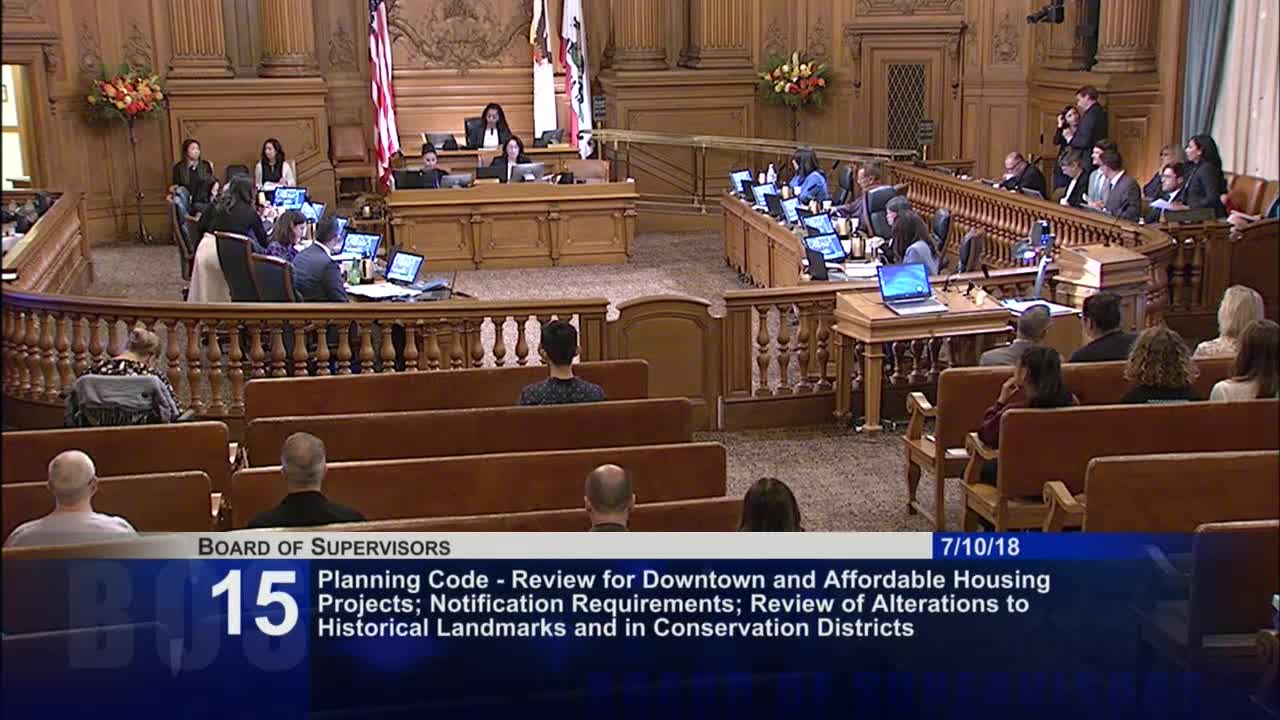
The Board of Supervisors voted unanimously on July 10, 2018, to rescind a prior first-reading vote and adopt cleanup and restorative amendments to a planning-code bill (item 15) that streamlines review for certain housing projects while restoring notification and tenant counseling requirements for unit removal.
The San Francisco Board of Supervisors voted unanimously July 10 to rescind an earlier first-reading vote on a planning-code amendment and approved a package of cleanup and restorative amendments that streamline review processes while restoring tenant-notice protections.
Supervisor Aaron Peskin, who moved the changes, told the board staff and counsel had identified omissions and drafting errors after the item’s initial move to first reading and asked planning staff to present specific cleanup edits. “There are a number of, cleanup items,” planning department staffer Jacob Bentliff said on the floor, and then detailed the changes by page and line in the ordinance draft. Bentliff said, “On page 41, starting on line 8… there were 6 use categories that were inadvertently omitted,” and that language from existing sections would be restored and consolidated to reflect current practice.
The amendments approved on the floor clarified which design guidelines apply, extended certain replacement rules to all districts rather than only RH districts, corrected a longstanding typographical error (restoring the phrase “unauthorized units” where the draft had “authorized units”), and restored multiple notice and appeal provisions that had been unintentionally dropped. Supervisor Peskin said the package also restores requirements to provide information about tenant counseling services when residential units are removed and to post interior notices prior to authorization of unit removal. He moved the amendments and the board took the item as amended; Supervisor Tang seconded the motion.
The board’s action preserves the ordinance’s headline reforms — including delegating review of some large downtown projects to the Planning Department and eliminating discretionary hearings for 100% affordable projects when the Planning Commission delegates — while ensuring that long-standing tenant-notification practices and specific appeals/permit instructions remain in the code text. Deputy City Attorney Kate Stacy was thanked on the record for assisting with the drafting and cleanup.
The ordinance passed its first reading as amended; the board rescinded the earlier first-reading vote to allow the cleaner, clarified text to be voted. City staff and supervisors described the changes as technical cleanups and restorations of existing practice rather than policy reversals.
What changed and why: planners and counsel said the earlier draft inadvertently omitted several notification-triggering use categories, narrowed some design-guideline references too far, and contained a wording error that reversed the intended reference to “unauthorized units.” Those omissions and the restoration of interior-post, mailing-verification, and tenant-counseling notice language were described on the record as necessary to preserve existing tenant protections while implementing procedural streamlining.
The ordinance will return for further readings consistent with the city’s legislative process. The board’s clerk recorded the unanimous vote to adopt the amendments on first reading as amended.