Get Full Government Meeting Transcripts, Videos, & Alerts Forever!
Get email alerts on the Waste And Food Access topic
No spam. Unsubscribe anytime.
Supervisor Safai introduces on-site sorting requirement for large producers; Supervisor Cohen asks OEWD to study food access in underserved neighborhoods
Summary
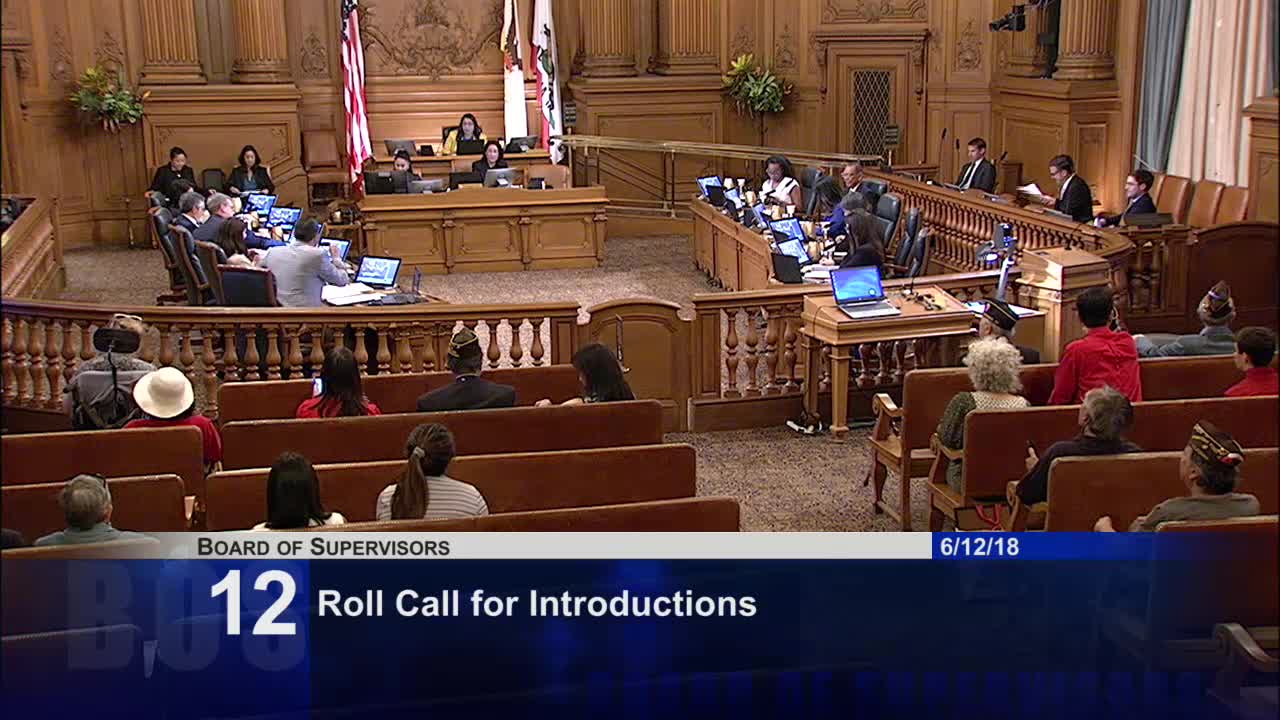
Supervisor Ahsha Safai introduced legislation to require audits and corrective on‑site sorting at large waste producers, and supervisors asked OEWD to study ways to attract grocery stores to underserved "food districts."
Supervisor Ahsha Safai used the Board’s new‑business period on June 12 to introduce legislation aimed at increasing citywide waste diversion by requiring on‑site sorting and audits for large producers whose waste streams show contamination above thresholds to be set by the Department of the Environment. Safai recounted that, per the Department of the Environment and Recology, about 60 percent of what is placed in the city’s trash stream is compostable or recyclable, and argued on‑site sorting at large buildings is the most effective place to reduce contamination.
Under the proposal as described on the floor, the Department of the Environment would audit large apartment buildings, office buildings and other large waste producers; properties with contamination above a department-established percentage would receive notice and have 45 days to submit a corrective plan. That plan could include hiring a “zero‑waste facilitator” or on‑site sorters; Safai said some venues already use on‑site sorters during large events. He said fines for persistent noncompliance could exceed $1,000 per day (he characterized the potential fines on the record as “over a thousand dollars”). The legislation as introduced will refer the details—including the numerical contamination threshold and enforcement structure—to the Department of the Environment for regulations.
Separately, Supervisor Aaron Peskin (Supervisor Cohen in the transcript introduced a different item to OEWD) and Supervisor Scott Wiener; and Supervisor Kim (floor remarks) asked the Office of Economic and Workforce Development (OEWD) to evaluate strategies to attract and retain grocery stores and alternative models in neighborhoods the transcript describes as “food districts” (areas lacking access to a full-service grocery). Supervisor Cohen asked OEWD to study incentives such as tax or hiring credits and to assess grocery models that could provide healthy foods in underserved neighborhoods like the Tenderloin and South of Market.
Why it matters: The proposals target two different gaps—waste diversion at the point of generation and grocery access in underserved neighborhoods. Safai’s measure uses inspections and corrective plans to reduce contamination and boost recycling/composting; the OEWD referral asks staff to report back on tools to stimulate grocery service and healthy-food access in designated food districts.
Next steps: Safai said regulatory details will be established by the Department of the Environment. The OEWD referral directs department staff to assess attraction and retention models and report back on options; neither action was adopted as an ordinance on June 12 and both will proceed through the ordinance and administrative/regulatory processes described by the sponsoring offices.