Get Full Government Meeting Transcripts, Videos, & Alerts Forever!
Get email alerts on the Mental Health topic
No spam. Unsubscribe anytime.
Board declines to back state conservatorship bill after hours of public testimony and supervisor debate
Summary
President London Breed’s resolution urging support for state Senate Bill 1045 — a measure to permit conservatorship for chronically homeless people with serious mental illness and severe substance‑use disorder — failed to pass the Board of Supervisors after extended debate over civil liberties, funding and implementation.
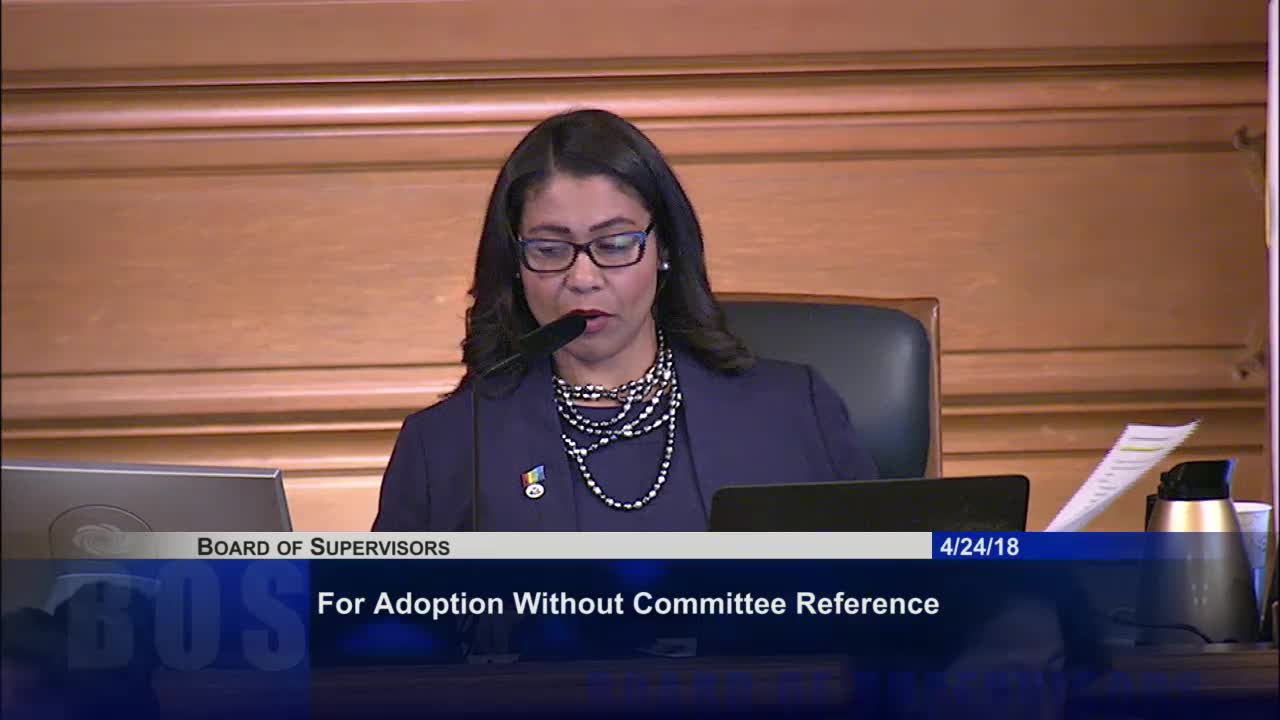
A resolution introduced by Board President London Breed urging statewide support for Senate Bill 1045 — legislation that would expand conservatorship eligibility to include some chronically homeless people with serious mental illness and severe substance use disorder — failed to pass the Board of Supervisors on April 24 after lengthy public testimony and a divided debate among supervisors.
The bill’s supporters, including President Breed, argued the law fills gaps in current conservatorship statutes written decades ago by allowing courts to consider severe psychoactive substance use (not only alcohol) when deciding whether an individual is gravely disabled and in need of court‑ordered care. Breed said the measure, if enacted, would remain an opt‑in framework for counties and that San Francisco would still have to pass a local implementation ordinance.
Opponents included disability advocates, civil‑liberties groups, parts of the mental‑health provider community and drug‑policy organizations. Speakers raised concerns that SB 1045 lowers the bar for involuntary confinement, lacks state funding for the intensive supportive housing and treatment the law would require, and risks racially disparate enforcement. Tony Robles of Senior and Disability Action said, “This proposal dangerously expands involuntary care while offering no guarantee of housing, medical care or due process protections adequate for the population it targets.”
Supervisors also disagreed internally on whether supporting the state bill now — as amended and described in the city’s resolution — was the correct step before the board convened a focused committee hearing to vet implementation details. Some supervisors said they support the policy goal of helping extremely vulnerable people who repeatedly cycle through emergency rooms and jails, but asked for more time to hear experts and for assurances of funding, admissions criteria, guardrails for civil‑liberties protection and post‑conservatorship housing pathways.
After debate and an unsuccessful motion to refer the resolution to committee, the board voted on the resolution as introduced (and as amended on the floor); the resolution did not pass.
Why it matters: SB 1045 would change state conservatorship law and — if enacted — could allow counties to court‑order intensive treatment and supportive housing for people who meet narrow, combined criteria for chronic homelessness, serious mental illness and severe substance dependence. The board’s decision leaves San Francisco without an explicit city resolution supporting the measure and reflects sharp local disagreement over the balance between protecting vulnerable people and safeguarding civil liberties.
Board action: President Breed’s urging resolution (item 42) was considered; following debate and public comment the board did not adopt the resolution.