Get Full Government Meeting Transcripts, Videos, & Alerts Forever!
Get email alerts on the Police Reform topic
No spam. Unsubscribe anytime.
Supervisors hold broad hearing on DOJ reforms, crisis intervention training and proposed Tasers for SFPD
Summary
Supervisors convened a committee‑of‑the‑whole hearing for an update on the Department of Justice collaborative reform work with San Francisco Police Department, and to examine progress on crisis intervention training and data collection. Chief Bill Scott told supervisors the department remains committed to the DOJ recommendations even though the federal oversight phase is concluding.
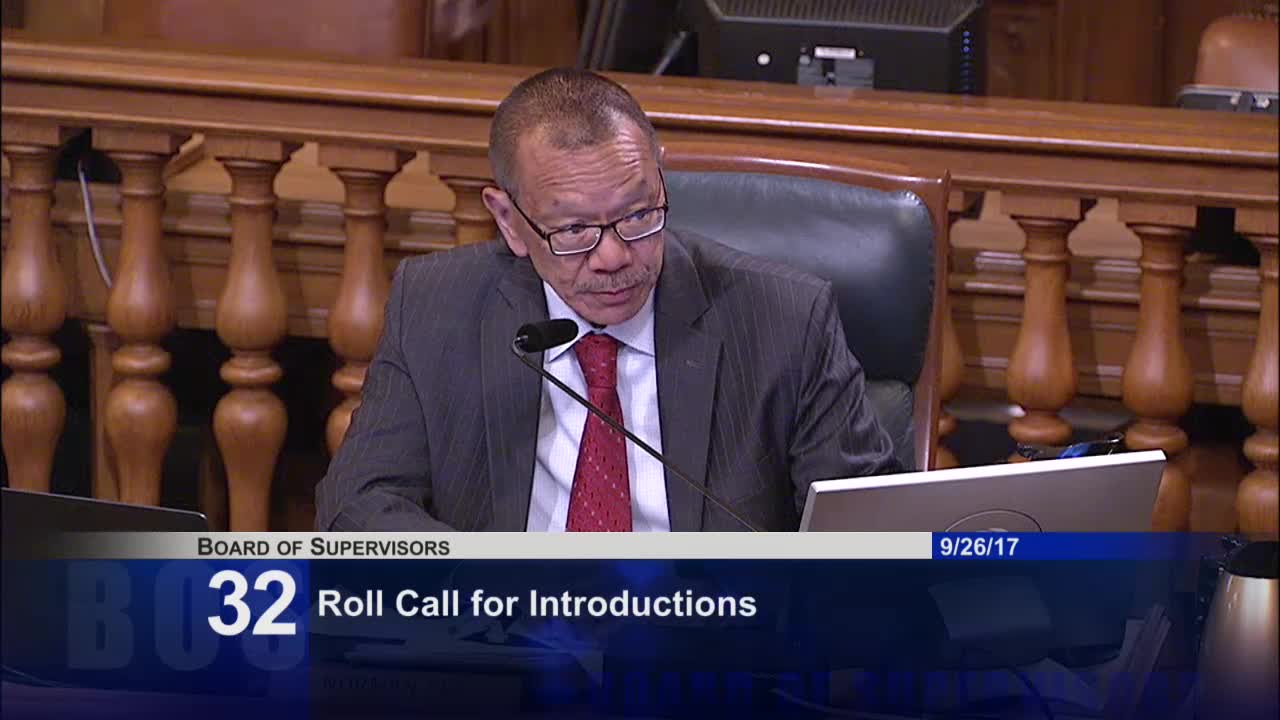
The San Francisco Board of Supervisors held a committee‑of‑the‑whole hearing on the Department of Justice collaborative reform initiative and San Francisco Police Department progress on the DOJ’s recommendations, with an extended public discussion of crisis intervention team (CIT) training and the police commission’s pending consideration of electronic control weapons (commonly known as Tasers).
Supervisor Sandra Lee Fewer convened the session and said the Justice Department’s decision to scale back federal monitoring makes local transparency and continued implementation — not retreat — essential. “We are committed to every one of the 272 recommendations,” Chief Bill Scott told the board. He said he would continue implementation work even though the Justice Department concluded its formal oversight phase.
Status and implementation
Chief Scott reported that the department had submitted 81 recommendation packages for DOJ review; that number reflects packages the department considers complete for DOJ evaluation though he emphasized that submitted “completions” sometimes require ongoing training and follow‑up. Scott said workstreams include policy changes, data collection and technological upgrades, training and the establishment of an ongoing reporting process to provide independent public progress reports.
Training and CIT
Supervisors and community advocates pressed the department about the scale and speed of CIT training. Scott said 931 officers had received a short-form CIT/field‑tactics module (the transcript later corrected the short course to 20 hours) and 737 officers had completed a 40‑hour CIT curriculum; he described a staged rollout that prioritized patrol officers in high‑need neighborhoods such as the Tenderloin. Supervisors asked about the dispatch protocols that trigger CIT responses and whether clinicians from the Department of Public Health are responding alongside officers. Chief Scott said clinicians are participating on some calls and that the department is still formalizing protocols and staffing the clinical positions that will co‑respond with officers.
Independent data analysis and outside researchers
Supervisors underscored the need for independent academic analysis to interpret use‑of‑force data, pointing to disparities in traffic stops, searches and use of force. Scott said an MOU with an academic partner is under review and awaiting finalization; he said some items are with the city attorney’s office for legal review. Several speakers from civil‑rights and community organizations told the board outside academic evaluation was essential to determining whether disparities reflect bias or other factors.
Public debate over Tasers (electronic control devices)
The hearing devoted substantial public comment to the police commission’s pending October vote on authorizing electronic control weapons for SFPD use. The board heard many neighborhood residents, civil‑rights groups and professional organizations urge the city to pause on ECW adoption until the department completes reforms, expands CIT coverage and installs the data and training oversight systems the DOJ recommended. Speakers described national evidence of ECW injuries and deaths, cited litigation costs in other jurisdictions and warned of subjective application of manufacturer warnings (for example, people who are pregnant, elderly or on certain medications).
Organizational advocates
- Coalition on Homelessness: said people living outdoors have disproportionate policing contact and are over‑represented in fatal officer‑involved incidents. - San Franciscans for Police Accountability and the Bar Association of San Francisco: urged delaying ECW deployment and prioritized oversight, independent academic review, and technology investments for evidence collection and analysis.
Outcome and next steps
No board vote was required; the hearing concluded and the matter was filed. Chief Scott and supervisors committed to continued implementation of DOJ recommendations, to finalizing the academic MOU and to creating a local oversight and reporting mechanism to replace the DOJ’s review functions. Supervisors asked for an updated timeline, detailed cost estimates and a clearer plan for how many officers will need further training and when the department will reach full coverage.
Who spoke (selected)
- Chief Bill Scott — Chief of Police, San Francisco Police Department - Supervisor Sandra Lee Fewer — Board member who led remarks on the item - Supervisor Catherine S. Cohen — Sponsor of the hearing (questioning lead) - Jennifer — Coalition on Homelessness (public comment) - Jackie Barshack — San Franciscans for Police Accountability (public comment) - Julie Tron — Bar Association of San Francisco (public comment)
Clarifying details
- Reported DOJ recommendations: 272 total (finding from DOJ report); Chief Scott indicated 81 recommendation packages had been submitted by SFPD for DOJ review. - Training counts cited by the chief during the hearing: 931 officers on a short-form CIT/field tactics module; 737 officers on a longer 40‑hour CIT curriculum (department counts in transcript).
Authorities
- U.S. Department of Justice collaborative reform initiative (CRI) — final report and recommendations to SFPD (2016) - SFPD Department General Orders and use‑of‑force policies (internal departmental authorities) - Police Commission (local oversight body)
Provenance
- topicintro: transcript block reading item 28: “Item 28 is a hearing … the blue ribbon panel on transparency, accountability, and fairness in law enforcement.” (transcript time ~5534.97) - topicfinish: transcript block concluding the item: “This hearing has been held and is now filed.” (transcript time ~11016.835)
Community relevance
- Geographies: Citywide (San Francisco), with operational focus on neighborhoods such as the Tenderloin and Mission where CIT rollouts were prioritized. - Impact groups: People experiencing homelessness, people in mental‑health crisis, communities of color, SFPD personnel and neighborhood residents.
Meeting context
- Engagement level: High — the hearing lasted multiple hours, included extended public comment from community organizations and legal groups, and detailed exchanges between supervisors and the chief. - Implementation risk: Medium–high — the department’s reforms require sustained funding, training, technology upgrades and independent evaluation; the DOJ’s decision to conclude formal oversight places more responsibility locally for independent review.
Searchable tags
["SFPD","DOJ reform","CIT training","taser debate","use of force","police oversight"]