Get Full Government Meeting Transcripts, Videos, & Alerts Forever!
Get email alerts on the Police Reform Doj topic
No spam. Unsubscribe anytime.
Board and Police Commission hold joint hearing on DOJ assessment and policing reforms; staff outlines implementation plan
Summary
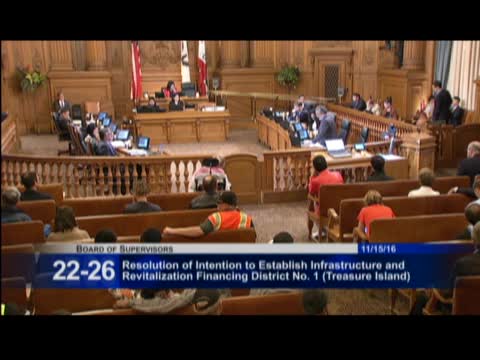
The San Francisco Board of Supervisors and Police Commission met jointly on Nov. 15 to review the U.S. Department of Justice 's assessment of SFPD and other reform reports and to hear the department's plan for implementing 272 recommendations.
The San Francisco Board of Supervisors and Police Commission met in joint session on Nov. 15 to review recommendations from the U.S. Department of Justice, the presidential Task Force on 21st Century Policing, the civil grand jury and a blue-ribbon panel, and to hear from city and SFPD officials on the implementation plan.
Diana Oliva Arroce, senior adviser and director for violence-prevention at the Mayor's Office, opened for the administration and reviewed the city's acceptance of the DOJ's assessment. The DOJ report, delivered in October, identified 94 findings and 272 recommendations on policy and practice across five priority areas: use of force, bias, community policing, accountability and recruitment/hiring practices.
Interim Chief Tony Chaplin and Captain Michael Connolly outlined the San Francisco Police Department's response. SFPD said it has created a Professional Standards and Principle Policing Bureau to manage implementation and developed a project-management "integrated matrix" that maps each recommended change to an executive sponsor, project manager, milestones and review steps. Captain Connolly described priorities in the near term: adopting revised training on de-escalation and time-and-distance tactics, deploying officer-worn cameras to district stations, improving capture of use-of-force and stop data via a phone-based reporting application, and expanding crisis-intervention teams to manage incidents involving persons in mental-health crises.
Department officials stressed that several major changes are already underway: expanded time-and-distance training across firearms and force-option curriculum; expanded hostage/crisis-negotiation capacity that the department says has improved outcomes; and early deployment of body-worn cameras to patrol stations. The department also demonstrated a mobile data-capture tool intended to standardize demographic and incident reporting, and said it plans to partner with independent academic or audit contractors for analysis.
Community advocates, including the San Francisco Public Defender's Racial Justice Committee and local civil-society groups, urged faster action and outside oversight to verify that reforms actually change practice. Damaris Evans, chair of the Public Defender's Racial Justice Committee, told the joint panel that existing data flaws have prevented definitive conclusions about racial bias and urged an independent analysis of updated data, naming Stanford researcher Jennifer Eberhardt as an example of expertise the city should engage.
Supervisors said they expected a rapid timeline and repeated public updates. "We need aggressive timelines," Supervisor Jane Kim said. Several supervisors pressed for clarity about responsibilities and how external contractors and the Department of Justice would be integrated into verification.
Why it matters: The DOJ assessment and follow-on reports identify structural and cultural reforms intended to reduce excessive force, improve accountability, and rebuild trust with communities of color. Implementing the recommendations will involve training, data systems changes, interagency coordination and resources.
What's next: City officials said they will continue implementing the department matrix, return with status updates and that the Board expects a follow-up report in early 2017. Community groups requested that the city issue a clear, independently verifiable timeline and consider hiring outside audit expertise to assess progress and analyze use-of-force and stops data.
Sources and attribution: Testimony and documents from Diana Oliva Arroce (Mayor's Office), Interim Chief Tony Chaplin, Captain Michael Connolly, Damaris Evans (Racial Justice Committee) and planning and data staff at the Nov. 15 joint session of the San Francisco Board of Supervisors and Police Commission.