Get Full Government Meeting Transcripts, Videos, & Alerts Forever!
Get email alerts on the By Right Housing topic
No spam. Unsubscribe anytime.
Board debate over "by‑right" housing bill ends with procedural ruling; motion fails for lack of six votes
Summary
After extended public comment and debate, the San Francisco Board of Supervisors voted on and then had a motion opposing or seeking amendments to a state "by‑right" housing trailer bill declared failed because it did not receive the six votes of the full board required to set city policy.
The San Francisco Board of Supervisors spent more than an hour debating a motion on Monday urging the city's legislative delegation to amend or oppose a state "by‑right" housing approvals trailer bill before ultimately having the motion declared unsuccessful because it did not receive the six votes required by the city charter to set formal policy.
The item drew extensive public comment from housing advocates, labor representatives and residents. Supporters of the governor’s proposal argued that more housing production is needed across the Bay Area; opponents, including the San Francisco Building and Construction Trades Council and several speakers, argued the state bill could increase demolition of existing housing and fail to protect labor and low‑income residents.
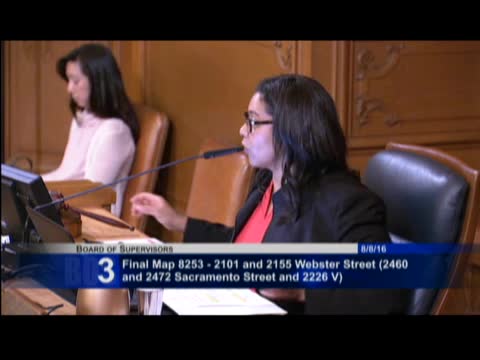
President Breed proposed an amendment to clarify that the board lacks legal authority to set substantive policy by motion under section 2.105 of the city charter and Board Rule 5.13; the amendment passed without objection. Supervisor Peskin moved the amended motion and it passed on a roll call showing five ayes and two nos (supervisors Tang and Wiener). Deputy City Attorney John Gibner then advised the board that, under the charter, adoption of a formal policy position requires a majority of all board members (six votes) rather than a majority of those present. After the city attorney’s clarification, the clerk announced the motion failed for lack of the required six votes.
"The city adopts formal policy positions on state legislation through resolution or ordinance," Deputy City Attorney John Gibner said during the exchange, adding that the mayor has authority to coordinate intergovernmental affairs and could lobby the Legislature in that role. Gibner said the board had not adopted a resolution that had gone into effect setting a policy on this bill.
Public commenters were sharply divided. Laura Clark of Grow SF called the repeat motion "a deliberate waste of everyone's time" and urged the board not to oppose the governor's by‑right bill. Tim Cohen of the San Francisco Housing Action Coalition urged supervisors to vote against the motion, saying, "Local jurisdictions ... have been using their rule making authority to impede, delay, obstruct housing production." Michael Theriault of the San Francisco Building and Construction Trades Council said the board should oppose the bill until it is amended to protect labor and prevent demolition of rent‑controlled housing.
Board members expressed differing views on both process and substance. President Breed argued the amendment was necessary to avoid setting a precedent of adopting substantive policy by motion. Supervisor Wiener said the motion was "sour grapes" and warned it would create confusion about the city's official position because the mayor can lobby under the charter and a motion is not an action the mayor can sign or veto. Supervisor Paskin (who led discussion in favor of the motion) contended the motion was the only timely way for the board majority to communicate its view to legislators given the mayor’s veto of an earlier resolution on the matter.
After the procedural ruling, the item concluded without a binding policy adopted by the city. The board record shows the motion had requested the clerk transmit the motion to all 120 members of the state legislature, but the city attorney advised that forwarding a board‑adopted document is permitted while noting it would not create a formal policy position under the charter. The clerk did not transmit the motion during the meeting.
Because the board did not adopt a resolution or ordinance with six votes, the city has no formal policy position on the trailer bill after the meeting. Supervisors and outside stakeholders may still lobby the Legislature in their individual capacities or seek a formal resolution at a subsequent meeting.