Get Full Government Meeting Transcripts, Videos, & Alerts Forever!
Get email alerts on the City Budget Overtime topic
No spam. Unsubscribe anytime.
Supervisors split over overtime supplemental; fire, emergency management and sheriff funding advance while other departments face scrutiny
Summary
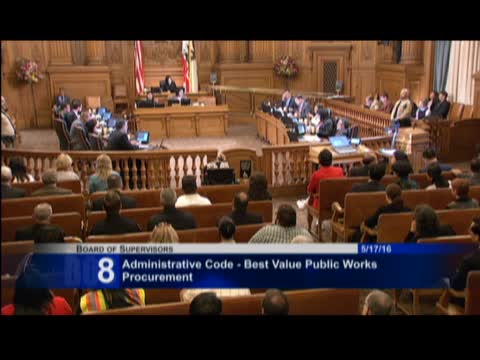
The San Francisco Board of Supervisors on May 17 took several conflicted votes on an ordinance to reallocate roughly $24.7 million into overtime accounts for multiple city departments, ultimately approving transfers for some departments while delaying or subjecting others to further scrutiny.
The San Francisco Board of Supervisors on May 17 took several conflicted votes on an ordinance to reallocate roughly $24.7 million into overtime accounts for multiple city departments, ultimately approving transfers for some departments while delaying or subjecting others to further scrutiny.
The measure, introduced as Item 9, would deappropriate approximately $20.6 million from permanent salaries, fringe benefits and non-personnel accounts and appropriate about $24.7 million to overtime accounts across the sheriff's department, Department of Emergency Management (DEM), fire department, Department of Public Health (DPH), Public Utilities Commission (PUC) and the police department. The ordinance requires an eight-vote (two-thirds) threshold under Charter section 9.113 because it affects operating budgets.
Why it matters: City departments told the board they need the money to cover projected increases in overtime; board members raised questions about recurring “salary savings” and whether departments are using unfilled positions to justify higher overtime. Several supervisors said the item exposed weaknesses in budget oversight and hiring practices that they want to address in the coming budget cycle.
The debate and outcomes
Supervisor John Avalos called the item “a really challenging one” and pressed the city budget analyst for details about why departments reported large salary savings that then were moved to overtime. Supervisor Mark Farrell urged the board to avoid leaving unaddressed “padding” in departmental budgets: “I do not want to have any padding going on in our budgets at all.”
Melissa Whitehouse of the Mayor’s Budget Office told the board the supplemental is primarily an internal reallocation: “this entire supplemental … is just moving money from one place to the other,” and warned that not approving the transfers for some departments could have “really serious” impacts on day-to-day services.
The item’s path was unusually complex. An early roll call produced what was reported as an 8–3 vote in favor, but that action was rescinded and a subsequent vote produced a 5–6 result that the clerk recorded as a failure on first reading. Later in the meeting members moved to reconsider and split the ordinance into parts. After separation and further roll calls the board recorded these outcomes:
- Fire department, Department of Emergency Management, and sheriff’s department: approved on first reading (vote recorded as 11–0). The board took this as a separate, prioritized authorization for public-safety and emergency response staffing needs.
- Department of Public Health, Police Department, and Public Utilities Commission: approved on first reading on a separate roll call (vote recorded as 7–4). Several supervisors said they voted for the transfers reluctantly and only after hearing from the Mayor’s Budget Office about the operational impacts of not approving the money.
What board members said
Supervisor Avalos and several others voiced concern that recurring salary savings are routinely used late in the year to cover overtime and other costs and said the board needs stronger scrutiny during the budget cycle. Supervisor Campos and Supervisor Avalos pressed for more information about staffing deployments and the extent to which civilian positions could replace sworn overtime work in some jobs.
Farrell emphasized the operational risk if the board refused to move funds for public-safety units, while others said passage should not substitute for a longer-term audit of hiring and overtime practices.
Next steps and context
Several supervisors asked the budget office and city departments for more detailed information and agreed to reexamine overtime and hiring practices during the upcoming budget season. The board’s split votes mean some departments will receive the requested transfers for the remainder of the fiscal year while the broader questions about salary savings and overtime usage are expected to be addressed in subsequent budget oversight hearings.
Votes and formal actions
- Initial recorded roll call (first reading): reported as 8 ayes, 3 noes (Avalos, Kim, Peskin). The clerk recorded the ordinance as passing on first reading; the vote was subsequently rescinded.
- Rescinded/reconsideration vote: subsequent roll call produced 5 ayes, 6 noes and the clerk recorded that the ordinance failed on first reading after the rescission.
- Separated votes after reconsideration: fire/DEM/sheriff approved (11–0); DPH/police/PUC approved on a separate roll call (7–4).
Legal authority referenced
- Charter section 9.113 was cited during debate as the legal threshold for the ordinance because it affects operating budgets.
What was not decided
Board members repeatedly emphasized that passing transfers this week does not resolve their underlying concerns about recurring salary savings, hiring freezes, or deployment practices. Several supervisors said they intend to press for performance audits and hiring reviews in the months ahead.
Ending
Supervisors divided along oversight-versus-service lines, approving transfers for several public-safety agencies while reserving additional scrutiny for departments where members expressed concern about recurring budget practices. The board asked the Mayor’s Budget Office and affected departments to provide more detailed information as the city moves into the next budget cycle.