Get Full Government Meeting Transcripts, Videos, & Alerts Forever!
Get email alerts on the Labor And Employment topic
No spam. Unsubscribe anytime.
Board approves ordinance guaranteeing six weeks of full pay for new parents, with phased implementation and enforcement path
Summary
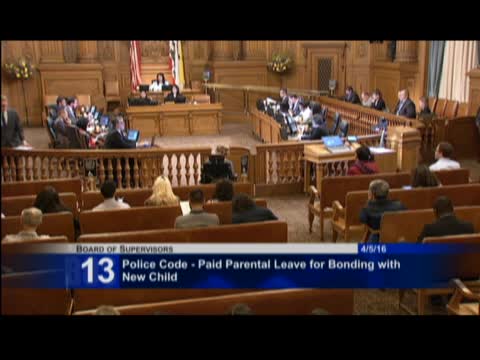
San Francisco supervisors on April 5 voted to adopt an ordinance requiring covered employers to provide six weeks of full wage replacement for new parents, making the city the first in the nation to guarantee 100 percent pay for that period.
San Francisco supervisors on April 5 voted to adopt an ordinance requiring covered employers to provide six weeks of full wage replacement for new parents, making the city the first in the nation to guarantee 100 percent pay for that period.
The ordinance requires employers with 20 or more employees to make up the portion of state disability pay that leaves workers short of full wages. The board adopted two amendments before final passage: one from Supervisor Eric Peskin that phases in coverage for smaller employers and adjusts employer-size thresholds, and one from Supervisor Scott Wiener that restores a limited private right of action, routed first through the Office of Labor Standards Enforcement for investigation.
The core sponsor, Supervisor Scott Wiener, said the measure removes a significant barrier that prevents many lower-income workers from taking bonding leave. “This legislation will make San Francisco the first place in the United States to guarantee six fully paid weeks of parental leave,” Wiener said on the floor. Wiener and other supporters framed the ordinance as an equity measure intended to help lower-paid workers who cannot afford the pay cut under California’s state disability short-term program.
Supervisor Peskin offered a phase-in amendment that changes the employer-size triggers and delays the effective date for the smallest employers; Peskin described his amendment as a modest, pragmatic change to ease the burden on small businesses and secured the votes needed for adoption. Peskin’s amendment was approved 10–1, with Supervisor David Campos casting the lone no vote. Wiener’s amendment restoring a private enforcement pathway — which requires a worker to file a complaint with the Office of Labor Standards Enforcement (OLSE) and allows a lawsuit only if OLSE does not act within 90 days — passed unanimously.
Speakers on the floor described the ordinance as a continuation of San Francisco’s progressive labor policy record. Supporters said the city had worked with business representatives and made concessions to address concerns; opponents worried the phase-in weakened worker protections. After amendments were adopted, the board voted to enact the ordinance as amended.
The ordinance includes staged effective dates to give smaller employers time to comply: it applies first to larger employers at the start of the next calendar year, with subsequent trigger dates for mid-size and smaller employers as specified by the Peskin amendment. The measure also directs the city’s labor enforcement office to investigate complaints and sets a 90‑day investigation window before a worker can file in court.
The ordinance drew extended floor debate and several technical amendments in committee prior to the full-board vote. Supporters named coalition partners that worked on the measure, including the California Work and Family Coalition, Legal Aid organizations and business stakeholders.
The board adopted the amendments and passed the ordinance on April 5.