Get Full Government Meeting Transcripts, Videos, & Alerts Forever!
Get email alerts on the Transportation Fees topic
No spam. Unsubscribe anytime.
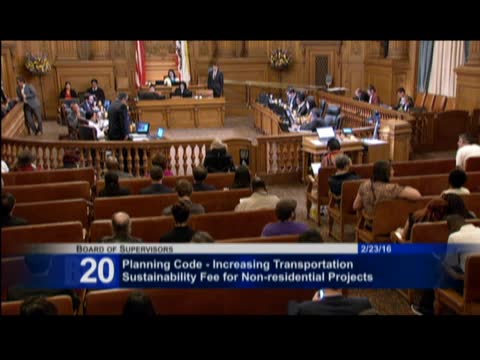
Board approves $2 per-square-foot TSF increase and grandfathering for pipeline projects after amendment
Summary
Supervisors voted 6–5 to amend the Transportation Sustainability Fee with a $2 increase and one-time grandfathering for projects in the pipeline; debate centered on transit funding needs versus development impacts and the legislative process.
The San Francisco Board of Supervisors on Feb. 23 approved, on first reading as amended, a Transportation Sustainability Fee (TSF) increase for large nonresidential projects, adopting a $2-per-square-foot rise and a one-time grandfathering provision for projects already in the approval pipeline.
Supervisor John Avalos moved the amendments and said the increase would generate roughly $2 million a year and an estimated $30 million in one-time funds from grandfathered projects. Avalos argued commercial projects impose greater transit impacts than residential projects and said the measure would help cobble together funds needed to address a multimillion-dollar maintenance deficit.
Supporters, including Supervisors Weiner, Cohen and Kim, praised the measure as a significant source of funding for Muni and street-safety projects. “This is going to be bringing more than $20,000,000 new additional dollars to Muni,” Supervisor Breed said in the debate, while Weiner urged colleagues to respect the long legislative process that led to the fee proposal.
Opponents argued the board should not further raise fees in a way that harms development unpredictably or without fuller review. Supervisor Peskin said rising numbers of mandatory set-asides and fees are eroding budget flexibility and legislative discretion. Supervisor Tang and Supervisor Peskin also questioned whether the board should use legislative sessions to alter complex fee policy without more study.
After amendment votes, the measure passed on first reading 6–5, with supervisors Tang, Weiner, Breed, Cohen and Farrell voting no and Yi, Avalos, Campos, Kim and Marr voting yes (Peskin voted aye in that tally). Supervisor Avalos’s amendments (including a table clarifying fee structure and technical clean-ups) were adopted by the board without objection, then the ordinance was passed as amended on first reading.
Supporters said the TSF is intended to raise funds specifically for transit and transportation infrastructure, while critics said the city should be cautious about adding fees that could deter development or be viewed as a hidden tax on job-creating projects. Several supervisors urged follow-up analysis and continued oversight on fee implementation.