Get Full Government Meeting Transcripts, Videos, & Alerts Forever!
Get email alerts on the Transportation Funding topic
No spam. Unsubscribe anytime.
Board fails to override mayor's veto of transportation sustainability fee
Summary
The Board of Supervisors debated an override of Mayor Ed Lee's veto of an ordinance to raise the Transportation Sustainability Fee for large nonresidential projects. After several hours of debate, the board sustained the veto in a 6-4 vote, so the ordinance failed.
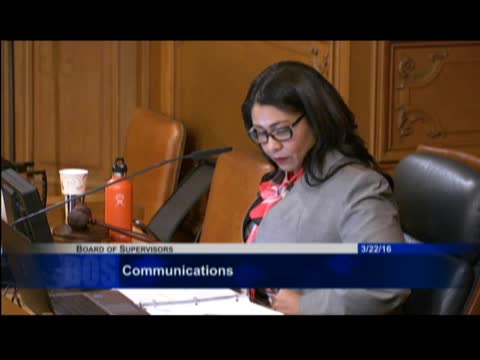
The San Francisco Board of Supervisors on March 22 debated whether to override Mayor Ed Lee's veto of an ordinance to raise the Transportation Sustainability Fee (TSF) for large nonresidential projects, but the board failed to override the veto and the ordinance did not pass.
Supervisor John Avalos, the ordinance's lead sponsor, opened debate by urging colleagues to side with transit riders and working taxpayers rather than big developers. "The test of our progress is not whether we add more to the abundance of those who have much, it is whether we provide enough for those who have little," Avalos said, quoting Franklin D. Roosevelt. Avalos said his amendments would raise about $2,000,000 a year and $30,000,000 in one-time revenue and described the measure as an equity step to require large developments to pay more toward the city's transportation backlog.
Supervisor Scott Wiener said he would vote to sustain the veto, arguing the TSF approved by the board late last year already nearly doubled annual developer contributions to transit from $26,000,000 to about $45,000,000 and extended fees to residential development for the first time. "To say that if you're not in favor of increasing it from $45,000,000 a year to $47,000,000 a year, you're somehow not supporting working people and you're siding with the 1% is absolutely specious," Wiener said.
Other supervisors voiced a range of positions. Supervisor Jane Kim, Supervisor David Campos and Supervisor Malia Mar (as identified in the transcript) spoke in favor of Avalos's amendments and urged an override to capture additional revenue they said would fund Muni needs. Supervisor Campos called the smaller fee an unfair "giveaway to big developers." Supervisor Kim described the change as a modest, tiered, progressive fee that is fairer than regressive alternatives.
After debate the clerk called the roll. The vote on the mayor's veto override recorded six ayes and four nos: Ayes ' Campos; Kim; Marr; Peskin; Yi; Avalos. Nos ' Breed (President); Cohen; Tang; Wiener. The chair announced, "The veto is sustained and the ordinance fails."
Why it matters: The dispute exposed a split on the board over policy and political strategy: whether to press for a somewhat larger fee immediately or accept the larger package approved last year as the major policy gain. Supporters of the override framed the vote as an equity measure that would raise modest additional revenue for Muni; opponents argued the existing TSF already materially increased developer contributions and that the proposed change was small in comparison to the overall reforms achieved last year.
Context and next steps: The ordinance at issue would have amended the planning code to revise how the city charges large commercial developments for their transportation impacts. Because the mayor issued a veto on March 11, the only remaining action was the board's override vote; that failed, so the mayor's veto stands and the amended TSF does not take effect.