Get Full Government Meeting Transcripts, Videos, & Alerts Forever!
Get email alerts on the Memorial topic
No spam. Unsubscribe anytime.
Survivors and community leaders urge Board to support comfort-women memorial; speakers stress remembrance and reconciliation
Summary
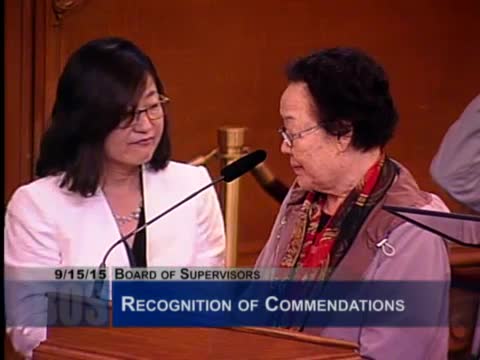
A large group of community leaders, survivors and advocacy organizations urged the board to support a memorial to women forced into sexual slavery during World War II; survivor Lee Ee Young Soo ("Grandma Lee") addressed the board and requested a memorial to help heal victims and preserve history.
Survivors, faith leaders, civil-rights groups and community supporters used the public-comment period Tuesday to urge the San Francisco Board of Supervisors to back a memorial honoring the women forced into sexual slavery by the Japanese military during World War II.
Ee Young Soo Lee — identified in the meeting as "Grandma Lee," a survivor who traveled from Korea and a longtime activist — spoke to the board through an interpreter and asked officials to erect a memorial in San Francisco. In her remarks she described herself as "the living evidence of history" and said she came to the city to press for a memorial that she hopes will help relieve the sorrow she and other survivors still carry.
Religious and civic leaders spoke in support as well. Rabbi Doug Kahn of the Jewish Community Relations Council said the Jewish community supports the memorial effort as a means of honoring survivors and educating the public. Reverend Amos Brown of the NAACP framed the measure as an act of historical truth and reconciliation. Numerous speakers from Korean-American, Japanese-American and broader coalitions described the proposal as a human-rights and women's-rights issue, not an ethnic or national condemnation.
Why it matters
Advocates said the memorial would honor survivors while they are still living and would serve as an educational site to prevent future abuses. Opponents and critics — referenced during public comments — have argued that the memorial singles out Japan or could inflame tensions; proponents responded that the measure targets wartime military policies and seeks apology and reparations rather than collective blame.
Speakers quoted or referenced
- Ee Young Soo Lee ("Grandma Lee"), survivor and advocate; asked the board to erect a memorial to help resolve and remember the history. - Rabbi Doug Kahn, Director, Jewish Community Relations Council; expressed organizational support for memorializing the comfort women. - Reverend Amos Brown, President, San Francisco NAACP; supported the memorial and called it an act of historical truth. - Phyllis Kim, Korean American Forum of California; described longstanding international advocacy for recognition, apology and reparation.
Meeting context: the item was the subject of many public comments and a civic coalition; the board did not take a final vote on a memorial measure during the meeting.
Ending
Speakers asked supervisors to move the memorial proposal forward so the history is memorialized and so survivors can see recognition in their lifetimes. The board received the testimony during public comment; next steps — including any resolution or committee referral — were not recorded in this excerpt of the meeting.