Get Full Government Meeting Transcripts, Videos, & Alerts Forever!
Get email alerts on the City Budget 2015 16 topic
No spam. Unsubscribe anytime.
Board approves two-year budget package, adds $25 million for affordable housing and calls November special election on $310 million bond
Summary
The Board of Supervisors approved the fiscal 2015-16 and 2016-17 budget package after committee work, adding a $25 million allocation for affordable housing and forwarding an ordinance to place a $310 million affordable-housing bond on the November ballot.
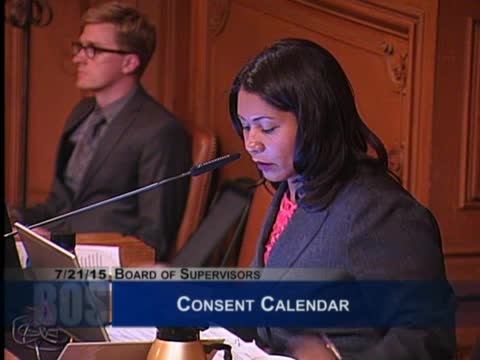
San Francisco—00—2�s Board of Supervisors on July 21 approved annual appropriation and salary ordinances for fiscal 2015-16 and 2016-17 and several related motions, endorsing a budget the board—00—2�s Budget and Finance Committee described as a consensus package that trims and reallocates funds while increasing targeted dollars for affordable housing and services.
The board, led in debate by Budget Chair Supervisor Mark Farrell, described the package as the product of months of committee work and late-night meetings. Farrell and others said the board—00—2�s amendments restored about $25 million specifically targeted to affordable-housing production over the two-year plan and added funding for homeless services, food security, child care, workforce development and pedestrian-safety programs.
Highlights and context: The mayor—00—2�s budget numbers were cited in committee as roughly $8.92 billion for the first year and $8.96 billion for the following year. Supervisor Farrell noted committee-identified savings of approximately $66 million over the two-year process, with $25 million earmarked for affordable housing production. The board also agreed to move forward with an ordinance calling a special election on Nov. 3, 2015, to ask voters to authorize up to $310 million of bonded indebtedness for affordable-housing construction and rehabilitation, with related administrative code changes for levy and collection; that ordinance passed unanimously on first reading.
Amendments and votes: During general debate Farrell moved a small technical amendment to shift $40,000 from Recreation and Park appropriations to the Arts Commission to support programming; that amendment passed without objection. The larger budget items (Items 16 through 40) were considered together as the annual appropriation package; the clerk announced that the items comprise the budget ordinances and associated fees, appropriations, reimbursements and contract directions. The board took roll-call on the package as presented; chairs and members thanked department staff, the Controller and the mayor—00—2�s budget team for their work. The initial consent roll calls earlier in the meeting recorded unanimous or near-unanimous adoption of many consent calendar items; the budget package itself moved forward on the board—00—2�s action with no recorded dissent on the first reading.
What the budget funds: Board members identified targeted increases including roughly $3 million more for homeless housing and services (families, seniors, adults and transitional-age youth), more than $1 million for food security, approximately $2.6 million for child care and family services, over $2 million for workforce development and continued investments in public-safety priorities such as arson investigative staffing and neighborhood prosecutors. Supervisors also highlighted Vision Zero pedestrian-safety work and funding for LGBT seniors and at-risk youth programs.
Procedure and next steps: The budget package passed its first-reading votes and procedural steps on July 21 with amendments recorded in the meeting. Some items will require additional ordinance steps or second readings in subsequent sessions per the city—00—2�s legislative calendar. The $310 million bond ordinance for the November ballot was adopted on first reading unanimously; a later ballot-argument and procedural schedule will govern final placement on the ballot.
Ending: Board members emphasized the committee-based process and thanked staff for extensive review, while several supervisors said they would continue to press for programmatic detail and follow-up oversight as departments implement the budget—00—2�s priorities.