Get Full Government Meeting Transcripts, Videos, & Alerts Forever!
Get email alerts on the Housing topic
No spam. Unsubscribe anytime.
Mayor Lee and supervisors push landmark housing package; city highlights homelessness steps
Summary
Mayor Edwin M. Lee outlined a housing blueprint that aims to build 10,000-plus homes and stressed homelessness interventions; the Board advanced housing code changes and supervisors introduced additional inclusionary housing and permitting reforms.
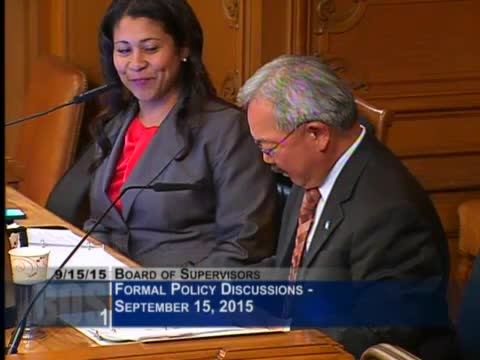
Mayor Edwin M. Lee and members of the San Francisco Board of Supervisors on Tuesday outlined steps intended to expand affordable housing production and to address homelessness across the city.
Lee used his allotted remarks to emphasize a multipronged housing strategy and to preview a package of legislation intended to accelerate permanently affordable housing production. "We launched a blueprint to build an additional 10,000 homes," Mayor Edwin M. Lee said, adding that the administration expects to exceed that goal and to ensure that a third of those homes be permanently affordable to low-income families.
The mayor tied the package to an array of tools, including neighborhood preference for existing residents in rehabilitated public housing sites and preferences for tenants displaced by Ellis Act or no-fault evictions. He also said the city would support 100% affordable developments financed by private-sector initiatives and new incentives for private projects to provide more units targeted to a broader range of incomes.
Why it matters: San Francisco faces a long-running housing shortage and rising homelessness. The mayor framed the package as an attempt to use the city's strong economy to produce housing at scale now, rather than waiting on long-term market cycles.
Board action and related proposals
Separately during the meeting the board finally passed an ordinance to amend the planning code to clarify how the inclusionary affordable housing program applies to housing projects including group housing projects, the Planning Department's CEQA determination and certain unit-designation rules. The ordinance (Item 6 on the agenda) was passed unanimously on final passage.
Supervisor Paul Farrell (co-sponsoring with the mayor) and others described additional reforms they plan to introduce, including: - An "inclusionary dial" to let rental projects target rents up to 90 percent of area median income (AMI) or ownership units up to 120 percent AMI in exchange for producing more permanently affordable units on site. - A small-sites alternative allowing developers of small projects to direct fees toward acquiring at-risk rental buildings nearby. - A strengthened off-site alternative that allows off-site replacement units within 1.5 miles or the same planning neighborhood and provides more time for off-site projects to be completed.
Supervisor Wiener separately introduced a proposal to remove conditional-use requirements for projects that are 100 percent affordable and to make it easier to use non-park publicly owned land for affordable housing. Wiener said the goal is to shorten approval timelines and reduce costs for projects that produce only affordable housing.
Homelessness initiatives
Lee described recent and ongoing homelessness efforts and framed them as part of the housing push. The mayor said the city has helped more than 19,000 people leave the streets and placed nearly 11,000 into supportive housing since 2004, and that the city expects to end chronic veteran homelessness by the end of the year. He listed rebooted outreach teams, an integrated 311 reservation system for shelter beds and an "innovative navigation center" launched about five months earlier that had already helped roughly 200 people.
The mayor also announced an additional $3 million in private funds to expand navigation-center services and asked the private sector to match city resources to sustain around-the-clock counseling and intake.
Speakers quoted in this article
- Mayor Edwin M. Lee, Mayor of San Francisco - Supervisor Julie Christensen, Board of Supervisors (questioning on homelessness) - Supervisor Paul Farrell, Board of Supervisors (co-sponsor, inclusionary proposals)
Ending
Supervisors and the mayor expressed a shared urgency to increase housing supply while expanding homelessness services; the City Hall discussion set out a legislative and administrative agenda that supervisors said they will consider in committee and on future meeting agendas.