Get Full Government Meeting Transcripts, Videos, & Alerts Forever!
Get email alerts on the Utilities Energy topic
No spam. Unsubscribe anytime.
Board and mayor's office press PUC‑CCA timeline; Wiener ties pole‑lease proceeds to streetlight reinvestment
Summary
Supervisors pressed the mayor's office and PUC representatives about San Francisco's community choice aggregation (CCA) plans and whether the Public Utilities Commission will move quickly to set rates. Supervisor Wiener won an amendment asking that proceeds from new pole lease agreements be dedicated toward streetlight improvements.
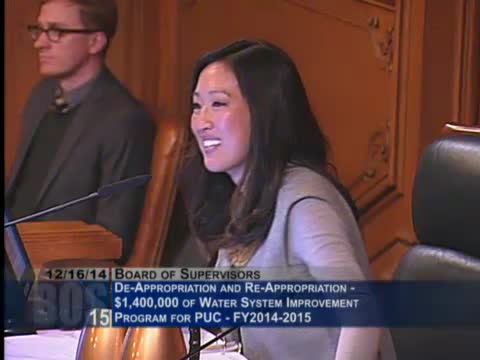
Supervisors used the Dec. 16 meeting to press the mayor’s office and San Francisco Public Utilities Commission (PUC) on the timeline and job outcomes for Community Choice Aggregation (CCA) and related clean‑power programs.
Supervisor Campos asked whether the PUC remained committed to implementing CCA and when rates might be set. The mayor’s senior adviser, Roger Kim, said the mayor supported a local CCA program that is “tied to local jobs” and that the administration was reviewing LAFCO’s draft study before a joint meeting between LAFCO and the PUC.
Separately, the board considered a PUC‑sponsored resolution authorizing master license agreements for outdoor distributed antenna system (DAS) pole installations (agreements with vendors such as Verizon). Supervisor Scott Wiener proposed — and the board adopted — an amendment stating the board’s intent that proceeds generated from pole‑lease revenues be dedicated to reinvesting in the city’s streetlight program through the annual appropriation ordinance. Wiener argued the PUC’s power enterprise has under‑invested in streetlights and that new lease revenue should help fill that gap.
Why it matters: CCA is a policy tool the city could use to change local power procurement and create local jobs, but it requires close coordination between the mayor’s office, the PUC and regional bodies. Meanwhile, the PUC’s pole leases and advertising or antenna revenues can become local revenue sources; Wiener’s amendment is a policy statement for the budget process tying new revenues to a specific public‑safety and infrastructure priority.
What’s next: The mayor’s office said it would continue to coordinate with LAFCO and the PUC and review the final LAFCO report. The PUC resolution authorizing master DAS pole license agreements passed as amended; supervisors said they expect the budget committee to consider the intent language when the city appropriates revenue generated from the leases.
Speakers quoted in this article spoke during the Board of Supervisors meeting on Dec. 16, 2014.