Get Full Government Meeting Transcripts, Videos, & Alerts Forever!
Get email alerts on the Short Term Rentals topic
No spam. Unsubscribe anytime.
Supervisors introduce substitute short-term rental ordinance; public comment largely from hosts urging flexibility
Summary
Supervisor Scott Wiener introduced substitute legislation to regulate short-term rentals, shifting administration to the Planning Department, adding mandatory registration and safety checks, and extending registration requirements to single-family homes.
Supervisor Scott Wiener introduced substitute legislation to regulate short-term rentals in San Francisco, addressing online platforms such as Airbnb, VRBO and HomeAway and proposing a series of amendments to the board's earlier proposal.
Under the substitute legislation Wiener described, responsibility for administering the program would shift to the Planning Department, administrative penalties for repeat violators would increase, and registration numbers would be required and required to appear in postings. The substitute would for the first time require single-family homes that engage in short-term rental activity to register and comply with principal-place-of-residence rules. It would explicitly exclude subsidized and affordable housing (including below-market-rate units and single-room-occupancy units) from participation, and it would prohibit short-term rental activity in units with outstanding building, electrical, plumbing, mechanical, fire, health, housing or planning code violations.
Wiener said the Planning Commission considered the measure over the recess and offered recommended changes, and the substituted legislation incorporates many public comments, particularly around safety, registration, and preserving affordable housing. He said the land-use committee was asked to hear the legislation in September.
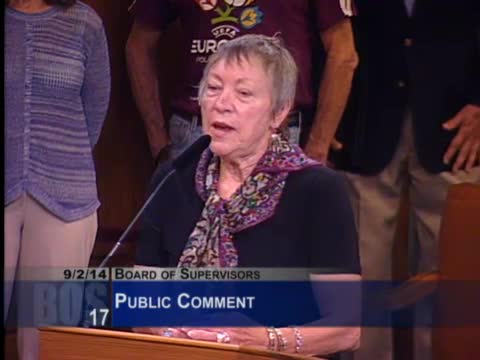
During the public-comment period that followed, multiple residents and hosts testified in favor of loosening restrictions on home-sharing, describing the income from hosting as critical to staying in the city, helping pay mortgages and medical bills, and supporting neighborhood businesses. Speakers included homeowner hosts who said they rent single rooms at below-market rates to help pay expenses, a homeowner who described using short-term rental income to help pay for a child's law school costs, and representatives of host coalitions who urged the board to adopt regulations that enable home sharing and collect occupancy taxes. Several commenters expressed willingness to pay tax and follow safety rules but asked for fewer restrictions on days-per-year limits, and for allowances sensitive to seniors and single-family homeowners.
Wiener said the board would proceed through the land-use committee and the public process to refine the measure.