Get Full Government Meeting Transcripts, Videos, & Alerts Forever!
Get email alerts on the Zoning Variance topic
No spam. Unsubscribe anytime.
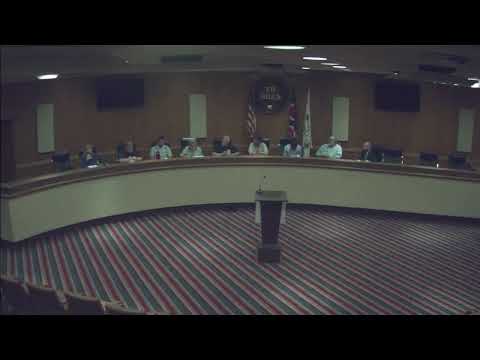
7 Hills Zoning Board denies request for larger accessory building at 2917 East Sprague Road
Summary
The Seven Hills Zoning Board of Appeals voted 5-0 to deny a request for a 226-square-foot variance to allow a 576-square-foot accessory building at 2917 East Sprague Road, citing lack of a demonstrated practical difficulty and the board's inability to grant use variances.
The Seven Hills Zoning Board of Appeals voted 5-0 on Sept. 10 to deny a 226-square-foot variance that would have allowed construction of a 576-square-foot accessory building at 2917 East Sprague Road.
The board’s decision turned on two points: the request sought space partly to store materials used by a nonprofit connected to the property owner, and the board said it could not grant permission to operate a business from the accessory structure. Legal counsel Joe Grandinetti told the board, “Use variances are something that are not…that’s not something that this board can do.” The applicants had asked for the larger building to hold donated items and equipment they said support local military and veterans.
Board members analyzed the request under the established practical-difficulty factors used for area variances. Members said the applicant could repair or rebuild an accessory structure up to the city’s permitted 350 square feet without a variance, and that the record did not show a property-specific hardship that would justify exceeding that limit. The board also noted guidance from the city engineer that a grading plan and drainage accommodations would be required if a larger structure were approved.
The applicant and a supporter described the activity as nonprofit work. One speaker identified in the record as a resident and nonprofit founder said, “I will never make money off this. I will never.” Board members acknowledged the nonprofit purpose but said the variance evaluation must focus on whether the property’s physical conditions create a practical difficulty under the city’s ordinance.
After discussion the board took a roll call vote: Mr. Ceridi—No; Mr. Maday—No; Mr. Line—No; Mr. Fletcher—No; Mr. Bruns—No. The motion to grant the 226-square-foot variance failed, 0–5. The board’s action will be forwarded to the Seven Hills City Council for review at its next meeting on Sept. 30.
City staff and board members encouraged the applicants to explore alternatives, including low-cost storage through community organizations or municipal programs. The board’s legal advisor and the service director offered to help the applicants identify options outside the variance process.