Get Full Government Meeting Transcripts, Videos, & Alerts Forever!
Get email alerts on the Assessment Standard Setting topic
No spam. Unsubscribe anytime.
Board approves mastery-level standard-setting process after hour-long debate over NAEP alignment and consequences
Summary
The Virginia Board of Education approved a process to set new mastery-level cut scores for Standards of Learning (SOL) tests after lengthy debate over whether the process’ orientation toward NAEP "proficient" would substantially increase failure rates and affect diplomas, accountability labels and funding consequences.
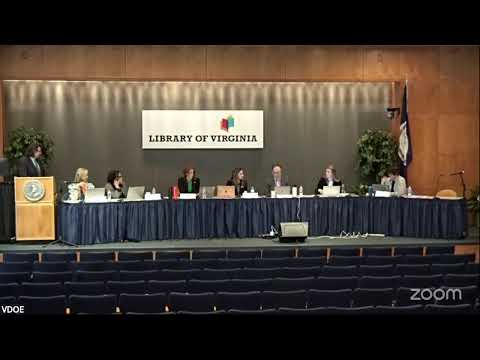
The Virginia Board of Education voted (6–1) to approve a process to set new mastery-level standards for Standards of Learning (SOL) assessments, clearing the way for committees and technical advisers to convene and recommend new cut scores. The vote followed extensive discussion about whether the proposed process — described in a work session and in materials before the board — would align Virginia’s mastery standard toward the National Assessment of Educational Progress (NAEP) “proficient” level, and about the downstream consequences for students, schools and accountability designations.
What the board approved: The motion approved the proposed standard-setting process (a procedural framework presented to the board for final review). Board staff and the presenter, Dr. Samantha Marsh Hollins, said the vote authorized the department to assemble the technical advisory committee (TAC) and standard-setting panels and to continue the work that will later return to the board with specific recommended cut scores.
Key points from the debate: Member Miss Holton warned the change could “make it harder to pass the SOLs” and said she feared the near-term effect would be a large increase in students and schools labeled as failing or “off track.” Holton asked for more analysis on graduation impacts and accountability consequences before final cut scores are set. Member Rotherham replied that the board was voting only on a process, not on final cut scores: “we're voting on a process here,” he said, urging the board to proceed and promising transparency and support for educators. Member Doctor Northern and others supported moving forward, arguing higher expectations with supports can improve outcomes. Several board members asked staff to return with analysis on impacts to graduation requirements, school accountability labels and funding formulas.
Vote: Recorded in the transcript as Miss Kilgore — Aye; Doctor Northern — Aye; Mister Hansen — Aye; Miss McPherson — Aye; Mister Rotherham — Aye; Miss Holton — No; Chair Creasy — Aye. The motion passed.
Why it matters: The process will guide how Virginia defines ‘masters’ on SOLs. Speakers warned that any large upward shift in cut scores could raise expectations but also initially increase the number of students and schools that fall below the mastery threshold; board members requested additional modeling of consequences before final adoption of specific cut scores.
Next steps: Department staff will convene the TAC and standard-setting panels, gather technical input and return to the board with recommended cut scores and with impact analyses requested by board members.