Get Full Government Meeting Transcripts, Videos, & Alerts Forever!
Get email alerts on the Zoning Code Amendment topic
No spam. Unsubscribe anytime.
Proponent seeks smaller R‑3 lot sizes and denser yields; commission presses on schools, infrastructure and checks on maximum yield
Summary
Al Esch proposed amending the county R‑3 multifamily zoning standards to reduce minimum lot size to 8,000 square feet and a 65‑foot lot width in order to make multifamily and smaller‑lot development more practical; commissioners probed likely population and school impacts, yield per acre, open‑space requirements and the need for yield checks and
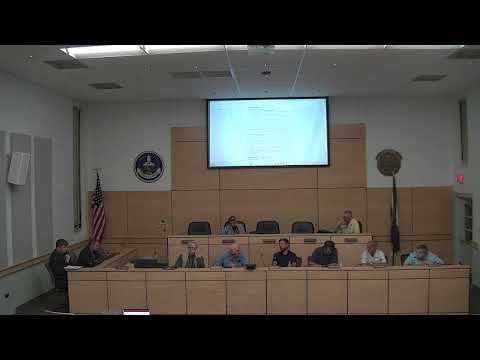
Al Esch presented a proposed zoning text amendment (case ZOADash05Dash25Dash01) at the Madison County Planning Commission workshop on Sept. 17 that would alter Article 7 (residential multifamily R‑3) to reduce minimum lot area and encourage more compact, orderly multifamily development. Planning staff said the application was re‑advertised after Mr. Esch requested a modification to the proposal for section 7‑3‑1 (minimum lot area), and the item is scheduled for a public hearing on Oct. 1.
Mr. Esch told the commission he proposed lowering the minimum lot area to 8,000 square feet with 65‑foot frontage to make R‑3 projects economical and to create smaller, more affordable housing options. “I personally feel like this would be a good place to make some changes in our most dense area here in the County,” he said, and described a conceptual site plan demonstrating a mix of small single‑family lots, townhomes and multifamily units intended to provide starter housing below current local price points.
Commission members probed potential impacts on schools, traffic, services and open space. One commissioner ran a rough “yield” calculation on the conceptual example: at existing densities a parcel might yield about 61 homes (roughly 244 residents assuming 4 per household), whereas the proposed density could yield 162 homes (roughly 648 residents), and the increased density would add substantially more school‑age children and greater demands on ingress/egress and stormwater infrastructure. Staff confirmed the county27s current R‑3 ordinance provides for up to eight dwelling units per acre and a 40% open‑space requirement; they also reported the county has approximately 44 parcels zoned R‑3 totaling about 154 acres (some parcels are split‑zoned).
Commissioners and the proponent discussed safeguards to avoid overdevelopment, including using a dwelling‑units‑per‑acre yield cap and explicit open‑space minimums as checks and balances. Mr. Esch said he would be willing to revise his proposed language to incorporate yield caps, open‑space standards and other ‘‘proffers’’ developers would provide at rezoning to ensure orderly development rather than blanket up‑zoning. He offered to have an engineer model a full 100‑acre parcel under the code constraints to demonstrate a maximum yield and green‑space outcome.
Several commissioners said concerns about school enrollment may be mitigated by recent enrollment trends; staff reported K–12 enrollment of about 1,512 students this year compared with about 1,540 last year (a decline of roughly 30 students) but stressed enrollment is not static. Commissioners also asked staff and county counsel about the county27s legal authorities, including whether the county could limit the number of building permits issued; county staff (Mister Wright) said he would research that question but expressed doubt a simple permit cap would be lawful and said further legal review is required.
No formal vote was taken; Mr. Esch said he would consider tabling or revising his application and that he is willing to add checks‑and‑balances language if the commission and board prefer that approach. The item will proceed to the advertised public hearing schedule unless the applicant requests a written tabling.